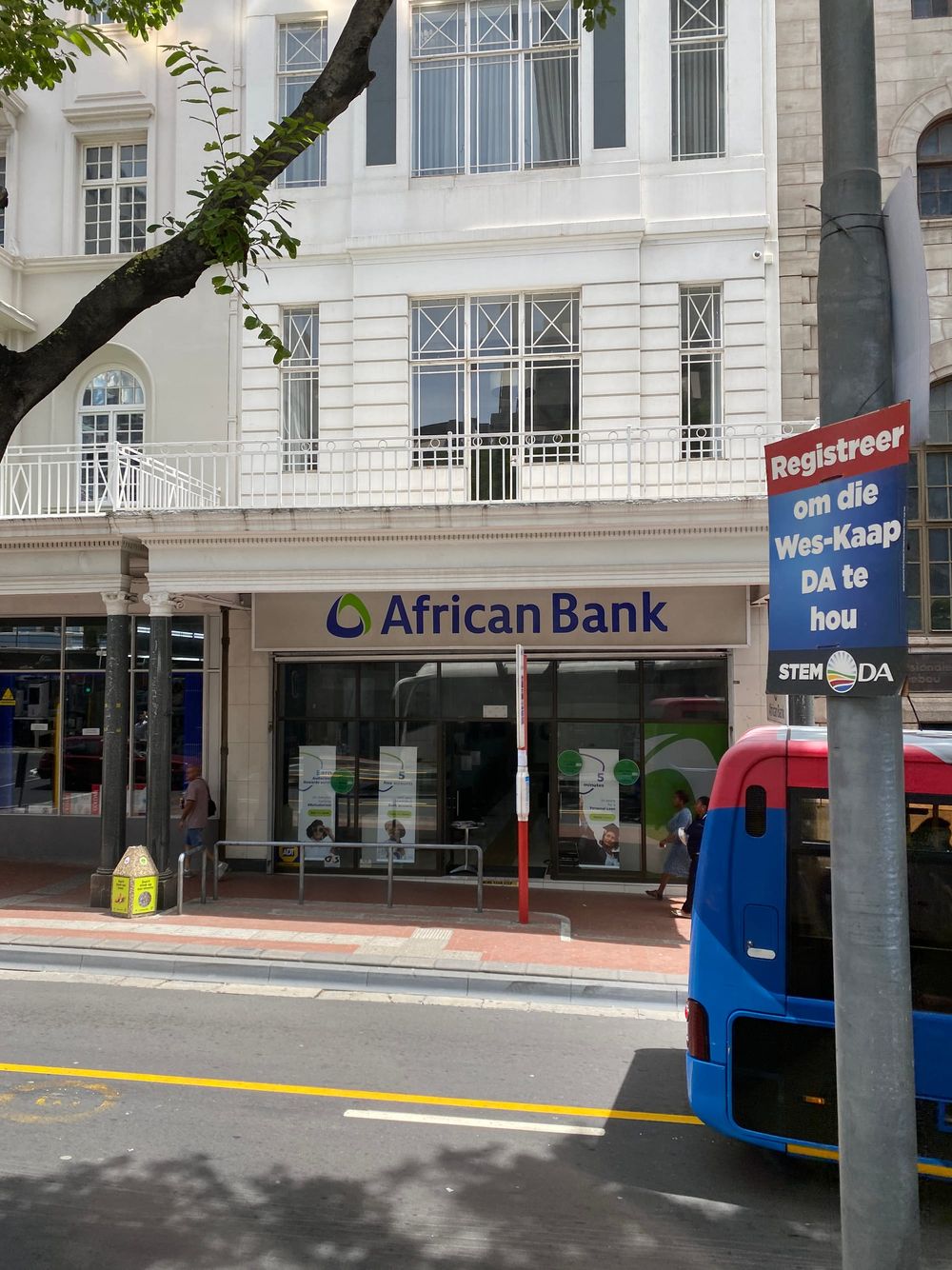
African Bank has appointed Keketso Motsoene as chief executive of its Business and Commercial division, the lender confirmed on Thursday, filling a role vacated when Zwelibanzi Manyathi was elevated to the group's top job. Motsoene joins from Absa Business Banking, where he served as managing executive for the Commercial Growth division, carrying client coverage and credit origination responsibility across South Africa's inland provinces. He brings more than two decades of banking experience spanning business and retail banking, private wealth, operations, client coverage and distribution. The appointment lands as African Bank seeks to expand its Business and Commercial operations and sharpen its focus on small and medium-sized enterprises.
The move follows the confirmation in late August of Manyathi as permanent group chief executive, a role he had held on an interim basis since March. Manyathi had led Business and Commercial since joining African Bank's boards in September 2022, overseeing the integration of acquired businesses and the division's push into the SMME segment. His confirmation came after the Prudential Authority signed off on the appointment, effective 25 August 2026. Motsoene therefore inherits a division that has been without a permanent leader through one of the most difficult stretches in the bank's recent history.
A DIVISION BUILT THROUGH ACQUISITION
African Bank's Business and Commercial arm is largely the product of an acquisition drive undertaken over the past several years as the lender sought to convert itself from a single-product unsecured lender into a diversified institution. The group acquired Grindrod Bank for R1.5 billion, the assets of Ubank for R80 million, and Sasfin's capital equipment finance and commercial property finance businesses for R3.25 billion. It walked away from a deal to acquire Eskom's R5.7 billion home loan book, which would have taken it into secured lending, choosing instead to concentrate on bedding down transactions already completed.
That expansion, pursued under former group chief executive Kennedy Bungane's Excelerate strategy, left the board seeking consolidation rather than further growth. Bungane stepped down with immediate effect in March amid weak performance and a financial reporting error, with the board stating at the time that it wanted to embed the organic and inorganic growth of the previous five years, drive efficiencies and streamline customer propositions. The Business and Commercial division sits at the centre of that agenda, since it houses most of the acquired capabilities that must now justify their cost.
RESTRUCTURING SHADOWS THE APPOINTMENT
Motsoene takes up the role while African Bank is contemplating a Section 189A retrenchment process that could affect 1,200 employees and lead to the closure of 90 branches across South Africa. The bank flagged the process after reporting a net after-tax loss of R624 million for the six months ended 31 March 2026, saying costs were outpacing risk-adjusted revenue and that it had reached the point of having to review staff costs. Its planned initial public offering, which would dilute the South African Reserve Bank's stake, has been pushed back to 2030. Trade union SASBO has criticised both the timing and the public nature of the consultation announcement, calling the manner in which the process unfolded unacceptable.
The immediate test for the new divisional chief executive is whether the business and commercial franchise can generate revenue at a pace that outstrips the cost base assembled through acquisition, particularly in SME lending where African Bank has staked much of its diversification case. Regulatory scrutiny adds a further constraint: the Prudential Authority has already criticised the group over an intra-group loan structured in a way that lifted its capital adequacy ratio. Investors and noteholders will be watching the group's next set of results for evidence that the division's credit quality and cost-to-income trajectory are turning, and for detail on how far the branch and headcount reductions ultimately extend.