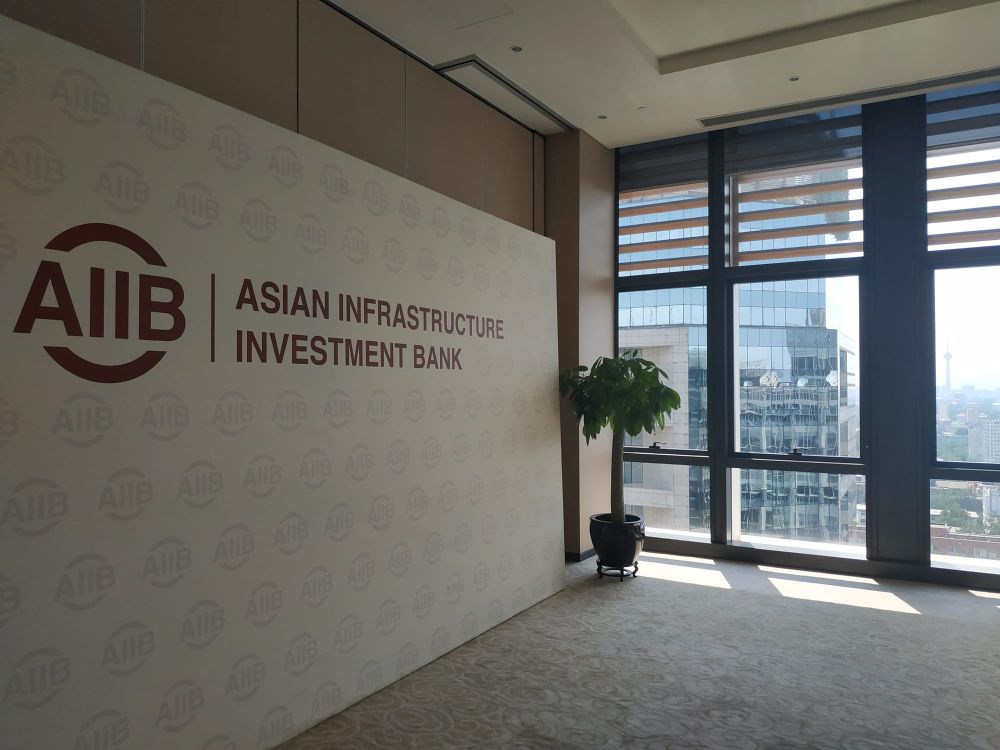
Zou Jiayi, president and chairwoman of the Asian Infrastructure Investment Bank, outlined AIIB's approach to financing Asia's green transition in an interview with SCMP Finance, setting out the multilateral lender's priorities on project financing, policy engagement and private sector mobilisation.
AIIB ROLE AND STRATEGY
The Asian Infrastructure Investment Bank, headquartered in Beijing and inaugurated in 2016, positioned itself as a regional development bank focused on infrastructure that supports sustainable growth across Asia. In the interview, Zou described how AIIB has directed attention to projects that enable decarbonisation and resilience, while working with member governments and other financiers to expand project pipelines.
The interview referenced Zou's background, noting that before leading AIIB she served as deputy secretary general of the national committee of the Chinese People’s Political Consultative Conference, a top political advisory body. Her appointment to the multilateral lender followed a career in public sector roles and marked a continuity of engagement between the bank and Asian policy circles.
AIIB's remit, as reflected in the discussion, combined direct financing with efforts to make projects bankable for private investors. Zou outlined a spectrum of activities from structuring public sector loans to participating in blended finance arrangements, and from advising on regulatory frameworks to co-financing with other multilateral development banks and commercial banks. The bank's approach aimed to align infrastructure investments with low carbon and climate-resilient outcomes while maintaining the economic development needs of member countries.
MARKET IMPLICATIONS FOR BANKS AND INVESTORS
For commercial banks and institutional investors operating in Asia, AIIB's emphasis on green infrastructure had several implications. First, the bank's participation in a project could act as a credibility signal for environmental objectives and project viability, potentially easing the syndication of large infrastructure loans. Second, AIIB's involvement in policy dialogue and technical assistance could reduce regulatory uncertainty and improve the investment climate for private capital in countries that lacked deep green finance markets.
The interview highlighted the ongoing challenge of mobilising private capital at scale for energy transition projects in the region. Zou discussed the need to build pipelines of bankable projects and to combine concessional resources with commercial financing where appropriate. This combination aimed to lower risk profiles and create replicable models that private investors could follow, rather than relying solely on scarce public finance.
Regulators and national development banks in Asia could expect continued engagement from AIIB on standards and capacity building. Partnerships between multilateral institutions and domestic authorities often focused on improving procurement, contract standardisation and environmental and social safeguards, areas that directly affected the ease with which private sector lenders and investors assessed opportunities.
Market participants also took note that the multilateral development bank landscape in Asia was evolving, with AIIB occupying a role that intersected with global lenders and regional financing mechanisms. The bank's actions on project selection, co-financing and policy advisory work influenced deal flow for commercial banks, nonbank financiers and infrastructure funds seeking exposure to green assets in the region.
While the interview did not provide new financial commitments or operational metrics, it reiterated AIIB's strategic intent to prioritise infrastructure that supports the energy transition, and to work through a mix of direct lending, co-financing and capacity building to achieve those goals. For stakeholders, the articulation of strategy offered signals about where the bank would concentrate resources and technical support.
Observers and market participants would watch implementation details, such as the types of projects funded and the structure of co-financing arrangements, to assess how effectively AIIB could catalyse private capital and scale up green infrastructure across diverse Asian markets.
Sources: SCMP Finance