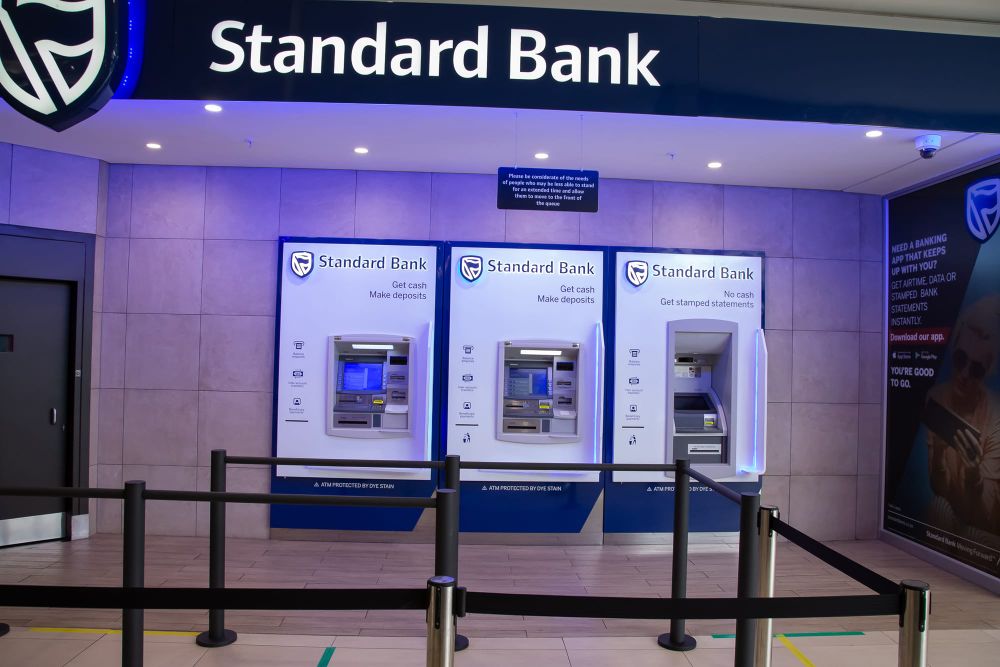
Angola's Capital Market Commission approved the public sale of a 34% stake in Standard Bank de Angola on 4 September, clearing the final regulatory hurdle for the lender's debut on the Luanda-based BODIVA exchange. The regulator sanctioned an offer of 4.76 million shares drawn from the holding the Angolan state seized from Carlos São Vicente, the former chairman of insurer AAA Seguros. The state asset management agency IGAPE subsequently indicated the government is seeking to raise as much as 208.5 billion kwanzas, equivalent to approximately $228 million, from the disposal. The subscription period is scheduled to run from 11 September to 25 September, with trading on BODIVA expected to commence on 30 September.
The transaction advances the government's long-running effort to convert recovered assets into budget revenue and to deepen a domestic capital market that has until now listed no commercial bank. Angolan authorities seized a 49% interest in Standard Bank de Angola in 2020 as part of proceedings against São Vicente, who was later convicted of embezzlement, money laundering and tax fraud. The 34% now on offer represents the bulk of that confiscated holding. Standard Bank Group, the Johannesburg-headquartered parent, holds a right to acquire a further 24%, a step that would lift its interest in the Angolan subsidiary to roughly 75% should it be exercised.
PROCEEDS ESTIMATES DIVERGE ON PRICING AND CURRENCY
Reported dollar values for the offer vary according to the exchange rate applied and the assumed clearing price within the indicated range. Estimates in circulation span roughly $215 million to $260.7 million, with Bloomberg citing up to $228 million and other calculations arriving near $224 million using a rate of about 931.93 kwanzas to the dollar. The kwanza-denominated figure of 208.5 billion represents the more stable reference point, as the final dollar equivalent will depend on demand and on the rate prevailing when the offer closes. Executives assessing the transaction should treat the wide dollar band as a function of pricing discretion rather than disagreement over the size of the stake.
The listing carries significance beyond the proceeds. BODIVA has operated primarily as a venue for government debt, and a commercial bank flotation of this scale would establish an equity benchmark for a market that has struggled to attract private issuers. Kokkie Kooyman of Denker Capital characterised the arrangement as favourable to Standard Bank Group, the Angolan government and the wider continent, reflecting a view among some regional investors that the transaction serves multiple constituencies at once.
SALE LANDS AMID BROADER FUNDING PUSH
The share offer coincides with a wider effort by Luanda to widen its investor base. Finance Minister Vera Daves de Sousa told Reuters on 9 September that Angola is seeking to open its $18.6 billion domestic government bond market to foreign investors and is in discussions with JPMorgan regarding inclusion in a frontier market local-currency debt index. She separately confirmed that Angola has completed its eurobond borrowing for 2026, stating, "For 2026, we do not foresee any new participation in the market," with any return next year to be weighed against conditions as the country approaches an election. The London Stock Exchange hosted an Angola-UK Investment Forum on 8 and 9 September, organised in partnership with Standard Bank and the Angolan government.
Attention now turns to execution. The immediate markers are the close of the subscription window on 25 September, confirmation of whether Standard Bank Group takes up its 24% entitlement, the final allocation and clearing price, and the first day of trading on 30 September. Demand levels will offer the clearest read yet on domestic and foreign appetite for Angolan equity risk, and a weak subscription would complicate the government's stated ambition to bring further recovered assets and state holdings to market. The outcome will also test whether asset recovery proceedings can reliably be monetised through public markets rather than negotiated private sales.