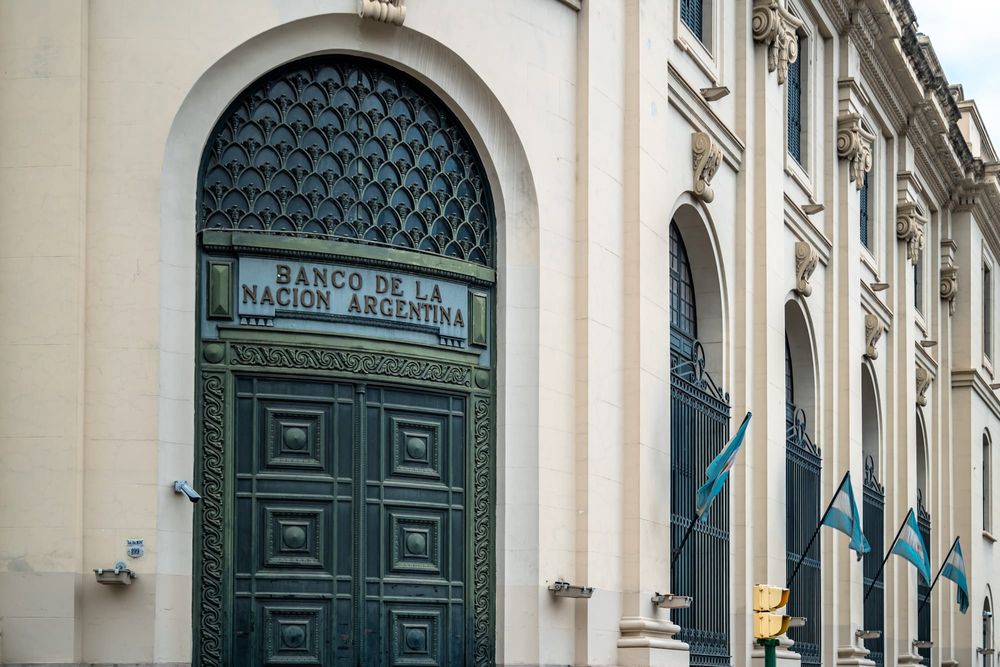
Santiago Bausili, president of the Central Bank of the Argentine Republic, met his Chinese counterpart Pan Gongsheng on the sidelines of an international symposium in Shanghai, a restrained overture toward resuming discussions on a bilateral currency swap months after Buenos Aires moved to unwind the facility under pressure from Washington.
MEETING DETAILS AND CONTEXT
The meeting did not take place as part of a formal signing or announcement, but it represented a diplomatic step back toward Beijing following Argentina's earlier decision to disengage from a Chinese currency lifeline. The talks occurred on the margins of a broader central banking forum in Shanghai, where senior officials from several jurisdictions gathered to discuss monetary and financial issues.
The swap arrangement in question previously served as an emergency source of foreign currency liquidity, allowing the central bank to access yuan or dollars without going to international markets. Buenos Aires moved to unwind the arrangement months earlier, after what has been described as pressure from Washington to abandon the facility. The meeting in Shanghai therefore carried symbolic weight, as it suggested a willingness to reopen lines of communication with the People's Bank of China on bilateral liquidity arrangements.
Both central banks have in the past used swaps and other bilateral tools to reduce reliance on third currency funding and to provide short-term backstops for balance of payments needs. The quiet bilateral engagement in Shanghai did not include a disclosed timetable or a new formal agreement, and there was no public signing at the event. Observers noted the contrast between the public posture in recent months and the private diplomatic exchanges that either side has continued to maintain.
MARKET AND POLICY IMPLICATIONS
On the policy front, the meeting underscored Argentina's ongoing search for options to stabilise external liquidity and manage exchange rate pressures. A reopening of discussions on swaps with China would not immediately alter Argentina's official reserve position, but it would expand the toolkit available to the central bank should it seek contingency lines of funding that sit outside conventional dollar markets.
For Beijing, the engagement offered a way to maintain influence in a major Latin American economy without a public declaration that could provoke diplomatic friction with Washington. For Buenos Aires, the conversation with the People's Bank of China signalled that authorities were exploring pragmatic options amid a challenging economic environment, while taking into account the diplomatic constraints posed by relations with the United States.
Market participants have long viewed bilateral swap arrangements as instruments that can provide short-term reassurance to foreign exchange markets, even when they are rarely drawn. The recent meeting in Shanghai therefore carried informational value, as investors and counterparties assess Argentina's appetite for nontraditional backstops and the central bank's readiness to diversify its liquidity arrangements.
Analysts said the encounter was likely to be interpreted through a geopolitical lens as much as a monetary one, given the involvement of three capital centres and the sensitivities around currency and credit lines. The talk also highlighted how emerging-market central banks navigate a complex field of bilateral relations, international financial pressures, and domestic policy priorities when considering liquidity instruments.
Officials did not announce any commitments or a schedule for future talks. The bilateral conversation in Shanghai appeared to be an initial, discreet step rather than a conclusive policy shift. It nevertheless indicated that Argentina and China had not closed the door on currency-swap cooperation despite the earlier unwinding of the arrangement under external pressure.
Sources: SCMP Finance