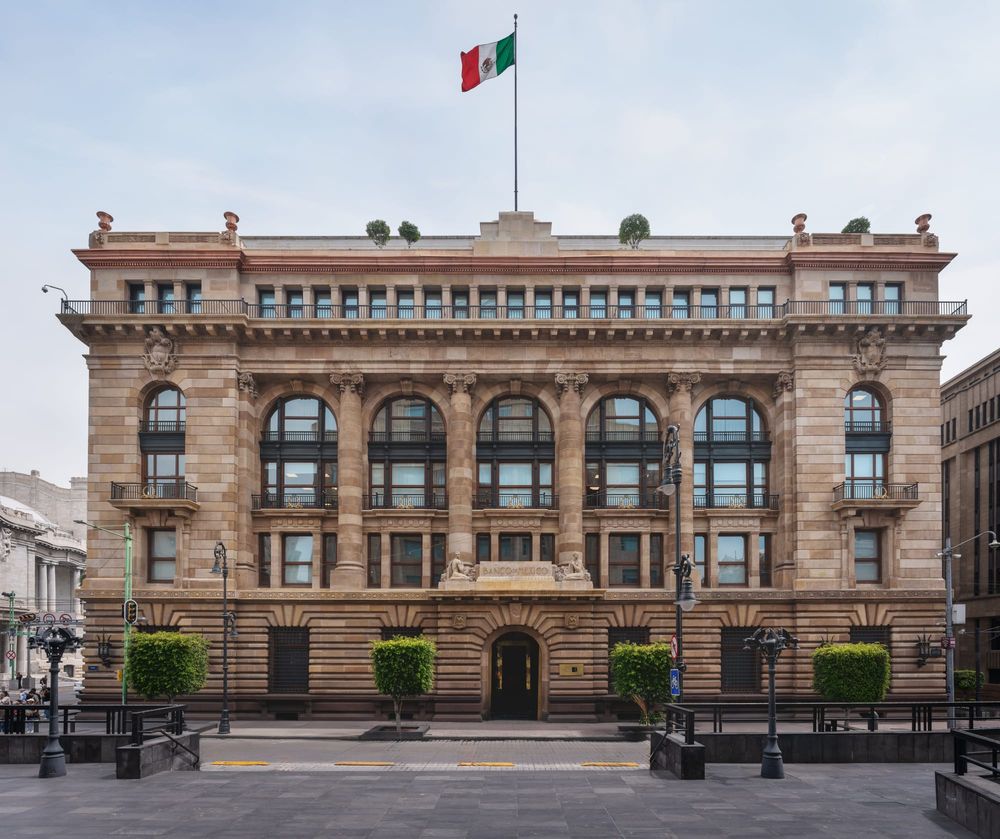
Banco de México held its overnight interbank interest rate at 7.00% at its February 2026 monetary policy meeting, the central bank announced on 5 February 2026 via its official publications page. The decision represents the first pause in an easing cycle that had been under way since 2024, when Banxico began reducing rates from a higher level as inflation appeared to be declining towards the target range. The hold signals that the Governing Board has concluded that the pace of disinflation is not yet sufficient to justify further cuts.
The rate decision reflects Banxico's assessment of a domestic inflation picture that remains above its 3.0% target. The central bank cited inflation running in a range of 3.77% to 4.63%, a band that captures both headline and core measures and indicates that, while inflation has declined from its peaks, the final stages of convergence to target are proving more resistant than the earlier phase of disinflation.
EASING CYCLE PAUSES AS INFLATION STAYS ELEVATED
The easing cycle that Banxico had been conducting since 2024 was among the more assertive in Latin America for a central bank of its standing. Rate reductions had been supported by a meaningful decline in inflation from the double-digit levels seen during the post-pandemic period, and by signs that economic activity was moderating sufficiently to reduce demand-side price pressures. The February 2026 pause indicates that the board now judges the remaining inflation gap to be too wide to bridge with a further cut.
With inflation between 3.77% and 4.63%, Banxico's target of 3.0% with a tolerance band of plus or minus one percentage point remains relevant. Readings towards the upper end of the cited range would sit at the boundary of or outside the tolerance band, placing the central bank in a position where additional easing would be difficult to justify without a credible downward inflation path. The February hold buys time to assess whether incoming data provides that path.
The Mexican economy faces a particular set of external variables at the start of 2026, including the implications of US trade and tariff policy for Mexican exports, manufacturing activity, and the peso. Exchange rate dynamics feed directly into imported inflation, adding a complicating factor for the Governing Board as it calibrates the trade-off between supporting growth and maintaining price stability.
GOVERNING BOARD MONITORS PATH BACK TO TARGET
Banxico's monetary policy framework commits it to achieving a 3.0% inflation target over the medium term, and the Governing Board has consistently emphasised that rate decisions are data-dependent rather than pre-committed to any particular trajectory. The February 2026 pause should therefore be read as a conditional hold rather than a signal that the easing cycle has definitively concluded: further cuts remain possible if the disinflation trend resumes.
The decision places Banxico in a position broadly consistent with several other emerging-market central banks that entered 2026 with policy rates still meaningfully above neutral but with inflation not yet fully anchored at target. Coordinating monetary policy normalisation with exchange rate stability and fiscal dynamics is a recurring challenge for emerging-market policymakers, and Banxico's February stance reflects that balance.
Banxico publishes its monetary policy announcements on its official website, and the full decision statement sets out the Governing Board's reasoning in detail. The next scheduled meeting will provide an opportunity to assess whether the inflation data that emerges over the intervening weeks warrants a resumption of the easing cycle or a continued hold at 7.00%.