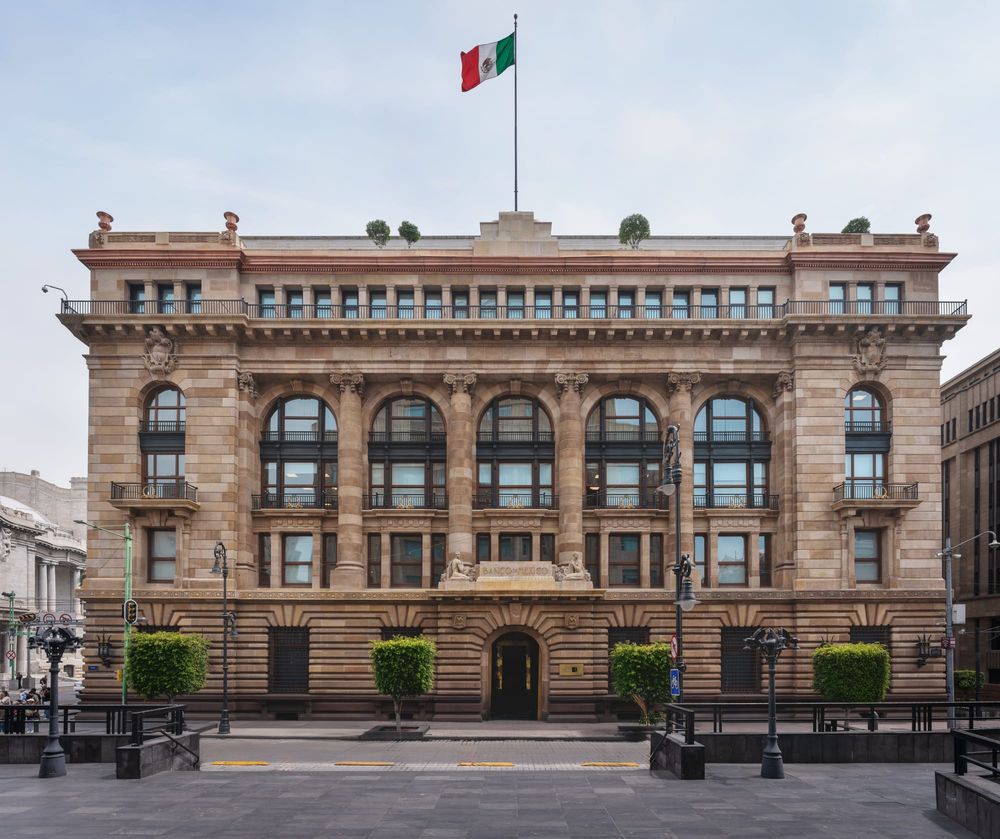
Banco de México held its overnight interbank rate at 7.00% at its March 2026 monetary policy meeting, with all board members voting unanimously in favour of keeping rates unchanged. The decision, announced on 5 March 2026, reflects the central bank's assessment that uncertainty over the inflationary impact of United States trade policy makes the present moment premature for resuming the easing cycle.
The board concluded that March was too soon to continue cutting rates, according to the statement accompanying the decision. The unanimous vote signals that the Governing Board views the risks to the inflation outlook as sufficiently material and broadly shared to warrant collective caution, even as the broader direction of the rate cycle over the preceding months had been downward.
TARIFF RISKS RESHAPE THE INFLATION CALCULUS
Mexico's deep economic integration with the United States means that shifts in US trade policy carry direct and indirect consequences for Mexican consumer prices. Tariffs imposed or threatened by Washington on Mexican goods affect export revenues, the peso's exchange rate, and domestic price levels for goods that move through cross-border supply chains. The board specifically cited tariff-driven inflation risk as a factor in its decision to pause, signalling that external conditions — rather than domestic demand dynamics — are currently driving the policy stance.
The pass-through from a weaker peso to domestic prices is a well-documented concern for Banxico's policymakers. If US tariffs compress Mexican export demand or disrupt the supply chains that run across the border, the resulting currency pressure could add to headline inflation at a time when the central bank has been working to anchor price expectations sustainably within its target range.
Banxico entered this meeting having already reduced its policy rate from higher levels during an easing cycle that had been progressing for several meetings. The hold does not represent a reversal of direction, but it signals that the pace of normalisation is being calibrated carefully against an external environment that has become materially less predictable in recent months.
OUTLOOK FOR THE CUTTING CYCLE
The board's statement that March is too soon to resume cutting implies an openness to returning to rate reductions at a later meeting if the inflation picture stabilises or if the uncertainties surrounding US trade policy begin to resolve. Banxico policymakers will monitor incoming data on consumer prices, the peso's trajectory against the dollar, and any policy developments from Washington that might reduce the degree of uncertainty currently weighing on their forecasts.
Mexico's economy is structurally exposed to US demand cycles, and monetary policy transmission through credit markets and business investment is conditioned heavily by the bilateral trade relationship. A prolonged period of tariff-related uncertainty would complicate Banxico's task of returning inflation sustainably to target while avoiding an unnecessarily extended period of restrictive real rates that weighs on domestic growth.
The central bank's next scheduled policy decision will provide an early opportunity to judge whether the external risks have crystallised, persisted, or eased. Markets and analysts will study the accompanying statement carefully for signals about the conditions that would need to be satisfied before the board feels confident resuming the cutting cycle that had been progressing prior to the March pause.