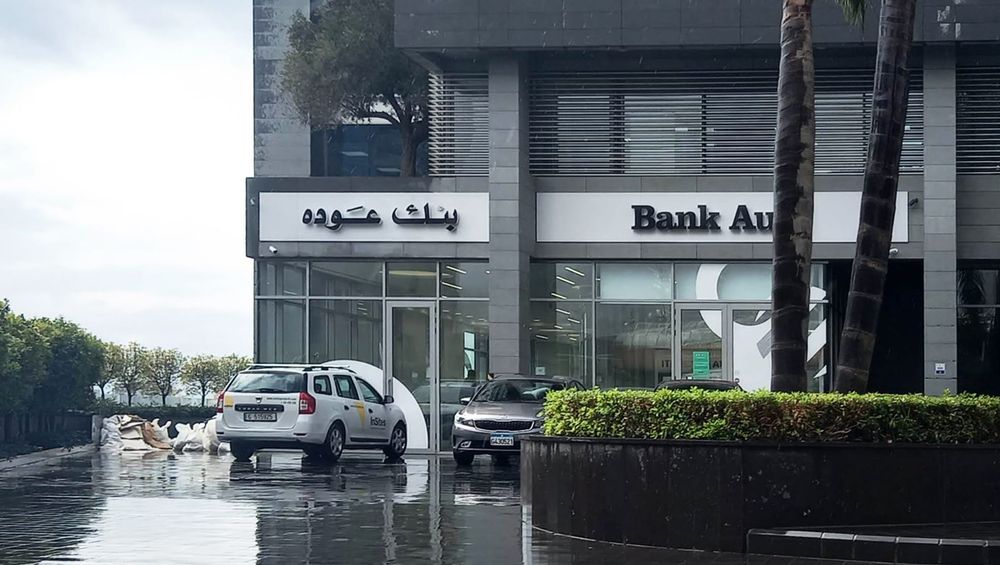
Bank Audi, in collaboration with Mastercard, announced on Wednesday a programme designed to bring 10,000 Lebanese entrepreneurs and small business owners into the formal digital economy through free banking and card services. Under the arrangement, disclosed in Beirut on 9 September, Bank Audi will provide 10,000 eligible businesses with free bank accounts and Mastercard business debit cards, delivered through its digital banking unit, neo Business. The package also includes multi-currency banking services and a simplified digital onboarding process built for smaller enterprises. Mastercard's contribution centres on digital acceptance solutions, merchant education and training programmes, and awareness campaigns intended to accelerate the adoption of digital payments among Lebanese merchants.
The programme follows a separate collaboration between Mastercard and Banque du Liban, announced days earlier, aimed at accelerating digital payment acceptance across Lebanon with a particular focus on small and medium-sized enterprises and women entrepreneurs. Both agreements point to a coordinated effort by the payments network and Lebanese institutions to rebuild transactional infrastructure in an economy that has operated heavily on cash since the banking crisis that began in 2019. Bank Audi launched neo by Bank Audi in 2024 as the country's first digital bank, a move the group described as a new chapter in its digital transformation. The latest initiative extends that platform from retail customers to the business segment.
WHAT THE PROGRAMME PROVIDES
Beyond the account and card offer, neo Business will make available payment and collection tools, multi-currency accounts, supply chain financing and transaction banking services to participating firms. That combination addresses two structural constraints facing Lebanese small businesses: the difficulty of accepting non-cash payments and the operational burden of managing revenues across multiple currencies. The multi-currency element is material in a market where businesses routinely price and settle in both Lebanese pounds and US dollars. Digital onboarding is intended to remove the branch-visit requirement that has historically slowed account opening for micro-enterprises.
Hassan Saleh, chief executive of neo by Bank Audi, said the bank was committed to empowering Lebanon's entrepreneurs and small businesses "with accessible financial solutions that help them grow and compete in an increasingly digital economy," adding that the collaboration would enable participating firms "to better manage their operations, strengthen their competitiveness, and contribute to Lebanon's economic growth." Mohamed Assem, Mastercard's country manager for Egypt, Lebanon and Iraq, said small businesses are "the backbone of every thriving economy" and that expanding access to digital financial services and acceptance solutions would create more opportunities for Lebanese entrepreneurs to participate in the digital economy. Neither institution disclosed a financial value for the programme or a timeline for enrolling the 10,000 businesses.
CONTEXT FOR LEBANON'S PAYMENTS MARKET
The initiative targets micro, small and women-led businesses, a segment that has borne much of the cost of Lebanon's prolonged financial dislocation. Bank Audi remains one of the country's largest banking groups, with operations in Switzerland, France, Saudi Arabia and Qatar alongside its Lebanese franchise and a representative office in Abu Dhabi. Its willingness to commit balance-sheet capacity and free-of-charge products to the SME segment signals a calculated bet that transaction volumes and deposit relationships built now will support fee income as the domestic economy normalises. For Mastercard, the programme fits a broader emerging-markets acceptance strategy that has included a separate risk-sharing facility with the International Finance Corporation announced this week.
The measure of the programme will be conversion rather than announcement: how many of the 10,000 targeted businesses complete onboarding, activate card acceptance and sustain digital transaction volumes. Lebanon's cash dependence reflects depositor distrust accumulated over years of capital controls and haircuts, and a free account paired with a debit card does not by itself resolve that. Executives at both institutions will also be watched on whether the supply chain financing and transaction banking components are extended at scale or remain limited to a subset of qualifying firms. No further disclosure schedule was provided.