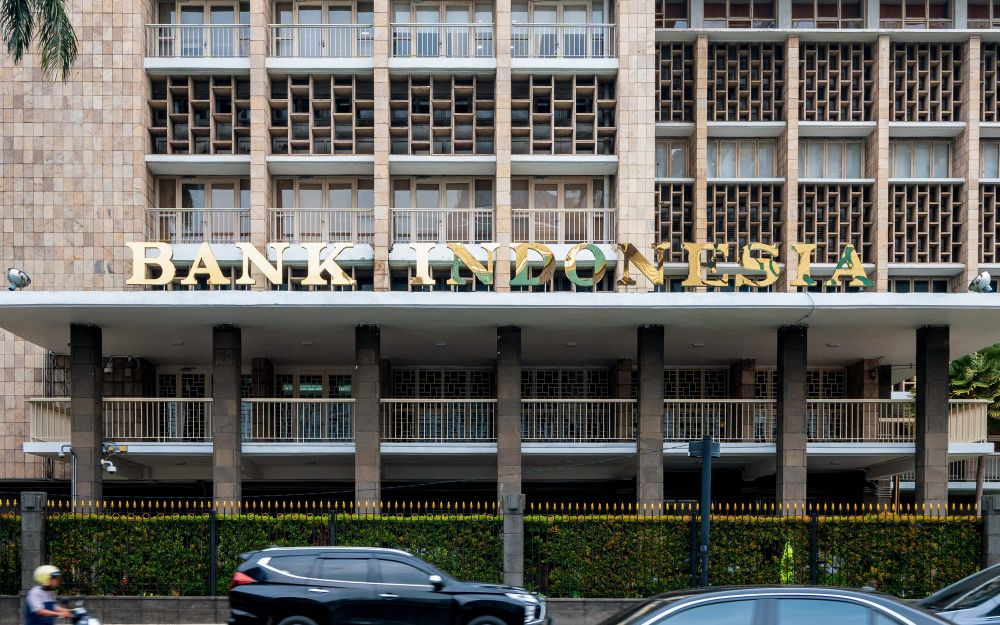
Bank Indonesia held its benchmark seven-day reverse repurchase rate at 5.75% on 23 September, its first policy meeting under Governor Destry Damayanti. The overnight deposit facility rate remained at 4.75%, while the lending facility rate stayed at 6.50%. The decision matched the forecast of 29 of 32 economists surveyed by Reuters. The central bank also expanded discounts on hedging costs for foreign investors buying rupiah-denominated assets.
The central bank had raised rates by a cumulative 100 basis points in three moves during May and June as the rupiah fell to record lows against the dollar. Damayanti said those increases were sufficient to address global uncertainty, while policy still needed to support domestic growth. Bank Indonesia retained its 2026 growth forecast of 4.9% to 5.7%. Annual inflation reached 3.19% in August, within the official 1.5% to 3.5% target range.
CURRENCY SUPPORT WITHOUT ANOTHER RATE INCREASE
The larger hedging discounts are intended to reduce foreign investors’ currency-protection costs and encourage capital inflows into rupiah assets. That measure adds to Bank Indonesia’s policy mix for defending the currency without raising borrowing costs across the economy. Reuters reported that the rupiah had recovered from June’s lows but weakened again in recent weeks as investors focused on fiscal risks and higher oil prices.
The hold also preserved room for the central bank to support activity after rapid tightening earlier in the year. Damayanti said stability remained the immediate focus, while the economy required space to sustain momentum. Bank Indonesia’s unchanged growth range and targeted hedging support indicate that officials are seeking to separate currency management from the broader interest-rate setting where possible.
MARKETS WATCH RUPIAH PRESSURE
Economists remain divided over whether the rate can stay at 5.75% through year-end. A Bank Permata economist cited by Reuters expected another 25-basis-point increase in the fourth quarter, while Barclays retained a forecast for no change through 2026 and 2027 if rupiah pressure does not intensify. The differing views leave exchange-rate conditions and capital flows central to the next policy assessment.
Bank Indonesia’s next decision will test whether the enlarged hedging incentive attracts sufficient inflows while inflation remains inside target. A renewed rupiah decline or stronger imported-price pressure would narrow the central bank’s room to support growth without another increase. Markets will therefore watch currency performance, foreign demand for local assets and the October policy meeting for evidence that the September balance can be maintained.