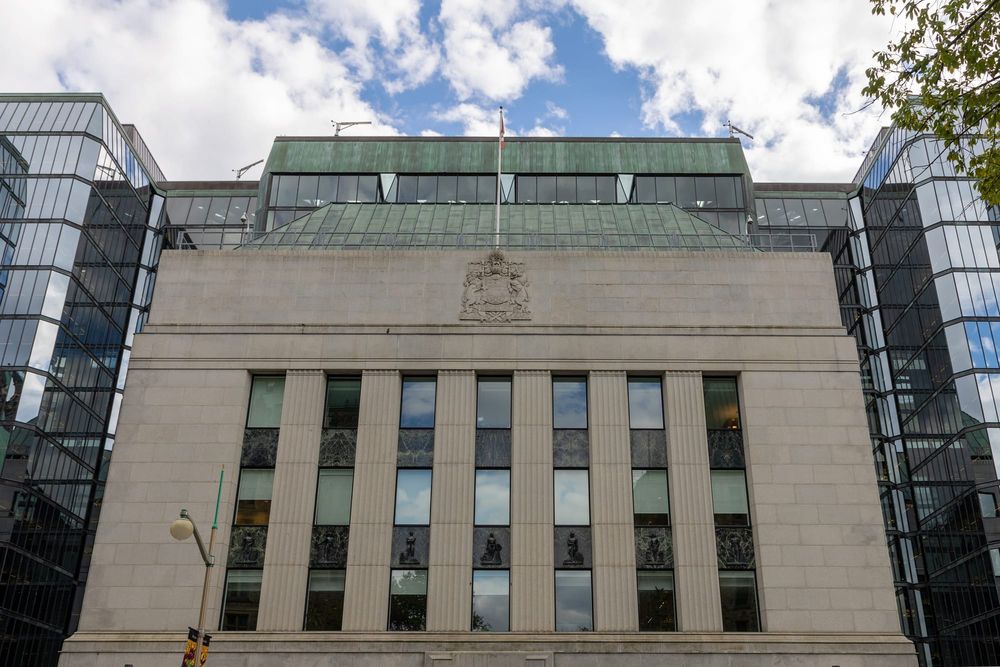
The Bank of Canada held its overnight rate target at 2.25% on Wednesday, keeping the Bank Rate at 2.5% and the deposit rate at 2.20%, but paired the decision with an unusually direct warning that consecutive rate increases could be needed if oil-driven inflation persists.
Governor Tiff Macklem told reporters after the decision that the Governing Council was prepared to act if higher energy prices fed through into broader inflation, warning specifically that consecutive rate hikes were possible if energy prices stayed high. His comments signalled that the current pause should not be read as a return to a rate-cutting bias.
INFLATION SPIKE ON THE HORIZON
According to the Bank's projections, inflation is expected to spike near 3% in the coming quarters before easing back to the 2% target by early 2027. The Bank attributes much of that spike to the pass-through of higher global oil prices to Canadian consumers, following geopolitical tensions in the Middle East. Managing that path without allowing inflation expectations to drift higher is the central challenge for policymakers over the coming meetings.
The Bank projected 2026 GDP growth at 1.2% and said the unemployment rate would remain in a range of 6.5% to 7%. The combination of subdued growth and elevated inflation places the Governing Council in a difficult position, with the risk of policy error running in both directions. Cutting too soon risks a further leg up in inflation if the energy shock persists; holding for too long risks reinforcing the slowdown in an economy already operating with meaningful slack.
Mr Macklem's warning that consecutive rate hikes could be required if energy prices stay high represents a shift in tone for a central bank that has spent much of the past year focused on the risks to growth. It brings the Bank of Canada closer to the language used by peers such as the Bank of England, which has also flagged energy-driven inflation risks in its recent communications.
MACKLEM STRIKES HAWKISH TONE
The Governor emphasised that the Bank would not tolerate a de-anchoring of inflation expectations, particularly given the recent history of above-target price growth in Canada. Officials have been at pains to distinguish between temporary energy-driven price rises and more persistent underlying inflation, and Wednesday's communications leaned heavily on that distinction. With unemployment projected to stay in the 6.5% to 7% range, the Bank is operating with meaningful slack in the labour market, which it argues should help to contain second-round effects even if the headline inflation rate rises further in the near term.
The decision to hold at 2.25% had been largely anticipated in financial markets, but the hawkish framing of the accompanying communications is likely to lead investors to reassess the timing of any future policy moves. The Bank did not provide explicit forward guidance on the next decision beyond its data-dependent framework, though the reference to the possibility of consecutive hikes is a clear steer that the bar for further tightening has been lowered.
Analysts will focus on subsequent inflation and labour market prints for evidence on whether the projected inflation spike is materialising and, if so, whether it is spreading beyond energy-related components into services and wages. The next Monetary Policy Report and the Governor's accompanying press conference will provide the Committee with the opportunity to elaborate on its reaction function in more detail, and to explain how it intends to balance the projected inflation spike near 3% against the projected return to the 2% target by early 2027 without triggering an undue slowdown in activity.