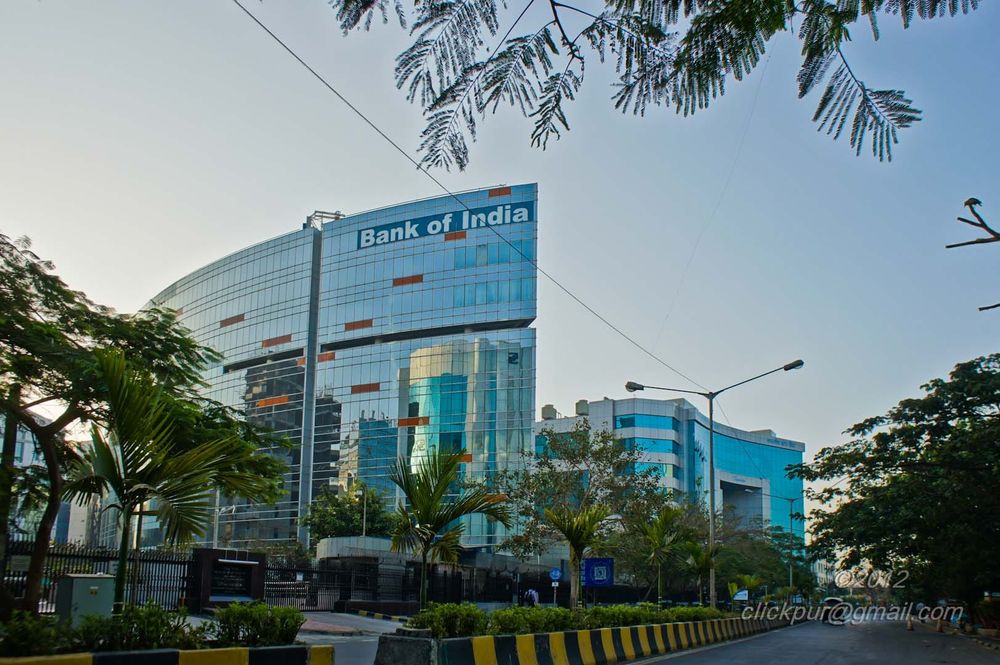
Bank of India set up a specialised branch at Nariman Point in Mumbai to strengthen its partnership-led lending ecosystem, with a mandate covering pool buyouts, co-lending, TReDS and supply chain finance.
BRANCH FOCUS
The new unit was created to centralise work on arrangements that link banks with non-bank lenders, trade platforms and corporate supply chains, operations that the bank identified as part of a broader push into partnership-led lending. The branch will handle pool buyouts, co-lending arrangements, onboarding to TReDS platforms and structured supply chain finance solutions, according to the report.
Pool buyouts refer to transactions in which a bank purchases a portfolio of loans or receivables originated by other lenders, while co-lending typically involves a formal arrangement between a bank and a non-bank lender to share credit exposure on individual loans. TReDS is a marketplace for discounting trade receivables that connects buyers, sellers and financiers. Supply chain finance covers arrangements that accelerate supplier payments through financial intermediation, often coordinated with corporate buyers.
STRATEGIC CONTEXT
The move aligned with a growing emphasis across India on collaborative lending models that expand credit distribution without requiring banks to build out origination networks from scratch. By concentrating partnership activities in a dedicated branch, the bank aimed to streamline credit assessment protocols, standardise documentation and provide a single point of contact for ecosystem partners.
Partnership-led models have attracted interest from banks and non-bank financial companies because they offer a way to broaden lending reach, in particular to micro, small and medium enterprises and to niche borrower segments. Structuring such partnerships typically requires specialised underwriting, operational integration and monitoring frameworks, and the branch will act as an internal centre of expertise for those functions.
The decision to place the unit at Nariman Point, a central Mumbai financial district, signalled an intention to be close to corporate clients, fintech hubs and trade platforms. Centralisation in a financial centre can facilitate faster coordination with external partners and with internal credit, risk and compliance teams, while also supporting the technical onboarding required for platforms such as TReDS.
MARKET IMPLICATIONS
The establishment of a dedicated branch for partnership-led lending could affect market behaviour in several ways. For counterparties, a single institutional point of contact may reduce transaction friction and make it easier to scale co-lending and buyout transactions. For originators and invoice sellers, clearer bank processes for TReDS and supply chain finance may lower execution risk and shorten cash-conversion cycles.
For the bank, concentrating partnership workflows may improve oversight of credit exposures that arise from third-party origination, and may help standardise the documentation that underpins co-lending and buyout deals. Greater standardisation can reduce operational risk and speed up credit decisions, while also helping the bank allocate capital and provisions more consistently across partnership products.
Regulatory and compliance considerations remain central to partnership models. Transactions such as pool buyouts and co-lending raise questions about credit transfer, documentation and responsibility for recovery. Platforms for trade receivables operate under established frameworks and require participant onboarding and monitoring. A specialist branch can assist with ensuring consistency against regulatory expectations and internal governance policies.
Industry observers and market participants have increasingly tracked bank initiatives to build structured partnership capabilities, as lenders seek to extend market share without assuming all origination costs. The Bank of India move added to that trend by creating a physical and operational hub for partnership activity, and by signalling a prioritisation of transaction types that connect banks to broader trade and receivables finance ecosystems.
Sources: The Hindu Business Line Banking