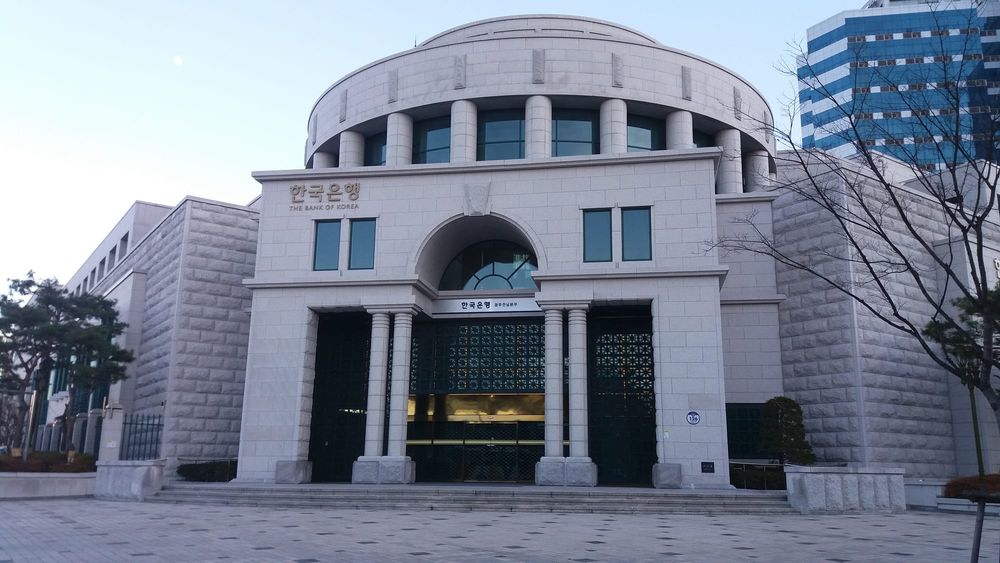
The Bank of Korea raised its Base Rate by 25 basis points to 3.00% on Thursday, delivering the country's second consecutive rate hike and citing mounting inflationary pressure. The move takes the policy rate to its highest level since January 2025 and marks the first back-to-back increases from the central bank since early 2023.
The Monetary Policy Board's decision, announced in the Bank of Korea's release, lifts the benchmark from 2.75% and represents a clear pivot to a firmer stance on inflation. Two successive hikes in short order underline the perceived urgency around emerging price pressures, in an economy that has historically been sensitive to imported cost dynamics and currency movements.
CONSECUTIVE HIKES SIGNAL RESOLVE
The back-to-back rate rises are the first from the central bank since early 2023, ending a prolonged period during which the Board had been either on hold or gradually easing policy. The pattern conveys a clear signal that policymakers judge the inflation risk profile has shifted sufficiently to warrant a more forceful response than a single, isolated adjustment.
The 25 basis point move is the standard incremental step used by most major central banks and provides a measured pace of tightening while preserving flexibility for further action. Cumulatively, the two hikes have added 50 basis points to the base rate, materially altering the calibration of financial conditions across Korea's banking, mortgage and corporate credit markets.
HIGHEST SINCE JANUARY 2025
At 3.00%, the Base Rate now stands at its highest level since January 2025. Korean policy rate history spans a wide range over the past several years as the Board has navigated the pandemic-era recovery, the global inflation surge and subsequent easing cycles. The return to the 3.00% level reasserts a restrictive posture.
The central bank cited mounting inflationary pressure as a driver of the decision. Korea's inflation dynamics reflect a combination of domestic services costs, energy imports and the pass-through effects of exchange rate movements, all of which figure prominently in the Board's assessment of the appropriate policy path.
The decision will be watched closely by financial institutions and borrowers across Korea, with tighter policy typically feeding through to higher household debt servicing costs in an economy where mortgages and consumer credit are a significant share of household balance sheets. The Bank of Korea's next meeting will provide the next scheduled opportunity for the Board to reassess whether further action is warranted. Korean commercial banks will begin to reflect the higher base rate in their internal cost of funds and, over time, in the pricing offered to retail and corporate customers. Mortgage borrowers on floating rate structures will feel the effect most immediately, while fixed rate segments will reprice as new originations are agreed at prevailing market yields. The move also has implications for the currency and cross-border capital flows, in a region where relative policy rate settings help shape investor allocation decisions across major Asian bond and equity markets. With the base rate now at 3.00% and inflationary pressure cited as the driver of successive hikes, the Board's communications at coming meetings will be closely parsed for signals about whether the current pace of tightening will be maintained, extended or paused.