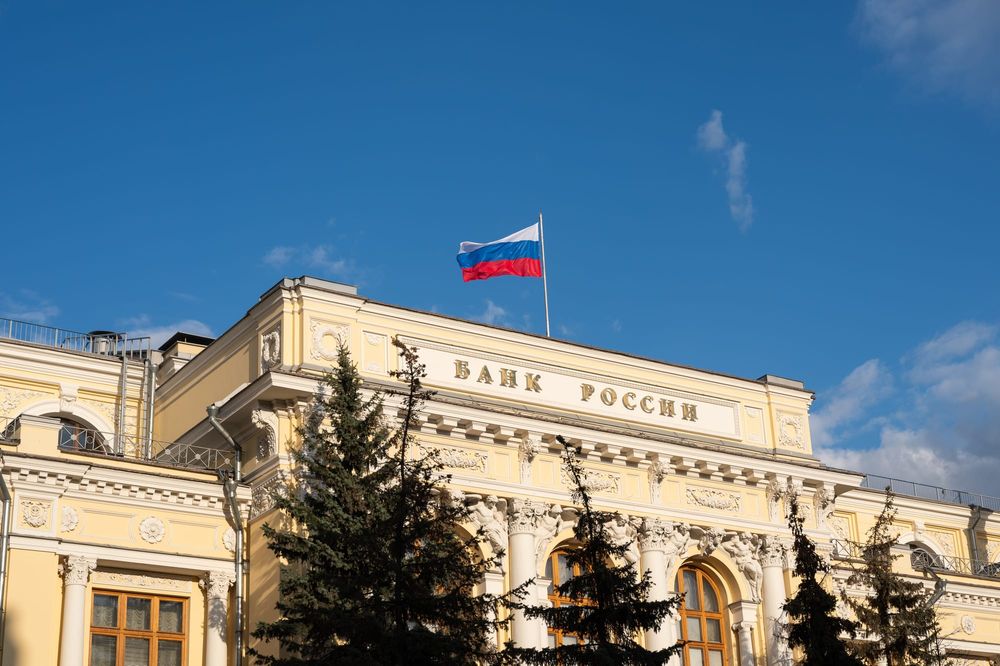
Bank of Russia kept its benchmark interest rate unchanged at 14%, pausing a prolonged easing cycle as renewed inflation pressure and supply disruptions complicated the outlook for an economy expected to record little growth this year.
The decision followed a series of rate reductions from a peak reached in 2025 and was in line with economists’ expectations. The central bank said current price pressures had increased significantly in recent months while the economy continued to expand at a moderate pace during the third quarter.
Russia’s economy is expected to grow only slightly above zero in 2026 as high borrowing costs, sanctions, currency dynamics and the economic consequences of the war in Ukraine weigh on activity. Businesses have pushed for lower rates, arguing that investment remains difficult while borrowing costs remain elevated.
INFLATION COMPLICATES FURTHER EASING
Inflation has re-emerged as the immediate constraint on monetary policy. Disruption to refinery capacity has contributed to fuel shortages and higher prices, feeding into transportation costs and broader inflation. The central bank has also pointed to temporary reductions in production capacity in some sectors as a factor behind stronger price pressures.
Annual inflation remains above the central bank’s 4% target. Higher global oil prices add another layer of complexity. They can support Russia’s fiscal position as a major energy exporter, but sustained increases can also contribute to global inflation and complicate domestic price dynamics.
WHY IT MATTERS
The decision demonstrates the increasingly difficult trade-off facing central banks operating in economies exposed to geopolitical and supply-side shocks. Russia needs lower borrowing costs to support investment and growth, but renewed inflation limits the speed at which monetary policy can be relaxed.
That tension is not unique to Russia. Energy prices and supply disruptions are once again influencing monetary decisions across major economies, forcing central banks to distinguish between temporary price shocks and inflation that could become embedded in expectations.
For the Bank of Russia, the next phase of policy will depend on whether current price pressures subside sufficiently to allow the easing cycle to resume. Until then, the 14% rate represents a compromise between an economy requiring support and an inflation outlook that remains too uncertain for aggressive monetary easing.