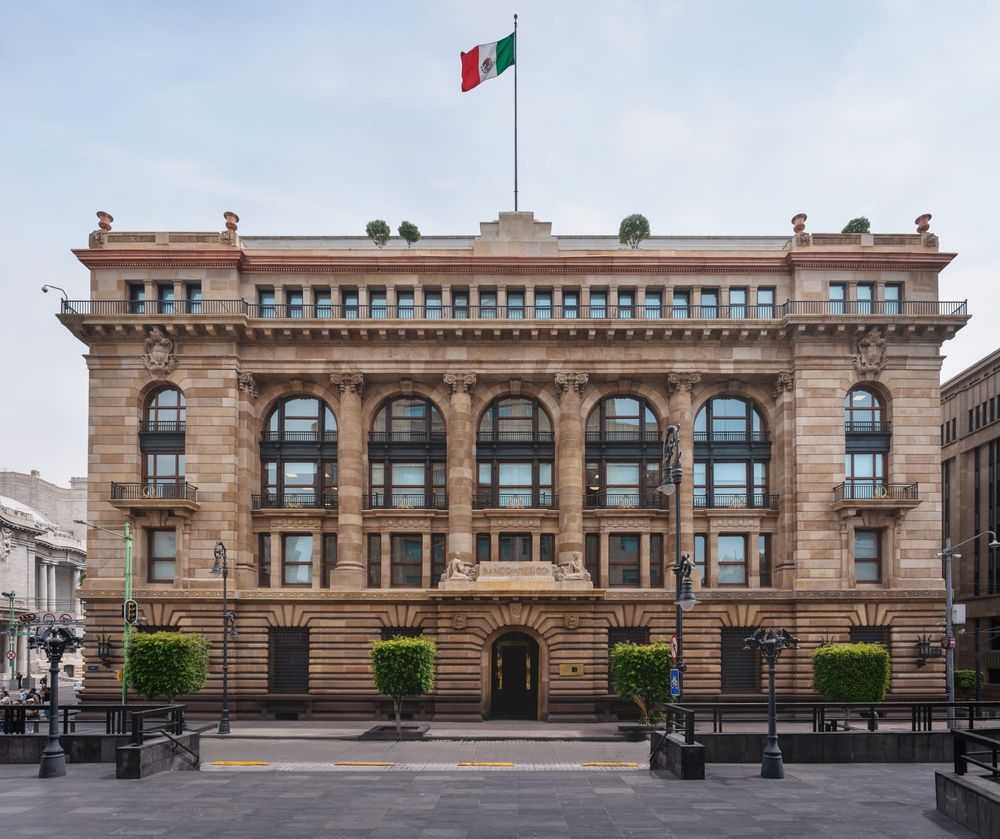
Banco de México published its Financial Stability Report for December 2025, with a dedicated section examining the transition risks associated with the global shift towards a low-carbon economy and their implications for Mexico's financial system. Released on 10 December 2025, the report identified regulatory change, technological disruption and market repricing as the principal channels through which the energy transition could affect the stability of Mexican financial institutions and the wider credit system they support across the domestic economy.
Transition risk — the financial exposure arising not from the physical effects of climate change but from the policy and market responses to it — has risen steadily on the agenda of central banks and financial supervisors worldwide. Banxico's decision to feature the topic prominently in its stability report signals that Mexican policymakers regard it as a material consideration for the domestic financial sector, particularly given the country's significant economic exposure to sectors that could face substantial adjustment costs as low-carbon policies tighten globally.
TWO GROUPS OF SECTORS FACE CARBON EXPOSURE
The report drew a distinction between two groups of sectors vulnerable to transition dynamics. Group 1 consists of directly high-emission sectors whose own operations generate substantial greenhouse gas output and which therefore face the most immediate exposure to carbon pricing, regulatory requirements and potential stranded-asset risk. Group 2 encompasses sectors that are indirectly exposed because they rely on high-emission inputs — energy-intensive raw materials or carbon-heavy logistics — and which could face cost pressures and demand shifts as the transition accelerates across value chains.
By mapping Mexican financial institutions' lending and investment exposures against both groups, Banxico is seeking to quantify where credit risk concentration may build if the transition unfolds faster than businesses in these sectors can adapt their operations and capital structures. The analytical approach reflects the methodology increasingly adopted by central banks in Europe and North America, using scenario analysis to assess the vulnerability of loan portfolios and securities holdings to a range of carbon transition pathways.
SYSTEMIC IMPORTANCE DESIGNATIONS ALSO UPDATED
Separately, the December report recorded that the CNBV, Mexico's banking and securities regulator, had designated Banco Citi Mexico as a Domestic Systemically Important Bank in April 2025. The DSIB designation carries enhanced regulatory requirements, including additional capital buffers, intended to reduce the probability and impact of distress at institutions whose failure could cause disproportionate disruption to the financial system. The designation adds Banco Citi Mexico to the list of institutions subject to heightened supervisory oversight under the Mexican DSIB framework.
The combination of the transition risk analysis and the updated DSIB designation illustrates the broad range of structural and supervisory considerations that Banxico is tracking as Mexico's financial landscape evolves. For the banking sector, the implications of the low-carbon transition are likely to become more concrete as international trade partners and investors apply increasing scrutiny to the carbon intensity of supply chains and the climate-related exposures embedded in financial portfolios. Banks with concentrated lending to high-emission industries will need to monitor how transition timelines and regulatory frameworks develop in Mexico's principal export markets in the years immediately ahead.