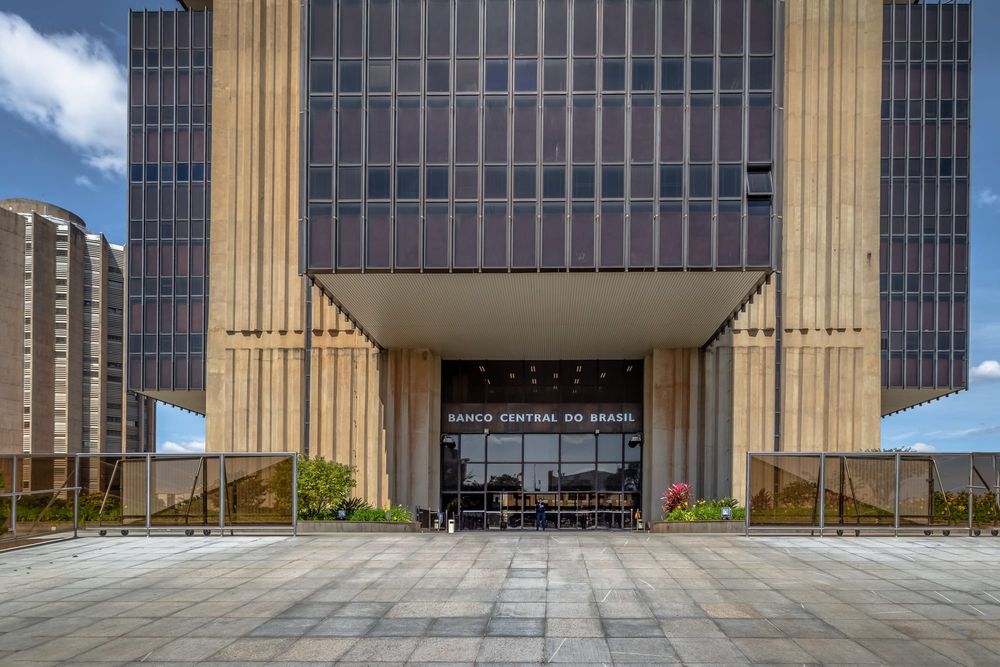
Brazil's Central Bank and the National Monetary Council jointly issued Resolution No. 14 on 3 November 2025, establishing new minimum capital requirements for payment institutions operating in the country. The regulation introduces a tiered structure that links the required capital floor directly to the category of activities each institution is authorised to carry out, replacing the amounts previously set out in BCB Resolution 80 with an updated framework designed to reflect the maturity and complexity of Brazil's payments market.
The joint resolution represents a recalibration of the prudential baseline for payment institutions at a time when the sector has expanded substantially, driven by the widespread adoption of PIX — the central bank's instant payment infrastructure — and a growing population of fintech entrants competing with incumbents across retail, corporate, and cross-border payment segments. The new requirements are intended to ensure that capital buffers remain proportionate to the activities each institution undertakes and the associated operational and financial risks.
TIERED FLOORS REFLECT ACTIVITY RISK LEVELS
Under the new framework, institutions that provide services only, without intermediating funds or extending credit to clients, are required to hold a minimum of R$1 million in capital. Institutions engaged in intermediation activities — where client funds pass through the institution's own accounts — face a higher floor of R$5 million, whilst those conducting granting activities, such as extending credit lines or post-paid facilities to payment account holders, must maintain at least R$7 million.
A separate threshold of R$5 million applies to institutions whose business models are substantially dependent on technology infrastructure, recognising that operational and cyber risks in that category are comparable in magnitude to those faced by intermediaries. The tiered architecture avoids the shortcomings of a single uniform requirement, which could either leave higher-risk entities under-capitalised or impose disproportionate burdens on smaller, lower-risk service-only providers that make up a significant portion of the registered payment institution population.
The resolution forms part of a broader regulatory update to Brazil's payments ecosystem. BCB Rule 495/2025, published around the same time, addresses related aspects of payment institution governance and operational requirements. Taken together, the two instruments signal that the Banco Central do Brasil intends to strengthen prudential and organisational standards as the sector matures and systemic interdependencies between payment institutions and the broader financial system deepen.
COMPLIANCE AND MARKET ENTRY IMPLICATIONS
Institutions already licensed under the prior framework will need to assess their current capital positions against the new floors and undertake any necessary remediation before the applicable compliance deadline. The regulation does not alter the licensing categories themselves but recalibrates the financial resources that must underpin authorised activities, which may require some smaller institutions to seek additional capital from shareholders or external investors.
For international payment groups seeking authorisation in Brazil, the updated minimums provide a clearer picture of the capital commitments required before market entry. Several global fintech firms have been pursuing Brazilian licences, drawn by the scale of the domestic market and the interoperability of PIX rails with cross-border payment corridors. The tiered structure means that a firm seeking only to offer technology-dependent services faces a R$5 million requirement, whilst one wishing to offer credit-linked payment products must be prepared to hold R$7 million.
The joint resolution approach, combining the BCB's operational remit over the payments system with the CMN's overarching monetary and financial policy authority, gives the new requirements a robust legal foundation and reduces the risk of procedural challenge by affected institutions. The publication on 3 November also aligns the update with concurrent licensing activity in the market, where new entrants including international fintechs have been active in obtaining authorisations under Brazil's evolving payment institution framework.