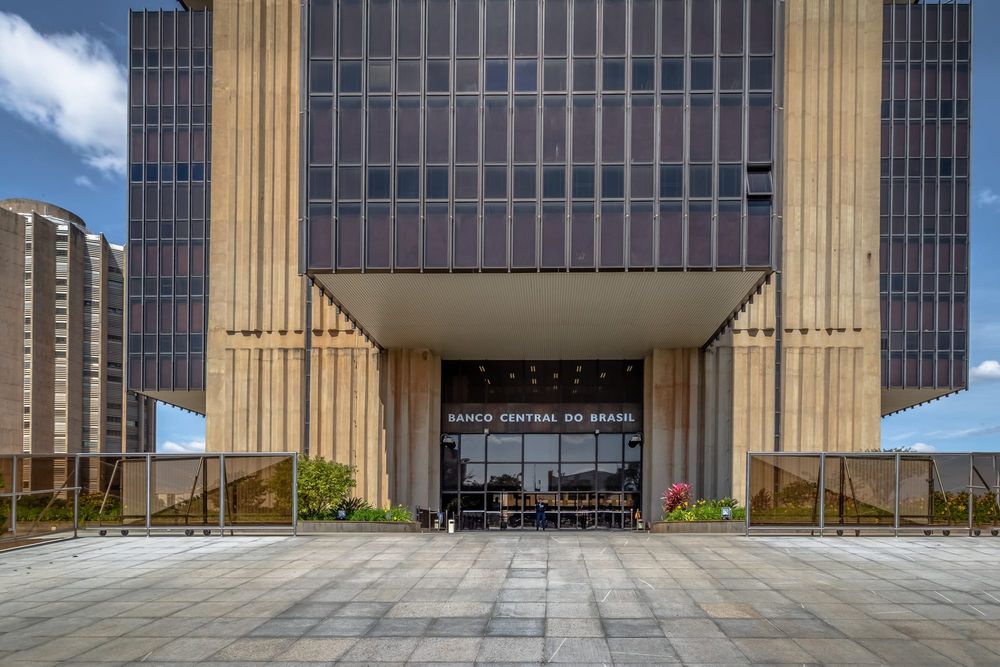
Banco Central do Brasil decreed the extrajudicial liquidation of Trustee Distribuidora de Títulos e Valores Mobiliários Ltda. and Banvox Distribuidora de Títulos e Valores Mobiliários Ltda. on Thursday, 3 September 2026, ordering both São Paulo-based securities distributors to cease operations immediately. The regulator said the measure was motivated by "the existence of grave violations of the legal norms that govern the activities of the institutions," without specifying which rules were breached. The act was signed by the central bank's director of supervision, Ailton de Aquino. Marilena Simões Valentim was appointed liquidator of both firms, assuming control from their existing management. Under the terms of the governing legislation, the assets of the controllers and former administrators of both institutions became unavailable from Thursday.
The action extends a supervisory campaign that began with the collapse of Banco Master, the multiple bank liquidated by the central bank in November 2025 after the arrest of its founder, Daniel Vorcaro. Trustee and Banvox are controlled by Maurício Quadrado, a former partner of Vorcaro at Banco Master who left the institution in 2024 and retained his securities firms under a separate corporate structure. Both distributors had already surfaced in Operação Carbono Oculto, the federal police investigation launched in August 2025 into alleged money laundering by organised crime through fuel distribution and investment fund structures. Quadrado was targeted by search and seizure orders during the second phase of the related Compliance Zero operation. The central bank said it would continue pursuing all applicable measures to establish responsibility, with findings potentially leading to administrative sanctions and referrals to other competent authorities.
LIMITED SYSTEMIC FOOTPRINT
The central bank emphasised the marginal weight of both institutions within the Brazilian financial system. As of July 2026, Trustee and Banvox jointly represented less than 0.001% of the total adjusted assets of the Sistema Financeiro Nacional and 0.76% of the volume of third-party asset administration. Both distributors belong to a prudential conglomerate classified in the S4 segment, one of the smallest tiers under Brazil's prudential regulation framework. On that basis the regulator stated the liquidation posed no relevant risk to the stability of the national financial system.
Fund volumes administered by the two firms had been contracting sharply well ahead of Thursday's decision. Together they held 86.7 billion reais under fund administration in July 2025, a figure that fell by almost 65% over the following twelve months, according to Anbima data. Trustee alone administered 66.9 billion reais in July 2025, declining to 23.2 billion reais by the end of July 2026, while Banvox fell from 19.8 billion reais to 7.5 billion reais over the same period. The drawdown followed the appearance of both names in the Carbono Oculto investigation and the enforcement action against their controller.
INVESTOR EXPOSURE AND NEXT STEPS
Market practitioners characterised the intervention as materially different from the Banco Master resolution. Luiz Felipe Terra Favieri, partner and director at LAD Capital responsible for risk and compliance, noted that Master was a multiple bank that raised debt and distributed certificates of deposit to retail investors through platforms, whereas Trustee and Banvox provide financial services to the market itself, making the impact on individuals smaller. Because the legal personality of investment funds is distinct from that of their essential service providers, transferring portfolios to other administrators is in principle relatively straightforward, with unitholders owning the underlying assets and able to appoint a replacement administrator by assembly. Favieri cautioned that under the special regime there may be delays until the liquidator establishes control of the situation.
Extrajudicial liquidation allows the central bank to wind down a supervised institution without prior judicial authorisation, a regime that can run for years before closure. Outstanding obligations are frozen at the outset, and the securities distributors carry no coverage from Brazil's deposit guarantee fund, which does not extend to their clients. Attention now turns to the pace at which the liquidator can facilitate portfolio transfers, and to whether the central bank's findings result in administrative penalties or criminal referrals as the wider Carbono Oculto proceedings advance. Neither company had issued a detailed public position on the decision at the time of the central bank's announcement, though the firms have denied irregularities and said the decision came as a surprise.