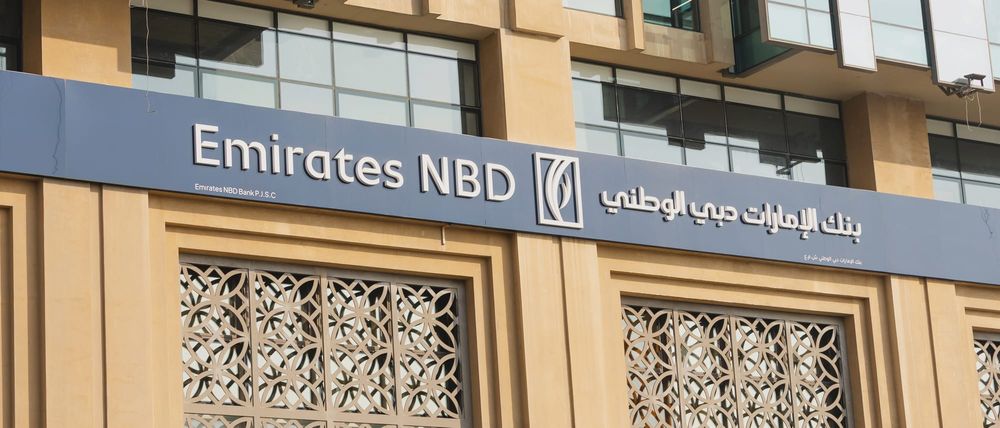
Emirates NBD completed a landmark sustainable bond transaction on 8 January 2026, issuing a USD 1 billion dual-tranche instrument comprising a USD 300 million blue tranche with a three-year tenor and a USD 700 million green tranche with a five-year tenor. The transaction is the first time any financial institution globally has issued a dual-tranche blue-green bond in a single transaction, establishing a new structural benchmark in the sustainable finance market and reinforcing Dubai's ambition to be a leading centre for ESG capital markets activity in the Middle East.
The deal also represents the largest blue bond ever issued in the UAE and across the Gulf Cooperation Council, a record that underlines Emirates NBD's intent to lead sustainable finance innovation in its home market. The bond was issued under the bank's updated Sustainable Finance Framework, which was revised in November 2025, and falls within its established Euro Medium Term Note Programme, providing investors with the legal and structural familiarity they expect from investment-grade financial institution issuers.
BLUE AND GREEN TRANCHES SERVE DISTINCT PURPOSES
The structural distinction between the blue and green tranches reflects a deliberate decision by Emirates NBD to direct capital to two different but complementary categories of sustainable activity within a single instrument. Green bonds fund projects with broadly defined environmental benefits, typically encompassing renewable energy generation, energy efficiency upgrades, clean transportation infrastructure, sustainable real estate, and pollution prevention. Blue bonds are a more specialised category, dedicated specifically to ocean-related and water-related projects, including sustainable fisheries management, marine ecosystem conservation, coastal resilience infrastructure, and sustainable water treatment and management.
The three-year tenor on the blue tranche and the five-year tenor on the green tranche are consistent with market conventions for instruments of their respective types and give investors a choice of duration exposure within the single transaction. The combined USD 1 billion issue size is large enough to attract the participation of major institutional investors, including sovereign wealth funds, asset managers, and insurance groups, that typically require a minimum size threshold before committing capital to individual bond issues.
By combining both instruments in a single transaction under one framework, Emirates NBD demonstrates the versatility of its updated Sustainable Finance Framework and signals a strategic commitment to addressing multiple dimensions of the environmental finance agenda simultaneously. The structural innovation positions the bank as a participant willing to push the boundaries of what Gulf-based financial institutions bring to the international sustainable bond market.
FRAMEWORK UPDATE AND GCC MARKET CONTEXT
The November 2025 revision to Emirates NBD's Sustainable Finance Framework was an essential precondition for this transaction, establishing the governance structures, use-of-proceeds definitions, project selection processes, and reporting commitments that institutional investors and ESG-focused analysts require before allocating capital to labelled sustainable bonds. Frameworks of this type are reviewed by independent second-party opinion providers and are increasingly subject to scrutiny from regulators and major investor groups concerned about greenwashing risk.
The GCC sustainable bond market has expanded considerably over recent years, supported by the region's stated net-zero ambitions, the financing requirements of large-scale clean energy projects, and growing demand from global institutional investors for ESG-labelled paper from creditworthy issuers in emerging and frontier markets. Emirates NBD's transaction adds to the body of evidence that UAE banking institutions can access international capital markets on competitive terms with credible sustainable finance instruments.
The bank has not specified the individual projects that will receive proceeds from the blue and green tranches at the point of issuance, which is standard practice for bonds issued under framework programmes. Allocation reporting will typically be published in the year following issuance once proceeds have been deployed to eligible projects identified under the framework's criteria, at which point investors and sustainability analysts can assess whether the stated environmental objectives have been achieved.