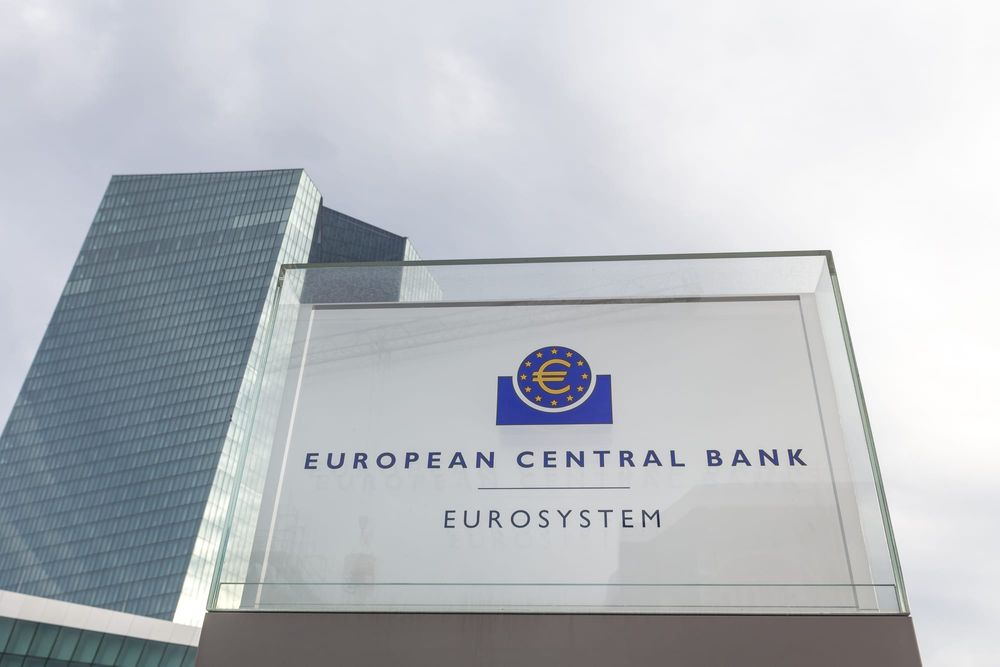
The European Central Bank raised its three key interest rates by 25 basis points on Thursday, its first increase in nearly three years, in response to renewed inflation pressures triggered by the conflict in Iran and its impact on energy markets. The Governing Council's decision was unanimous, and without reservation, President Christine Lagarde told reporters.
The deposit facility rate rises to 2.25 percent with effect from 17 June 2026, the main refinancing operations rate to 2.40 percent, and the marginal lending facility rate to 2.65 percent. The move ends the extended pause that had followed the ECB's earlier easing cycle and reasserts the Governing Council's readiness to act pre-emptively when inflation risks shift.
STAFF PROJECTIONS REVISED HIGHER
New Eurosystem staff projections accompanying the decision show HICP inflation averaging 3.0 percent in 2026, before easing to 2.3 percent in 2027 and 2.0 percent in 2028. The near-term profile has been marked up materially from the previous projection round, reflecting the energy-price shock associated with the conflict and its knock-on effects on transport and utility costs across the euro area.
By contrast, the 2028 projection sits precisely at the ECB's 2 percent symmetric medium-term target, and the 2027 figure is only modestly above it. That trajectory allowed the Governing Council to characterise the current tightening as an insurance move against second-round effects on wages and services prices, rather than a signal that inflation has become entrenched. Anchoring inflation expectations through decisive action has been a repeated theme in ECB communication.
BALANCE SHEET RUN-OFF CONTINUES
Alongside the rate decision, the Governing Council confirmed that the asset purchase programme and pandemic emergency purchase programme portfolios continue to decline at a measured pace, with the Eurosystem no longer reinvesting the principal payments from maturing securities. The passive run-off of the balance sheet supplements the tightening effect of the rate move and reduces the ECB's footprint in euro-area sovereign and corporate bond markets.
The unanimity of Thursday's decision is notable given the range of views typically expressed on the Governing Council, and reflects broad recognition of the risks posed by the energy shock at a time when core services inflation had not fully returned to target. The reference to the Iran conflict in the ECB's communication marks a rare explicit link between a geopolitical event and the immediate rate decision, and underscores the sensitivity of the euro-area energy bill to Middle East developments.
The full monetary policy statement and the accompanying press conference materials were published on the ECB website. The Governing Council's next monetary policy meeting is scheduled in the coming weeks, when the trajectory of energy prices and their pass-through to underlying inflation will be reassessed against fresh data on wages, services prices and inflation expectations across the euro area. Market participants had positioned for a hike ahead of the meeting, and attention now shifts to whether the Governing Council will characterise the move as a one-off insurance step or as the opening of a more sustained cycle should the energy shock persist. Euro-area sovereign yields and the trade-weighted exchange rate of the euro will be closely watched over the coming days as investors digest the projections and the tone of the accompanying press conference.