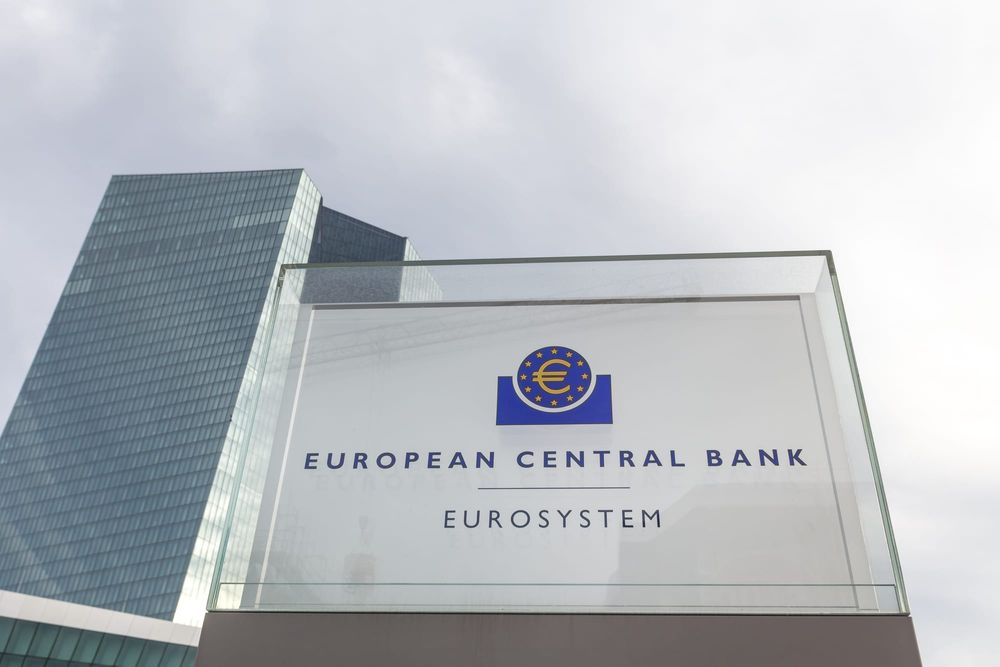
The European Central Bank has raised its three key interest rates by 25 basis points, lifting the deposit facility rate to 2.50% in the Governing Council's second hike of 2026. The move, announced on 10 September 2026, takes effect from 16 September as the ECB responds to a fresh oil-driven rise in inflation.
The main refinancing operations rate was increased to 2.65%, while the marginal lending facility rate rose to 2.90%. President Christine Lagarde described the decision as unanimous and characterised it as a 'no-brainer', according to the statement referenced on the ECB's press page.
INFLATION AND GROWTH FORECASTS
Alongside the rate decision, the ECB revised its inflation projections upwards, pointing to headline inflation of 3.0% for 2026 and 2.5% for 2027. The upgraded profile reflects the impact of the recent increase in oil prices on the outlook for consumer prices across the euro area.
The Governing Council also raised its 2026 growth projection to 0.9%, from 0.8% previously, indicating that activity in the euro area has held up marginally better than the ECB had assumed at its last round of forecasts. The combination of higher inflation and modestly stronger growth underpinned the case for tighter monetary policy.
The move marks the second rate hike of 2026, reversing part of the easing cycle that had brought policy rates down from previous peaks. By moving in 25 basis point increments, the Governing Council has kept the pace of tightening measured while signalling its willingness to act again if inflationary pressures prove more persistent.
With the deposit facility rate at 2.50%, the main refinancing rate at 2.65% and the marginal lending facility rate at 2.90%, the ECB has preserved the customary spreads across its three key rates. The parallel adjustment maintains the standing facility corridor that guides overnight money market rates.
UNANIMOUS DECISION
The unanimity of the vote, as characterised by Lagarde, sends a strong signal about the Governing Council's assessment of the risks facing the euro area. Members had been publicly divided in earlier phases of the cycle, and the description of the September decision as a 'no-brainer' underlines the extent to which the recent oil price surge shifted the calculus.
The Governing Council's statement, referenced on the ECB's website, framed the decision as necessary to prevent a broader passthrough of higher energy costs into services and core inflation. The revised 2027 inflation projection at 2.5% indicates the council does not yet see inflation returning cleanly to its 2% target within the projection horizon.
Market attention now turns to the ECB's communication about the future path of rates, with the deposit facility rate at 2.50% effective from 16 September. The Governing Council will reconvene at its next scheduled monetary policy meeting to reassess the outlook based on incoming data.
The revised projections, at 3.0% inflation for 2026 and 2.5% for 2027 alongside 0.9% growth for 2026, define the analytical backdrop against which the September move was calibrated. With Lagarde characterising the decision as unanimous, the Governing Council enters the final quarter of the year with a coherent public position on the balance of inflation and growth risks in the euro area.