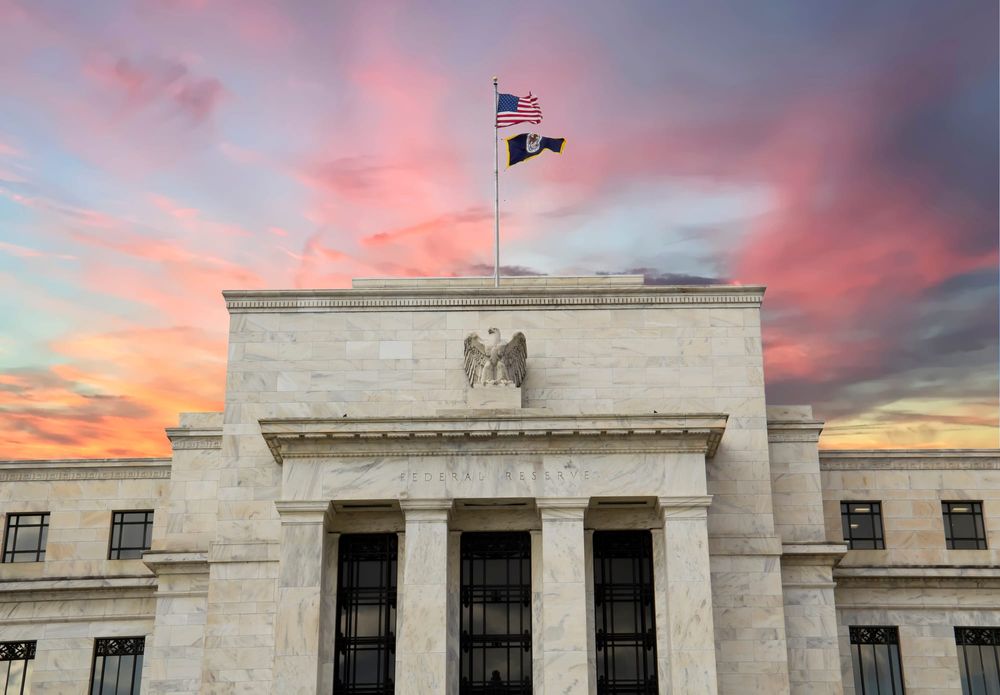
The Federal Open Market Committee voted to hold the federal funds rate at its target range of 3.50–3.75% at its April 2026 meeting, keeping policy unchanged as policymakers weighed elevated uncertainty from ongoing trade disputes and monitored potential energy price spillovers from tensions in the Middle East. Chair Jerome Powell, speaking after the decision, reiterated the Committee's data-dependent approach, emphasising that future adjustments — in either direction — would be conditioned on incoming economic evidence rather than any pre-set calendar path. The decision was widely anticipated in markets, which had priced a high probability of no change at the April meeting given the unresolved nature of the major risks the Fed has been tracking.
The decision to hold came against a backdrop in which trade war uncertainty had become a persistent and complicating feature of the economic outlook. With tariff levels shifting and their ultimate pass-through to consumer prices contested among economists and market participants, the Committee concluded that preserving optionality was more prudent than committing to a move whose implications remained unclear. Powell's communications after the meeting reflected that careful posture, offering no firm forward guidance on timing or magnitude of any future adjustment.
TRADE AND ENERGY RISKS DOMINATE DELIBERATIONS
Powell's post-meeting remarks placed particular weight on the Committee's monitoring of energy markets. The Fed is tracking potential spillovers from Middle East conflict to oil and gas prices, a concern with direct implications for headline inflation readings. Energy price shocks have historically complicated the task of returning inflation durably to target, and in a context where the Committee was already managing uncertainty from trade policy, an additional external shock through energy costs would further complicate the policy calculus. The Fed appeared unwilling to declare any premature victory on price stability while that channel remained live and uncertain.
Trade tensions contributed a second layer of complexity. Higher tariffs, if they prove sustained and broad-based, create a policy dilemma with no clean resolution through conventional rate adjustments: they can simultaneously lift prices — which would argue for tighter policy — while suppressing demand, which would argue for easing. The Committee's commitment to a data-dependent approach reflects, in meaningful part, the difficulty of pre-empting an outcome whose direction and magnitude remain contested. Waiting for clearer evidence before acting is not inaction; it is a deliberate strategy to avoid compounding economic uncertainty with unnecessary policy volatility.
WHAT COMES NEXT FOR US RATES
By reaffirming a data-dependent stance without providing explicit forward guidance, the Fed has kept all options open for subsequent meetings. Powell made clear that the Committee would assess economic conditions as they develop, preserving the ability to cut if growth or labour market data soften materially, or to hold — and if necessary tighten — if inflation proves stickier than current readings suggest. Markets will parse each data release between now and the next meeting for signals about which direction the balance of risks is tilting.
The April hold extends a period of policy stability that has allowed the Fed to observe how the economy absorbs the cumulative effect of the rate adjustments already made since the tightening cycle began. For businesses and consumers, the message from the April meeting is one of deliberate patience: the Fed is neither alarmed enough to act urgently in either direction nor sufficiently confident in the outlook to signal a clear next move. Until trade policy uncertainty resolves more definitively and the energy price picture becomes clearer, the Committee appears content to observe and retain maximum flexibility — a stance that may well persist through several further meetings depending on how those external variables evolve over the coming months.