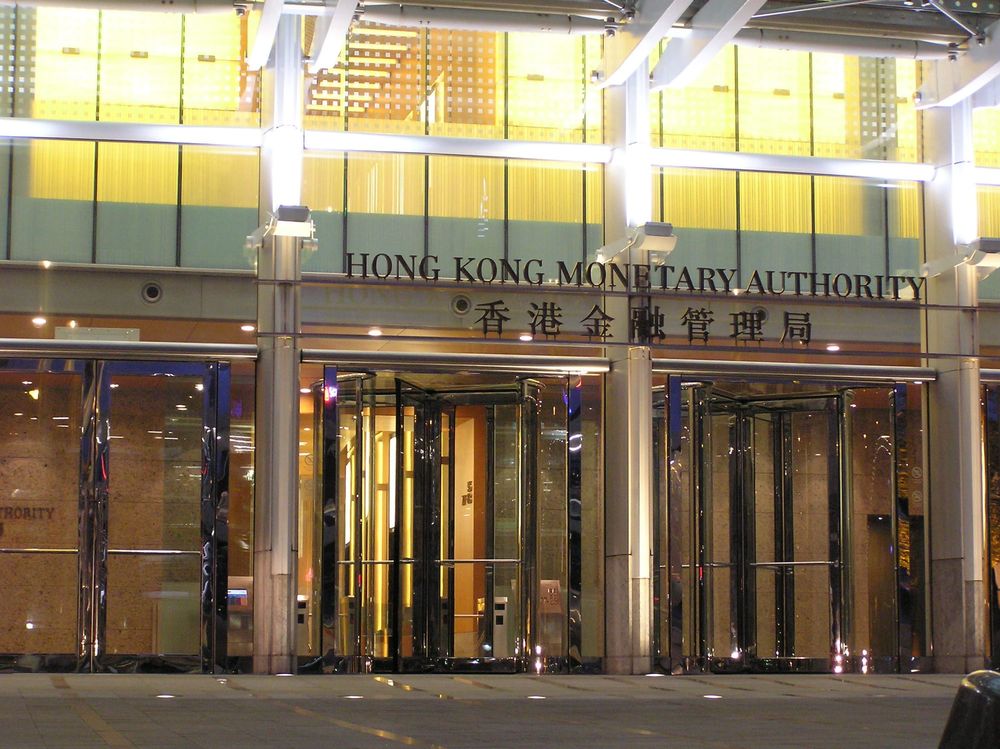
The Hong Kong Monetary Authority has released a Phase 2B prototype of the Hong Kong Taxonomy for Sustainable Finance for public consultation, extending the classification framework used by the city's banks and investors to identify green and transition activities. The prototype, published on 7 September 2026, adds ten new economic activities and eleven whitelist adaptation measures to the taxonomy.
The new economic activities span transportation, manufacturing and waste sectors, broadening the taxonomy's coverage of areas central to Hong Kong's decarbonisation trajectory. The eleven whitelist adaptation measures are aimed at supporting climate resilience, marking a formal expansion of the taxonomy beyond mitigation-only activities into adaptation.
BUILDING ON PHASE 1 AND 2A
Phase 2B builds on the first phase of the Hong Kong Taxonomy issued in January 2024 and on the Phase 2A consultation that preceded the latest release. The layered approach has allowed the authority to expand sectoral coverage in stages, giving banks, corporates and investors time to align data and disclosure practices with each new tranche of activities.
The prototype has been developed to remain aligned with the Common Ground Taxonomy and other international frameworks, an important consideration for a jurisdiction that intermediates cross-border capital flows into and out of the mainland Chinese market. Consistency with international taxonomies helps reduce the cost of interoperability for issuers and lenders active in multiple jurisdictions.
The transportation, manufacturing and waste sectors added under Phase 2B account for a substantial share of emissions in Hong Kong and the surrounding region, and their inclusion is a prerequisite for the taxonomy to serve as a practical tool for transition finance. The whitelist adaptation measures give financial institutions a clearer pathway to classify lending and investment supporting climate resilience projects.
Extending the taxonomy into adaptation is a notable step for a framework that had focused primarily on mitigation activities in its earlier phases. The eleven whitelist measures effectively pre-approve a defined set of climate resilience projects, providing certainty for banks and investors seeking to classify related exposures without repeating detailed case-by-case assessments.
SUPPORTING GREEN AND TRANSITION FINANCE
The HKMA said the Phase 2B prototype is intended to support the further development of green and transition finance in Hong Kong, part of the authority's broader strategy to position the city as an international sustainable finance hub. The consultation invites feedback from banks, asset managers, corporates and other market participants.
Green and transition finance has become an increasingly prominent theme in the Hong Kong market, with the government and market operators building out a suite of infrastructure spanning taxonomy, disclosure and product labelling. The expanded taxonomy is expected to reinforce data quality for sustainability-linked products and to support consistent supervisory expectations on climate-related risks.
Responses to the consultation will inform the final Phase 2B taxonomy, which the HKMA plans to publish following the review of feedback. The authority said further phases of the taxonomy would continue to broaden sectoral coverage in line with international developments and the needs of Hong Kong's financial sector.
Alignment with the Common Ground Taxonomy and other international frameworks, cited by the HKMA in its release, is intended to keep the Hong Kong Taxonomy interoperable for financial institutions that operate across multiple jurisdictions. That consistency reduces the risk of definitional divergence as banks and investors label green and transition assets under Hong Kong rules.