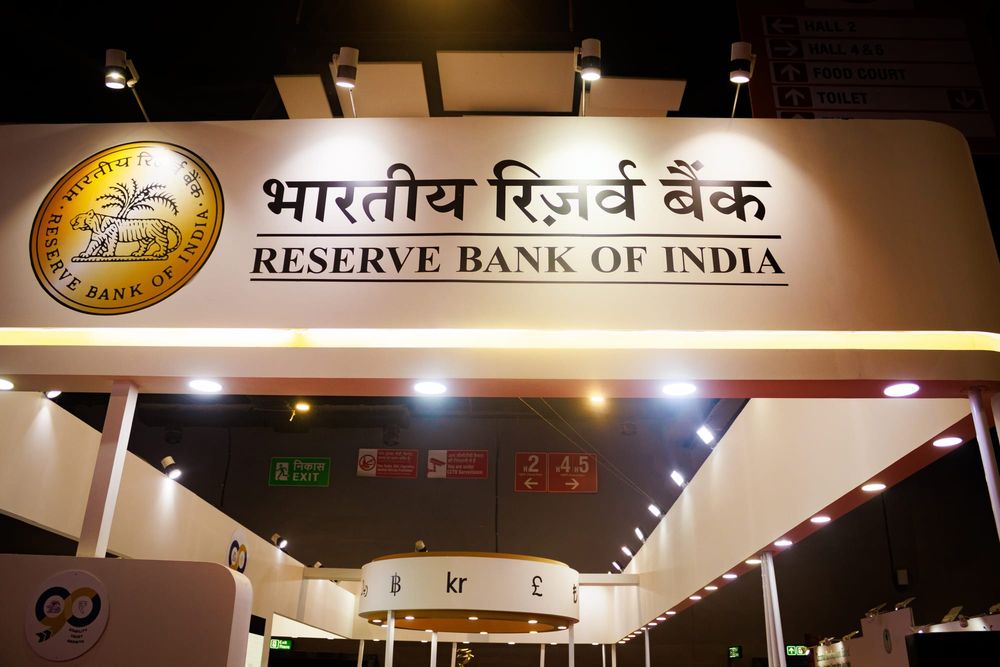
India will press fellow BRICS members to expand the use of central bank digital currencies for cross-border payments at the bloc's leaders' summit in New Delhi on 12 and 13 September, while declining to support a unified bloc-wide payments network, according to reports published on Thursday by Bloomberg and Reuters citing people familiar with the discussions. Prime Minister Narendra Modi favours the use of central bank digital currencies to settle bilateral trade between member states, the people said, speaking on condition of anonymity because the deliberations are private. Reuters reported that the proposal to link official digital currencies will form part of the agenda for the leaders' meeting, based on two sources familiar with the talks. The approach would allow members to settle bilateral trade using their respective CBDCs, reducing reliance on correspondent banking channels and lowering transaction costs. One of the sources said India has no interest in replacing the dollar, and that linking official digital currencies is intended to make cross-border payments easier and faster.
The proposal builds on work the Reserve Bank of India has advanced through the year. Reuters reported in January that the RBI had proposed linking the official digital currencies of BRICS members to facilitate cross-border trade, with the central bank also examining applications for trade and tourism payments. The initiative extends the declaration adopted at the 2025 BRICS summit in Rio de Janeiro, which called for greater interoperability among member payment systems to improve the efficiency of cross-border transactions. India chairs the grouping this year, which now comprises Brazil, Russia, India, China and South Africa alongside Egypt, Ethiopia, Indonesia, Iran, Saudi Arabia and the United Arab Emirates.
A DELIBERATE DISTANCE FROM THE DOLLAR DEBATE
New Delhi's position marks a separation between payments plumbing and monetary politics. India has resisted a single bloc-wide payments network that could be read as a rival to SWIFT or a direct challenge to the dollar, and has instead framed CBDC linkage as a cost and speed exercise. In August, Commerce and Industry Minister Piyush Goyal said India was not in favour of a separate BRICS currency. India also supports members settling trade in local currencies rather than routing transactions through a third currency.
Reserve Bank of India Governor Sanjay Malhotra said in August that cross-border payments were an area of interest for BRICS, citing scope for reducing cost, and that several options remained under discussion, including central bank digital currencies and linkages between fast payment systems. He characterised the proposals as still at the discussion stage. That framing matters for institutions assessing the timeline: the summit is expected to examine mechanisms rather than ratify infrastructure.
ADOPTION GAPS COMPLICATE IMPLEMENTATION
The practical obstacles are substantial. Reuters reported that the limited adoption of digital currencies globally could complicate implementation of any linkage. BRICS members sit at different stages of CBDC development, using different technologies, regulatory regimes and monetary policy approaches, meaning any cross-border arrangement would require significant coordination. India is running pilots of the digital rupee, China has deployed the e-CNY, and Russia has developed the digital rouble — three systems built to different specifications. An alternative track under discussion would interconnect existing fast payment systems, such as India's Unified Payments Interface and Brazil's Pix.
For banks with BRICS trade exposure, the immediate question is whether the New Delhi declaration converts the CBDC proposal from an agenda item into a mandated workstream with an owner and a timetable. Direct CBDC settlement between central banks would compress the correspondent banking layer that currently generates conversion costs, intermediary fees and settlement delays on intra-bloc flows. The sequencing to watch is the language in the summit communiqué on 13 September, any technical committee assigned to interoperability standards, and whether members with active pilots agree to a bilateral corridor as a proof of concept. Absent that, the initiative remains a statement of intent from the chair.