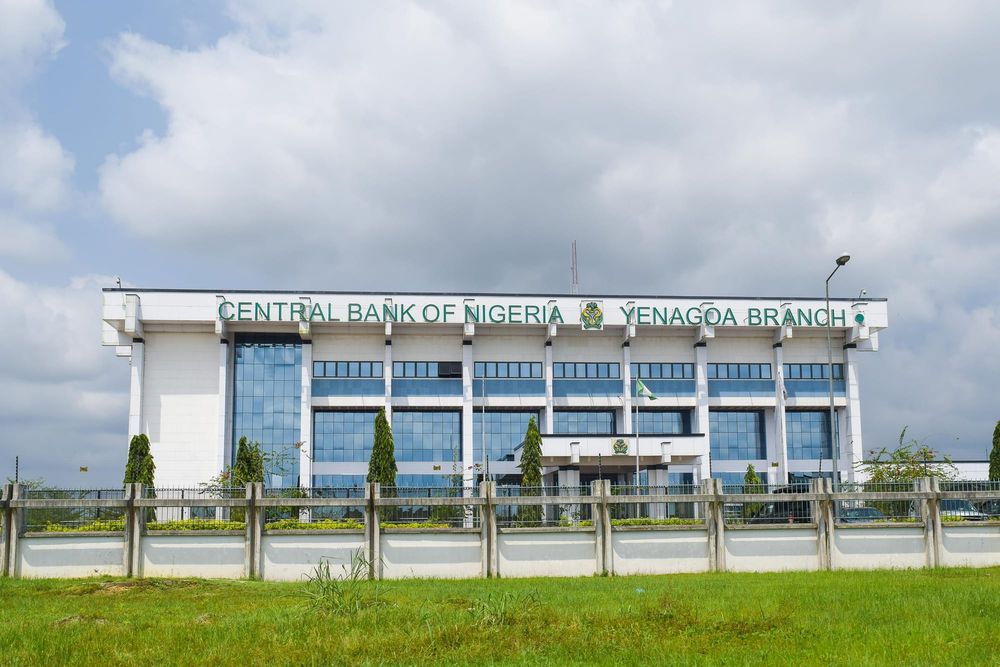
Nigerian banks placed about N4.4 trillion of surplus funds with the Central Bank of Nigeria through its Standing Deposit Facility during the past week, according to money-market data reported on Monday. The placements came as net liquidity in the banking system remained firmly in surplus, rising to N4.66 trillion from N3.61 trillion in the preceding week. Dealers at Cowry Assets Management Limited said an additional N2.3 trillion in primary-market repayments provided further support to system liquidity over the period. Analysts reported no activity at the central bank's Standing Lending Facility, indicating that lenders faced no meaningful funding pressure.
The scale of the placements underscores a pattern that has persisted through 2026, in which Nigerian lenders have preferred to hold surplus cash at the apex bank rather than deploy it into interbank lending or customer credit. Market analysts said the N4.4 trillion figure demonstrates that banks still hold substantial available cash despite the central bank's sustained withdrawal of liquidity through Open Market Operations. System liquidity had already improved sharply in August, rising 56.17 per cent to N4.65 trillion from N2.98 trillion in July on the back of maturing securities, FAAC allocations and other repayments. Those inflows more than offset the mop-up operations conducted by the central bank during the month.
RATES HOLD DESPITE CASH SURPLUS
Money-market rates eased only marginally despite the liquidity overhang. The overnight rate fell 13 basis points to 22.13 per cent, while the funding rate was unchanged at 22.00 per cent. Both levels remain elevated relative to the volume of cash in the system, indicating that the cost of short-term funds has not fully adjusted to the surplus. The persistence of high rates alongside abundant liquidity reflects the concentration of surplus funds among a limited number of institutions rather than an even distribution across the sector.
Nigerian Interbank Offered Rate quotations moved higher across most maturities, with the one-month, three-month and six-month tenors rising by 26, 56 and 76 basis points respectively. The overnight NIBOR rate increased by two basis points. The steepening pattern in longer-dated quotations suggests market participants are positioning for tighter conditions in the weeks ahead as sterilisation continues. In the secondary Treasury bills market, the average yield declined slightly to 18.86 per cent from 18.95 per cent, reflecting buying interest across the curve.
STERILISATION MEETS STRONG AUCTION DEMAND
Auction results during the week illustrated both the depth of available cash and the central bank's willingness to absorb it. At the Nigerian Treasury Bills auction, the apex bank offered N750 billion across the 91-day, 182-day and 364-day maturities and received bids totalling N3.4 trillion, more than four times the amount on offer. It allotted N865.7 billion, exceeding the initial offer by N115.7 billion. Stop rates on the 91-day and 182-day bills held at 16.30 per cent and 16.50 per cent respectively, while the 364-day rate fell 31 basis points to 16.84 per cent. Demand at the OMO auction was stronger still: against an offer of N1 trillion, investors submitted bids of N5.5 trillion, and the central bank allotted N2.9 trillion, with the 91-day bill clearing at 19.59 per cent and the 147-day and 154-day instruments at 18.99 per cent.
The liquidity position is expected to come under pressure from the OMO settlement of about N2.9 trillion, though maturities will replenish the system. Roughly N3.07 trillion in OMO maturities and a further N71 billion in NTB maturities are scheduled, bringing the projected injection to about N3.14 trillion, against a planned NTB auction of some N700 billion. The Financial Market Dealers Association projects total September inflows of N15.72 trillion, about 16.10 per cent above the N13.54 trillion recorded in August, with OMO maturities accounting for roughly 74 per cent of the total. Whether sterilisation succeeds in draining the surplus, and whether elevated SDF balances continue to substitute for private-sector lending, will be the central questions for Nigerian bank funding costs in the coming weeks.