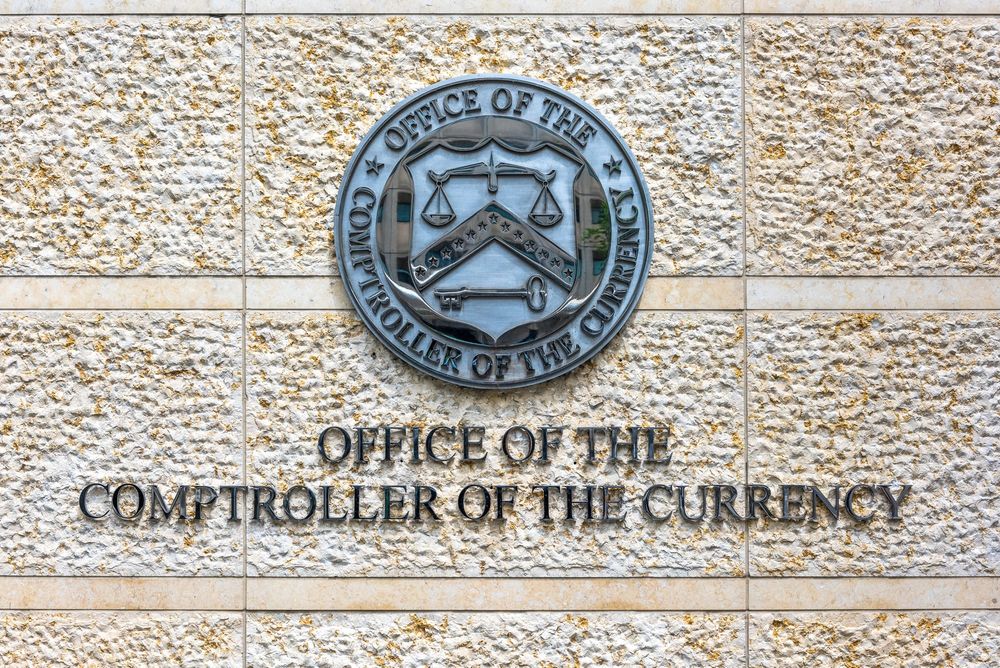
The Office of the Comptroller of the Currency (OCC) issued a formal Cease and Desist Order against 42 North Private Bank, a small private institution based in Canton, Massachusetts, on 20 March 2025, citing unsafe or unsound practices across several critical areas of the bank's operations including interest rate risk management, capital adequacy, liquidity, strategic planning, and earnings quality. The action was announced as part of the OCC's regular monthly enforcement release.
The new order replaced and superseded a prior Cease and Desist Order that the OCC had issued against the bank on 30 March 2017, a fact that underscores the persistence of supervisory concerns at the institution across multiple examination cycles spanning nearly eight years. The replacement of one formal order with a fresh one signals that the regulator concluded the prior framework had not produced the sustained remediation it required and that a renewed and strengthened set of mandated corrective actions was necessary.
LONGSTANDING SUPERVISORY CONCERNS
The duration of the OCC's engagement with 42 North Private Bank — from the 2017 original order through to the 2025 replacement — reflects a pattern of unresolved safety and soundness deficiencies that the institution has not been able to address to the regulator's satisfaction over multiple examination cycles. Cease and Desist Orders are among the most serious formal enforcement tools available to the OCC, representing a public regulatory finding that an institution must take specific corrective actions under active supervisory oversight. Their replacement rather than termination is a relatively uncommon outcome that typically signals the regulator found that prior commitments had not been met.
Interest rate risk featured prominently among the issues identified in the 2025 order. For a small private bank, exposure to interest rate movements can be particularly consequential given the limited diversification of revenue streams and the concentration of balance sheet positions relative to larger commercial institutions. The sharp and sustained rise in US interest rates between 2022 and 2023 intensified scrutiny of interest rate risk management practices across the sector, and smaller banks with concentrated fixed-rate asset portfolios or significant duration mismatches faced particular pressure on their net interest margins, unrealised investment losses, and economic capital positions.
Capital adequacy, liquidity management, and earnings quality were also cited as areas of concern, reflecting a set of weaknesses that appears to span multiple dimensions of the bank's financial condition rather than a single isolated failure. Strategic planning deficiencies suggest the OCC found that 42 North Private Bank's forward-looking management framework did not meet the standards expected of a sound institution operating under federal supervision, raising questions about the quality of governance and the adequacy of the bank's own assessment of its risk profile and business model viability.
MARCH 2025 ENFORCEMENT CONTEXT
The OCC's action against 42 North Private Bank was part of its March 2025 monthly enforcement release, which simultaneously included the termination of consent orders against Wells Fargo and ICICI Bank New York. The juxtaposition of closures at larger and more prominent institutions alongside the new order at a small Massachusetts private bank illustrates the range of supervisory tools the OCC deploys simultaneously across institutions of vastly different sizes and risk profiles, with the agency's oversight framework applying equally regardless of a bank's asset size or public profile.
Under the new Cease and Desist Order, 42 North Private Bank will be required to address the identified deficiencies in a structured manner under OCC oversight, with the regulator monitoring progress against corrective milestones specified in the order. Enforcement actions of this nature are public documents published through the OCC's enforcement actions database and remain in force until the agency formally determines that the institution has achieved compliance to the required standard and issues a termination notice, a process that may take years depending on the institution's capacity and commitment to remediation.