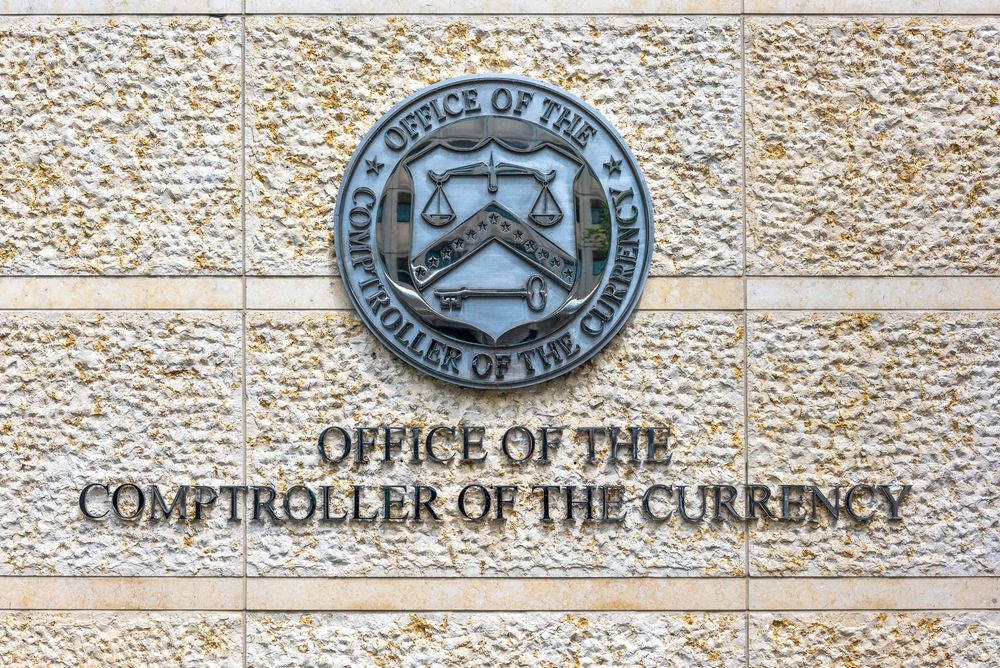
The Office of the Comptroller of the Currency announced its June 2026 batch of enforcement actions on Thursday, including prohibition orders against former executives of Quontic Bank and The First National Bank of Lindsay, Oklahoma. The news release, numbered NR-OCC-2026-48, was issued on 18 June 2026 and included multiple additional individual actions.
The two named orders target senior figures who held key positions at institutions that have been in the OCC's supervisory focus for materially different reasons. The action against the former Quontic officer centres on alleged misconduct in the mortgage-lending business, while the action against the former Lindsay chief executive is tied to a bank failure.
PROHIBITION ORDER AGAINST FORMER QUONTIC OFFICER
An Order of Prohibition was issued against Steven Ho, the former Vice President and Senior Mortgage Lending Officer of Quontic Bank. The OCC's action alleges that Ho concealed the use of unapproved third-party brokers, falsified loan applications and transferred confidential customer data, conduct the agency has treated as inconsistent with continued participation in the banking industry.
Prohibition orders bar the individual from participating in the affairs of any federally insured depository institution, effectively ending the person's career in mainstream US banking. The OCC uses the tool for the most serious instances of individual misconduct, where the agency has concluded that continued industry participation would pose an ongoing risk.
The alleged conduct described in the order touches on core areas of mortgage-origination integrity, including third-party broker oversight, the accuracy of loan applications and the protection of confidential customer information. Each of those subjects has been a repeated focus of supervisory attention across the mortgage sector.
LINDSAY BANK FAILURE ACTION
A separate Order of Prohibition was issued against Danny Seibel, the former President, Chief Executive Officer and Director of The First National Bank of Lindsay, Oklahoma. The OCC said the misconduct at issue caused the bank's insolvency and its placement into receivership in October 2024, one of the more consequential US community-bank failures of that period.
Prohibition orders tied to bank failures serve both a punitive and a preventive purpose, holding the individuals concerned to account and reducing the likelihood of further harm to depositors or the deposit insurance fund. The action against Seibel formalises the OCC's finding of culpability for the collapse of the Lindsay franchise.
The Lindsay case has been closely watched within the community-banking sector because of the direct link the OCC has drawn between individual conduct at the top of the bank and its ultimate insolvency. That framing underscores the personal accountability regime that has become an increasingly prominent feature of US banking supervision.
In addition to the two named prohibition orders, the OCC said multiple further individual actions were issued in the same batch, following the agency's practice of grouping enforcement announcements into periodic releases. The full release covers a mix of orders reflecting the range of misconduct addressed under the agency's authority.
For banks and bank employees, the June batch reinforces the message that the OCC continues to pursue individual accountability alongside institutional supervision. Both prohibition orders were published as part of news release NR-OCC-2026-48 on the agency's website, where the full text of each order and the complete list of actions is available.