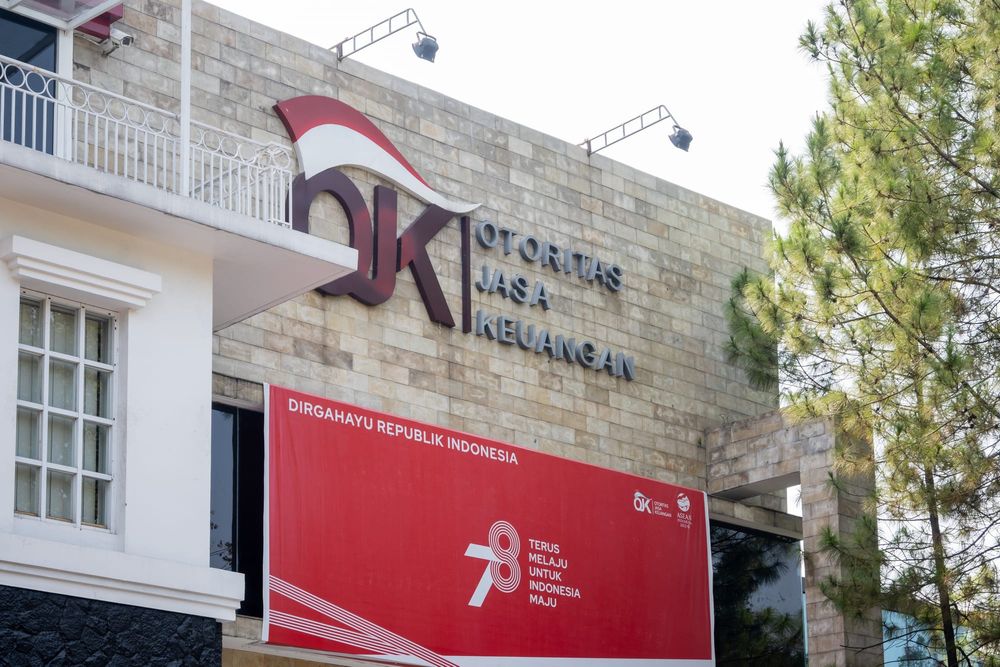
Indonesia's financial services regulator, Otoritas Jasa Keuangan (OJK), published Version 2 of the Taxonomy for Sustainable Finance in Indonesia (TKBI) on 11 February 2025, expanding its coverage to additional economic sectors and refining the classification criteria that financial institutions use to assess whether activities qualify as green, transitional, or ineligible for sustainable financing. The update follows the first edition of the TKBI and has been aligned with Version 3 of the ASEAN Taxonomy for Sustainable Finance, placing Indonesia's domestic classification framework within the broader regional architecture for sustainable capital allocation.
Regional harmonisation is a priority for markets seeking to attract cross-border sustainable investment flows, and OJK's decision to track the ASEAN standard reduces the risk of definitional fragmentation that has complicated sustainable finance in other jurisdictions. By bringing the TKBI into alignment with the ASEAN framework, Indonesian banks and capital market participants can apply classifications that are consistent with the standards used by their counterparts across Southeast Asia, lowering the cost of cross-border issuance and investor due diligence.
THREE-TIER CLASSIFICATION FOR CAPITAL ALLOCATION
The TKBI framework classifies economic activities into three categories: 'green', covering activities that directly contribute to environmental objectives; 'transitional', applying to activities that do not yet meet green thresholds but are on a credible pathway toward alignment; and a third category for activities that do not meet either set of criteria. The three-tier design allows financial institutions to engage with a wider universe of borrowers and projects without abandoning the principle of graduated environmental ambition, and it is consistent with the approach taken by multiple other national and regional taxonomies.
By extending TKBI Version 2 to cover additional sectors not addressed in the first edition, OJK increases the practical utility of the taxonomy for banks and insurers whose lending and investment portfolios span industries beyond those initially classified. The expansion is particularly relevant for Indonesian financial institutions with significant exposure to agriculture, manufacturing, and infrastructure — sectors that dominate the archipelago's economy but whose sustainable finance credentials have historically been harder to assess under narrower classification schemes.
OJK has positioned the taxonomy as the primary reference tool for sustainable capital allocation decisions across the financial sector, and its periodic revision reflects an intention to keep the framework current with evolving international standards and domestic policy priorities. Financial institutions are expected to use the taxonomy when structuring sustainable financing products and when making disclosures to investors about the environmental credentials of their portfolios.
PATHWAY TO NET-ZERO BY 2060
Indonesia has committed to achieving net-zero emissions by 2060, and TKBI Version 2 is designed to be a practical instrument in directing private finance toward activities consistent with that national target. The taxonomy gives banks, asset managers, and development finance institutions a common language for assessing transition risk and green opportunity, reducing the due diligence burden that would otherwise fall on individual institutions acting in isolation.
The release of Version 2 follows a period of growing regulatory emphasis on sustainable finance across Southeast Asia, with multiple jurisdictions updating or introducing taxonomies ahead of expected tightening in disclosure requirements for financial institutions. OJK's update keeps Indonesia aligned with regional peers and maintains the country's standing as one of the more active emerging-market regulators in developing a workable infrastructure for sustainable capital markets.