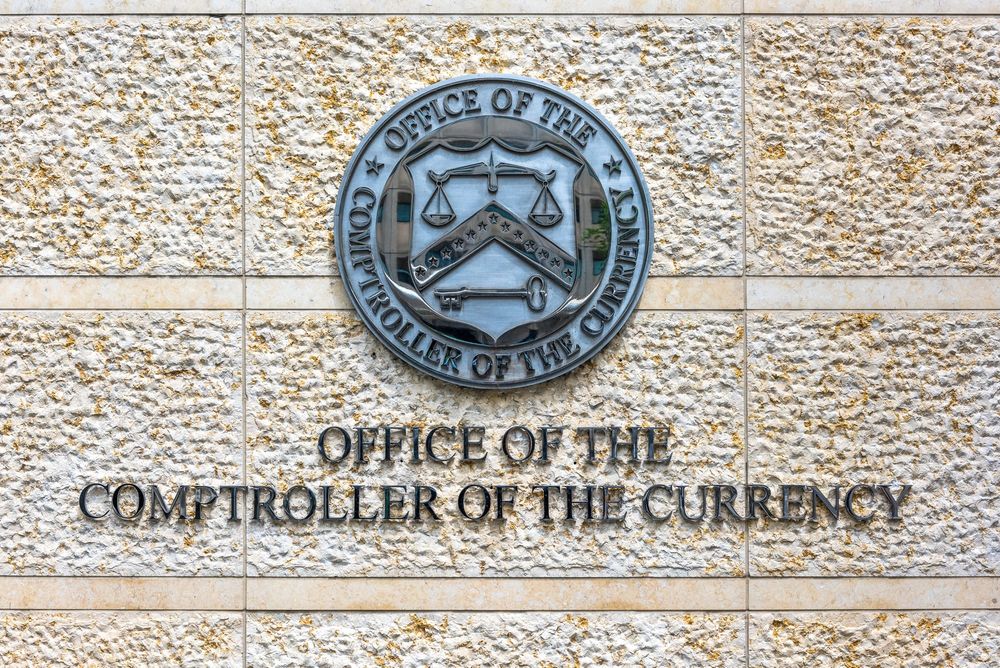
OpenReserve Bank, National Association, received preliminary conditional approval from the Office of the Comptroller of the Currency on 2 September to organise a full-service insured national bank in Salt Lake City, Utah. The regulator's eight-page decision requires the proposed institution to raise at least $210 million in initial paid-in capital, net of organisational and preopening expenses, and to maintain a Tier 1 leverage ratio of no less than 12% during its first three years of operation. The approval does not permit OpenReserve to begin banking operations, and the company must satisfy the OCC's capital, governance, security and compliance conditions before receiving final authorisation. The decision closed a review of just under five months, the charter application having been filed on 13 April.
The approval was disclosed alongside confirmation from a16z crypto, the digital-asset arm of Andreessen Horowitz, that it had led a $25 million seed round in the company. Jump Capital, Acrew, Coinbase Ventures, Wintermute Ventures, Clocktower, Quona, AAF Management and Zero Knowledge Ventures also participated. OpenReserve was founded in 2025 by Diwakar Choubey and Richard Correia, both former executives of MoneyLion, the consumer finance platform Choubey took public and subsequently sold to Gen Digital in 2025. The company has not disclosed its valuation or how much of the seed capital counts toward the $210 million requirement.
A FULL CHARTER RATHER THAN A TRUST LICENCE
OpenReserve pursued a full-service national bank charter rather than the limited-purpose national trust charter that most digital-asset firms have sought, a distinction that materially widens both its permitted activities and its supervisory obligations. The proposed institution would accept insured deposits and offer conventional commercial and retail lending alongside digital-asset services, where trust charters typically confine holders to custody and settlement. Its stated product range covers deposits and lending, payments and treasury services, tokenised deposit products, digital-asset custody through a subsidiary, and foreign correspondent banking. The bank does not plan to operate physical branches.
The company describes its architecture as a programmable core ledger supporting native on-chain settlement, positioned to enable continuous money movement rather than the batch cycles of ACH and wire transfer. A wholly owned subsidiary is planned for the issuance, custody, conversion and payment processing of U.S. dollar-denominated reserve-backed stablecoins, though the OCC noted that an application for that subsidiary has not been filed. Any such activity must comply with the GENIUS Act and its implementing regulations, with the regulator retaining sole discretion over whether the structure qualifies. Where the bank receives transaction fees in cryptocurrency, it would generally be required to convert those assets into fiat within one business day.
CONDITIONS AND SUPERVISORY CONTEXT
The conditions attached to the approval are extensive. OpenReserve must raise the required capital within 12 months and commence banking operations within 18 months, failing which the preliminary approval expires except in circumstances the OCC deems beyond the organisers' control. It must apply for Federal Reserve Bank stock, obtain deposit insurance from the Federal Deposit Insurance Corporation, notify the regulator at least 60 days before its proposed opening date, and submit to a preopening examination covering operational readiness, governance, compliance and technology. Programmes for the Bank Secrecy Act, sanctions compliance, credit risk and information security are required, as is independent testing of the electronic platform against unauthorised access, malicious software and denial-of-service attacks.
The decision forms part of a broader shift at the OCC under Comptroller Jonathan Gould, who has argued that firms engaged in novel technologies should have a route to federal supervision. The agency has received 40 de novo charter applications since 2025 and approved 21, having granted conditional national trust approvals to Coinbase, Paxos, BitGo, Ripple and Circle; Revolut received a similar decision on the same day. The expansion has attracted political scrutiny, with Senator Elizabeth Warren having criticised the agency in May over charters granted to digital-asset firms she argued could operate beyond the activities permitted under the National Bank Act. For OpenReserve, the binding tests now are the capital raise and the FDIC insurance determination, either of which could delay or foreclose an opening; the OCC retains authority to modify, suspend or withdraw the approval at any point before the bank commences business.