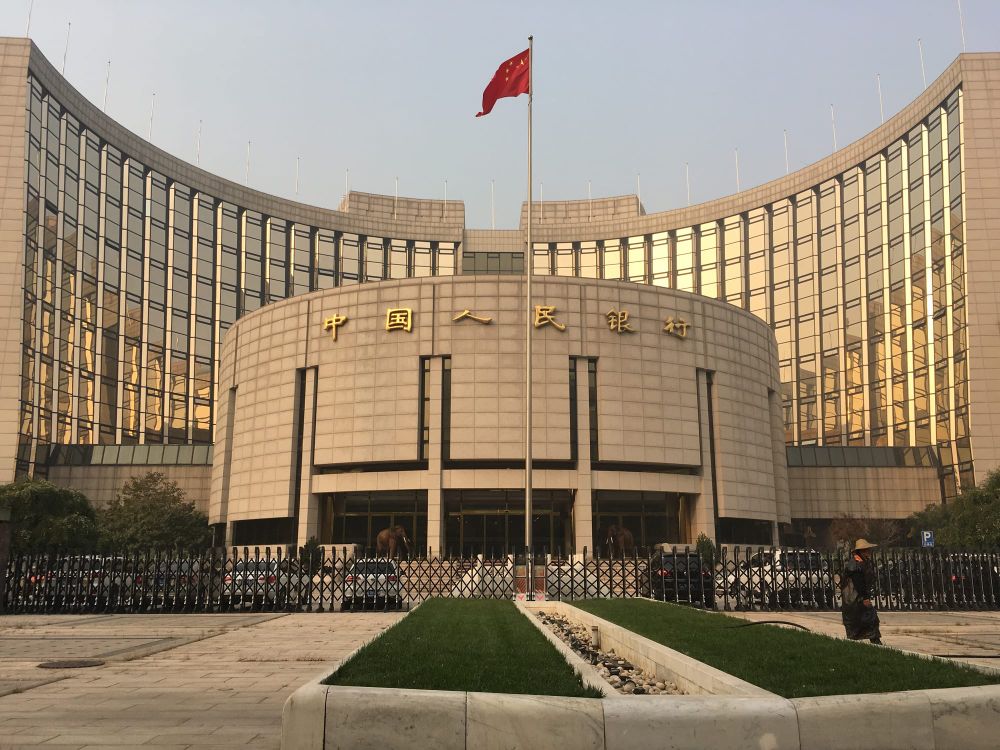
The People's Bank of China has published the Green Finance Status and Trends 2025–2026 report, providing the most comprehensive official account yet of how the country's green finance architecture has evolved since the policy framework was organised around five pillars beginning in 2021. The document catalogues developments across taxonomy, green insurance products, carbon markets, and disclosure standards, presenting China's position as one of the world's most systematically constructed green finance regimes and offering a detailed stocktake of the progress achieved across each policy dimension.
The five-pillar structure — covering standards, products, incentive mechanisms, information disclosure, and international cooperation — has provided the organising logic for Chinese green finance policy throughout the decade, and the 2025 report assesses advances against all five dimensions. Officials and external analysts have pointed to this framework as evidence that China's approach, while different in some particulars from European or US equivalents, is comparable in rigour and in several practical areas more advanced in terms of institutional embedding across the banking, insurance, and capital markets sectors.
GREEN INSURANCE AND DISCLOSURE ADVANCE IN 2025
Among the key 2025 developments highlighted in the report, the introduction of green insurance standards for Belt and Road Initiative investments stands out for its significance to international project finance. BRI infrastructure projects are spread across dozens of sovereign environments with widely varying environmental governance standards, and the absence of consistent criteria for insurance products covering those projects has long been identified as a structural gap. The new standards are designed to ensure that the financial risk transfer mechanisms underpinning BRI infrastructure incorporate environmental performance assessments aligned with China's domestic taxonomy, extending the reach of its green finance framework beyond its borders.
On disclosure, the report notes progress towards unified requirements applicable to financial institutions across the banking, securities, and insurance sectors. China has moved incrementally towards harmonised climate-related financial disclosure since international frameworks gained traction, but consolidating standards into a single cross-sector framework represents a meaningful simplification of the current patchwork. The 2025 report presents this as an ongoing advance, with further regulatory steps expected, rather than a completed reform already in full implementation across the financial system.
CCER CARBON MARKET RELAUNCHED AND STANDARDS EXTENDED
The report also provides an official assessment of the re-launch of the China Certified Emission Reduction scheme in 2024, which had been suspended since 2017 pending revisions to its methodology and verification framework. The CCER provides a voluntary offset mechanism that complements the national emissions trading scheme currently covering the power sector, and its resumption is significant for extending carbon pricing signals into sectors not yet covered by the mandatory cap-and-trade programme. The quality standards applied to the relaunched CCER have been strengthened relative to the original scheme, addressing criticisms of additionality and verification that contributed to the earlier suspension.
Alongside the CCER restart, China introduced national carbon footprint management standards in 2024, creating a product-level accounting framework expected to feed into both domestic procurement rules and export compliance requirements as major trading partners begin implementing carbon border adjustment mechanisms. The Green Finance Status and Trends report frames these developments as mutually reinforcing components of an integrated climate finance architecture, each contributing to a system in which environmental risk is progressively priced and disclosed across the Chinese economy.