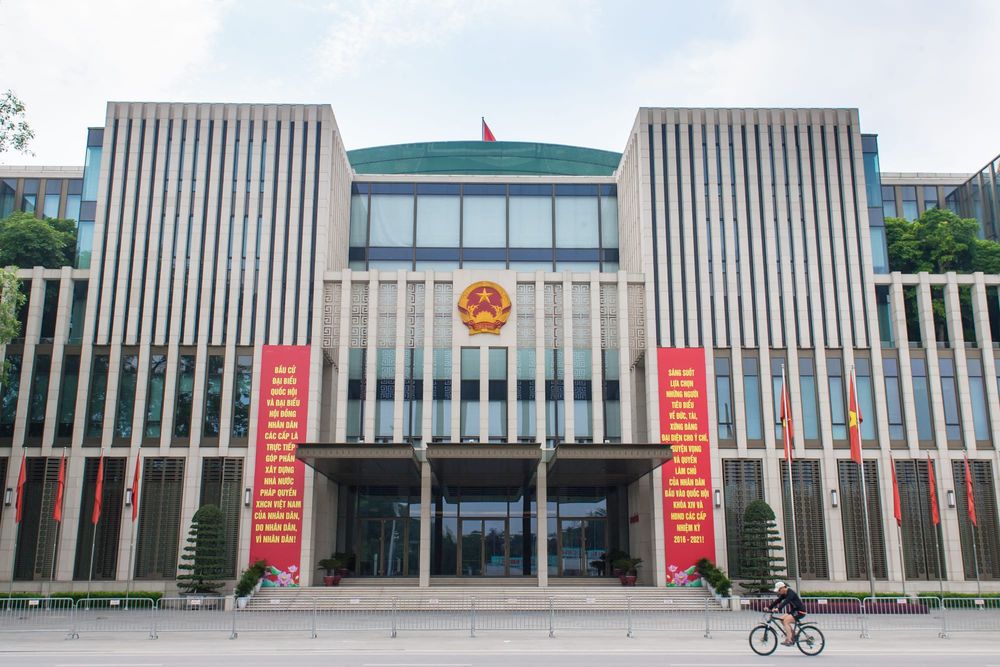
Vietnam's National Assembly approved Pham Duc An as Governor of the State Bank of Vietnam on 8 April 2026, installing new leadership at the country's central bank for the 2026-2031 term. The appointment ends a period of leadership transition at the SBV that followed the decision by outgoing governor Nguyen Thi Hong to move to a senior legislative role, creating a vacancy at the helm of one of Southeast Asia's most systemically important central banks.
Pham Duc An replaces Nguyen Thi Hong, who was elected as Vice Chairperson of the National Assembly — a prominent parliamentary role that required her to relinquish the central bank governorship. Nguyen Thi Hong had served as SBV Governor since 2020, overseeing monetary policy through a period that encompassed the Covid-19 pandemic, a subsequent inflationary episode, and a phase of policy easing to restore economic momentum.
NEW GOVERNOR FOCUSES ON RATE REDUCTION
Pham Duc An signalled immediately upon taking office that reducing interest rates to support Vietnam's economic growth objectives would be an immediate priority. The statement aligns with a broader policy direction that has been evident in the Vietnamese government's economic management, where stimulating investment and consumption through accommodative monetary conditions has been a consistent theme alongside fiscal expenditure measures.
For the SBV under Pham Duc An, the emphasis on lower borrowing costs translates into a disposition towards easing credit conditions where the inflation outlook and exchange rate stability permit. Vietnam has maintained relatively stable consumer price growth in recent periods, creating some space for the central bank to support growth without immediately triggering inflationary concerns, though the global energy price environment and exchange rate dynamics introduce constraints on how aggressively the new governor can move.
The State Bank of Vietnam operates within a multi-objective policy framework that balances price stability, exchange rate management, and active support for the government's economic growth targets as set by the National Assembly. The governor is the central figure in calibrating these sometimes competing priorities, making the appointment consequential not only for domestic monetary conditions but also for Vietnam's external financial relationships and its attractiveness to foreign investors.
LEADERSHIP CONTINUITY AT A CRITICAL PERIOD
Pham Duc An takes the helm of the SBV at a period of considerable strategic importance for Vietnam's financial sector. The country is deepening its integration with international capital markets, its banking system is undergoing ongoing reforms to improve non-performing asset ratios and capital adequacy standards, and the development of the International Financial Centre in Ho Chi Minh City is creating new regulatory demands on the central bank as the primary licensing and supervisory authority.
The National Assembly's approval of Pham Duc An was conducted as part of a broader cycle of senior government appointments that accompanies Vietnam's regular political leadership transitions. His appointment was confirmed by a full assembly vote, giving the new governor a formal legislative mandate that provides an important foundation for the policy direction he has already indicated.
Pham Duc An's prior experience encompassed work within Vietnam's financial and banking sector, though the SBV did not release a detailed professional biography alongside the appointment announcement. His immediate and public focus on interest rate policy from the first days of taking office suggests an intention to demonstrate early policy agency and signal to markets and the business community that the new leadership is oriented towards supporting economic activity.