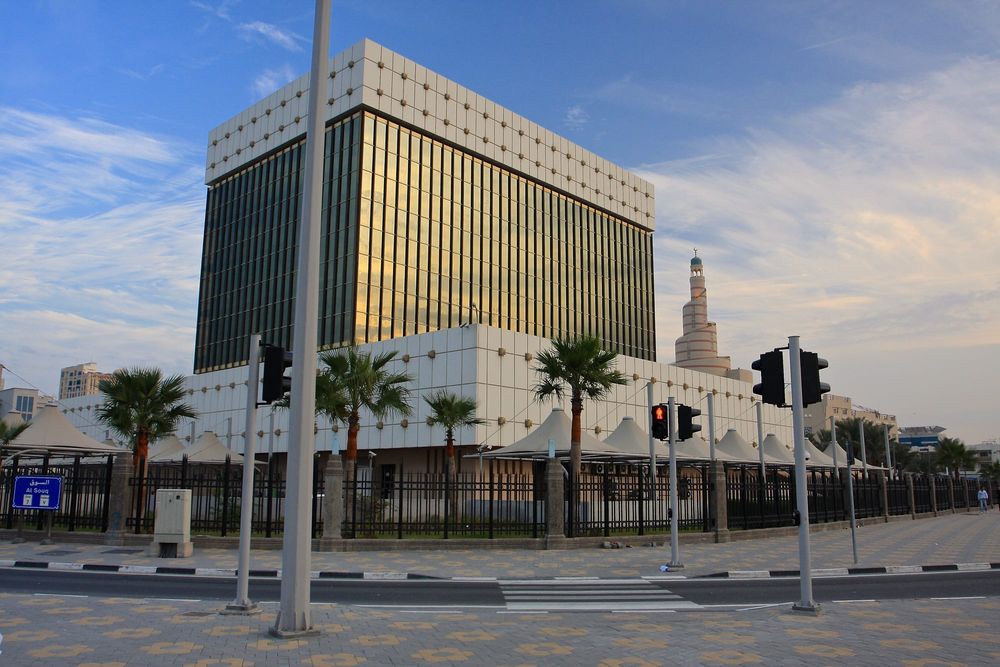
Qatar Central Bank announced on Monday that it had joined AFAQ, the Gulf Cooperation Council's cross-border payments system operated by the Gulf Payments Company, completing the participation of all six GCC central banks in the platform. Three Qatari commercial banks — Doha Bank, Qatar International Islamic Bank and Dukhan Bank — joined alongside the central bank, making them among the first lenders in the country to participate. The additions brought the total number of participating banks across the GCC to 74. The central bank said the step would enhance connectivity between regional payment infrastructures and support greater efficiency, speed and security in cross-border payments and financial transfers.
The move closes a rollout that began nearly six years ago. AFAQ — the Arabian Gulf System for Financial Automated Quick Payment Transfers — was launched on 10 December 2020, when the first transactions were exchanged between the Central Bank of Bahrain and the Saudi Central Bank. Onboarding of commercial banks and financial institutions commenced in April 2021, and the cross-currency service went live between Saudi Arabia and Bahrain in December 2021, followed by Kuwait in March 2022 and the Central Bank of the UAE in December 2023. Oman's onboarding advanced through early 2026, with the National Bank of Oman joining in February and Ahli Bank confirmed the same month. Qatar was the final central bank outside the network.
HOW THE SYSTEM OPERATES
AFAQ connects the real-time gross settlement systems of each GCC member state, allowing transfers to be processed instantly through members' national RTGS infrastructure with same-day settlement finality and irrevocability. The system's cross-currency service covers all six Gulf currencies — the Saudi riyal, UAE dirham, Bahraini dinar, Kuwaiti dinar, Omani rial and Qatari riyal — enabling a payer to send funds from an account denominated in the originating country's currency to a beneficiary account in the receiving country's currency. The operator states that transactions are executed at low fees within a secured private network linking AFAQ to the participating national central banks.
Volumes remain modest relative to the size of intra-Gulf commerce. The Gulf Payments Company reports more than 26 billion in transaction value and over 276,000 transactions since launch, figures that point to a system currently weighted toward larger-value transfers rather than high-frequency retail flows. Commercial adoption has been uneven across markets: some participating banks, including Kuwait's National Bank of Kuwait, have moved AFAQ transfers into consumer mobile banking channels, while in other jurisdictions the service remains concentrated among a limited set of institutions.
WHAT COMES NEXT FOR PARTICIPANTS
Qatar's entry follows a domestic payments build-out by the QCB. The regulator launched Fawran, the country's instant domestic payment service, in March 2024, and in December 2025 activated Qatari riyal and foreign currency transfer services through its upgraded QA-RTGS system, enabling domestic and international currency transactions to be processed and settled locally. AFAQ now supplies the cross-border layer above that domestic rail, positioning Qatari banks to route Gulf-bound transfers through a regionally governed system rather than correspondent banking chains.
With the central bank layer complete, attention shifts to commercial onboarding, where coverage across the six markets is still partial — three Qatari banks have joined out of a domestic sector in which all eight major lenders are connected to Fawran. The QCB indicated that participation by commercial banks is expected to expand alongside continued development and broader rollout of the system's services. A second service phase planned under AFAQ is set to support single-currency payments and, subsequently, cross-border multilateral net clearing of orders submitted by regional clearing systems. The pace at which Gulf banks extend AFAQ into retail and SME channels will determine whether the network shifts from an interbank settlement utility toward a mass-market remittance alternative in a region that hosts one of the world's largest migrant workforces.