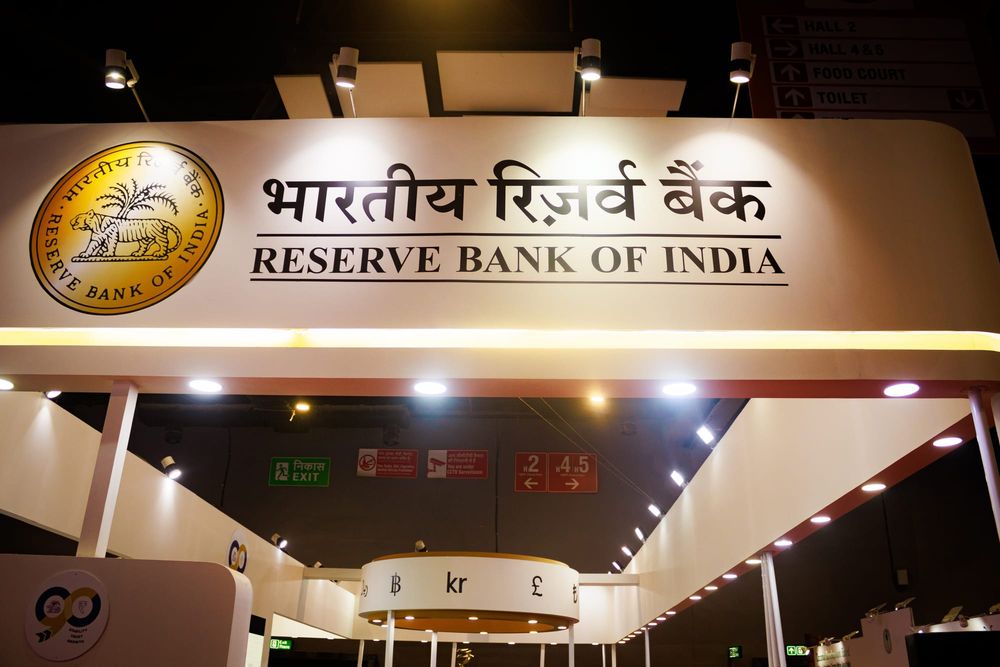
The Reserve Bank of India has introduced a comprehensive acquisition finance framework that allows banks to provide funding covering up to 75% of the value of qualifying mergers and acquisitions, in a significant liberalisation of the rules governing how Indian lenders may participate in corporate deal-making. The framework, announced in February 2026, applies specifically to transactions that result in a change of control and marks a material departure from the conservative approach to leveraged acquisition finance that had previously constrained bank participation in large-scale Indian M&A.
Under the new rules, acquisition lending is available for both listed and unlisted target companies, provided the acquirer and target meet specific eligibility criteria established by the RBI. Qualifying targets must have a net worth of at least INR 500 crore and a minimum three-year track record of profitability, conditions designed to focus the framework on established, creditworthy enterprises rather than opening acquisition finance to speculative or early-stage transactions.
ELIGIBILITY CRITERIA AND RISK DISCIPLINE
The net worth threshold of INR 500 crore and the profitability requirement together serve to concentrate access to acquisition finance on businesses with demonstrated earning power and balance sheet substance. Lenders are still required to conduct their own independent credit assessments of both the acquiring entity and the target, and the 75% ceiling ensures that a meaningful equity contribution is required alongside any bank funding, aligning the acquirer's interests with those of the lending institutions.
The 25% equity floor is a standard feature of acquisition finance frameworks in international markets and serves a well-established risk management function. When an acquirer is required to commit substantial equity capital to a transaction, the risk of strategic default or short-term asset extraction is significantly reduced, because the acquirer stands to lose a material portion of its own funds in the event of failure. That alignment of incentives makes the overall financing structure more stable from a lender's perspective and reduces the likelihood of credit losses arising from opportunistic deal behaviour.
India's M&A market has historically been characterised by limited use of bank debt to fund acquisitions, partly because the regulatory environment offered insufficient clarity on how acquisition lending would be treated for prudential and accounting purposes. The RBI's framework directly addresses that ambiguity, giving banks a defined and formal basis on which to structure and book acquisition loans and providing deal advisers and acquirers with a clear understanding of the financing capacity available within the Indian banking system.
IMPLICATIONS FOR M&A ACTIVITY AND BANK CONSOLIDATION
The framework is expected to catalyse activity in the Indian M&A market by making it materially easier for domestic acquirers to finance sizeable transactions without resorting to costly overseas borrowing or complex equity structures. Previously, Indian companies seeking to fund large acquisitions had to rely on a combination of internal cash reserves, equity issuance, and external commercial borrowings, a multi-source approach that could slow deal execution and limit the ambition of purely domestically funded strategies.
Banking sector analysts have noted that the RBI framework may also accelerate consolidation among Indian financial institutions themselves, providing a formal mechanism through which a financially stronger bank could arrange acquisition financing for the purchase of a smaller peer. The move is widely interpreted as part of the RBI's broader ambition to deepen India's domestic capital markets and reduce reliance on external borrowing for large-scale corporate transactions. For corporate acquirers and their advisers, the framework represents a meaningful change in the financing landscape, and deal activity is expected to respond accordingly as market participants familiarise themselves with the new rules.