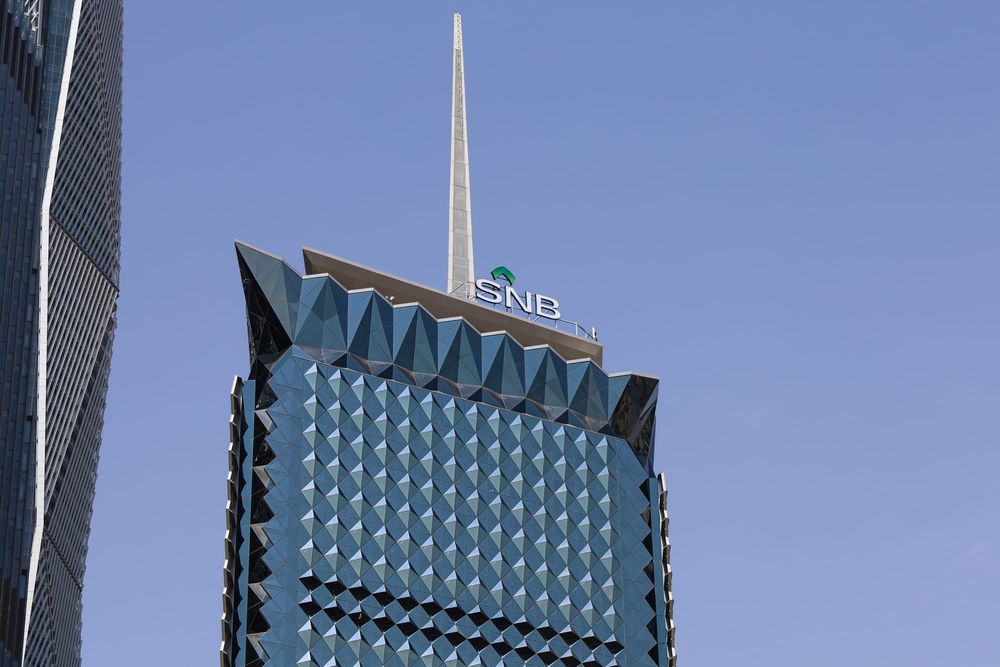
The Saudi National Bank is delivering on the financial promises made when the kingdom's two largest lenders, the National Commercial Bank and Samba Financial Group, were merged to create it in 2021. With integration benefits now materialising, SNB is reporting an improved cost-to-income ratio as it reviews performance through the first half of 2025, having also undertaken a significant expansion of its domestic branch network to serve clients linked to Saudi Arabia's multi-hundred-billion-riyal mega-project programmes.
SNB was established through the combination of NCB and Samba in 2021, a consolidation driven by the Saudi government's ambition to create a financial institution with the scale and balance sheet capacity to finance Vision 2030's transformative projects, including NEOM, the Red Sea development, and the Diriyah Gate scheme. Four years on, the merger's operational logic is increasingly visible in the bank's performance metrics, as the cost efficiencies and revenue synergies promised at the time of the deal begin to crystallise.
INTEGRATION BENEFITS AND DOMESTIC EXPANSION
The cost-to-income ratio is one of the most closely watched indicators of merger progress, and SNB's improving trajectory on this measure suggests that the rationalisation of overlapping operations, systems, and staff that typically follows large bank combinations is advancing as planned. Achieving efficiency gains of this kind requires sustained work on back-office consolidation, technology platform harmonisation, and procurement optimisation, making the improvement meaningful evidence of integration maturity rather than short-term cost cuts.
On the distribution side, SNB doubled its branch network in Saudi Arabia during 2024 and into 2025, a deliberate move to capture the deposit and lending flows generated by the kingdom's mega-project economy. Projects of this scale require significant financing activity across construction, engineering, hospitality, and logistics, and local branch presence remains important for relationship management with contractors, developers, and the supply-chain businesses that cluster around major infrastructure programmes. The expanded network positions SNB to be the primary banking partner for businesses and workers engaged across these projects.
The expanded network also supports SNB's retail ambitions. Saudi Arabia's rapidly growing and predominantly young population, combined with the broader digital shift in payments and banking, creates substantial opportunity for banks that can combine physical reach with digital capability.
REVIEWING INTERNATIONAL STRATEGY AFTER CREDIT SUISSE
SNB's international posture attracted significant scrutiny following the write-down of its stake in Credit Suisse in 2023, an investment that turned deeply loss-making when the Swiss institution was rescued by UBS in a government-brokered emergency transaction. The episode drew wide attention to the risks of cross-border bank equity stakes and prompted a broader review of how SNB allocates capital internationally and evaluates the governance and financial health of potential investment targets.
International expansion remains a stated strategic objective as SNB moves through the first half of 2025, though the appetite for large minority equity stakes in foreign financial institutions is likely to be assessed with greater caution following the Credit Suisse experience. The bank's international activity is expected to concentrate on geographies and business lines where it holds natural competitive advantages, including trade finance corridors relevant to Saudi Arabia's growing non-oil export ambitions and treasury operations in markets with strong Saudi business communities.
With its cost base improving, its domestic franchise expanded, and its integration programme substantially complete, SNB enters the second half of 2025 in a position to deploy the financial resources generated by the merger more selectively and with greater strategic clarity than was possible in the immediate years following the NCB-Samba combination.