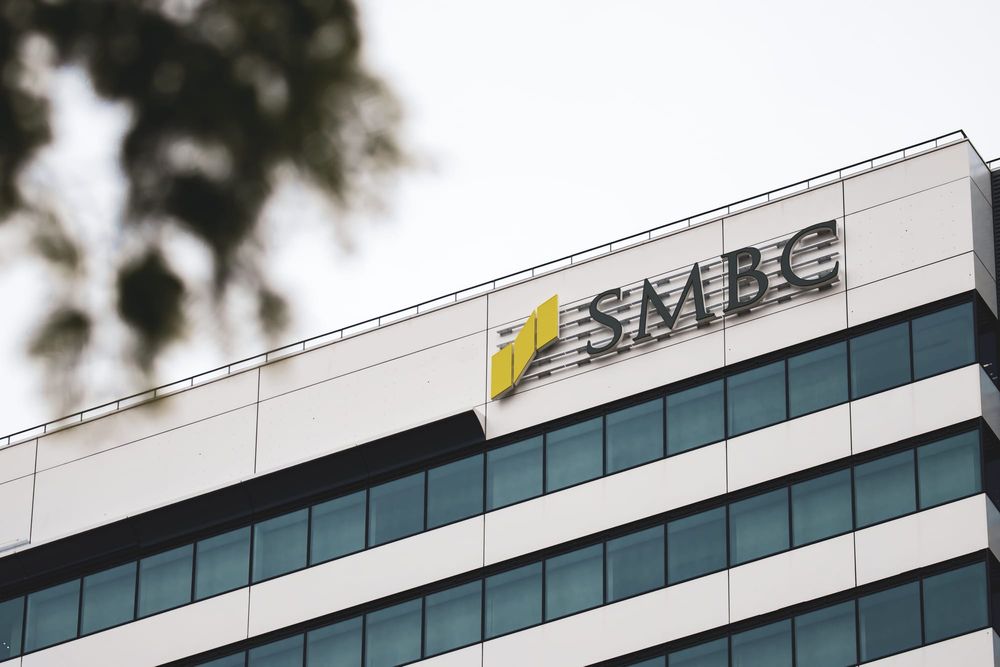
Sumitomo Mitsui Banking Corporation has sold its entire 1.65% equity stake in Kotak Mahindra Bank, one of India's leading private sector lenders, in a disposal that forms part of the Japanese bank's broader portfolio rebalancing carried out concurrently with its acquisition of a stake in Yes Bank. The transaction, executed in approximately August 2025, marks a deliberate reallocation of SMBC's Indian banking exposure from one of the country's most highly valued private sector institutions to another that is at a different stage of its development cycle, reflecting a strategic repositioning within one of Asia's most important and fastest-growing banking markets.
SMBC's decision to exit Kotak Mahindra Bank is directly linked to its concurrent move to acquire a stake in Yes Bank, with the proceeds from the Kotak disposal understood to partially fund the Yes Bank transaction. Taken together, the two transactions constitute a meaningful reorientation of SMBC's India strategy, moving away from a passive minority position in an established and richly valued franchise toward what is expected to be a more strategically engaged holding in a bank that has undergone extensive restructuring since its near-collapse and regulatory rescue in 2020. The shift reflects SMBC's broader preference for equity stakes that offer scope for active commercial partnership rather than purely financial exposure.
KOTAK MAHINDRA AND SMBC'S PRIOR HOLDING
Kotak Mahindra Bank is regarded as one of India's highest-quality private sector banking franchises, known for conservative balance sheet management, strong asset quality metrics, and the enduring institutional influence of founder Uday Kotak. SMBC's 1.65% stake represented a relatively modest financial exposure relative to the total market capitalisation of either institution, and the disposal is unlikely to carry material consequences for Kotak Mahindra's capital structure or governance arrangements. However, for SMBC, the holding had formed part of a portfolio of Asian banking investments that the group has been reviewing with a view to concentrating its equity positions where commercial partnership opportunities are most actionable and strategically valuable.
The sale of the Kotak stake is consistent with a broader pattern among major Japanese banks of focusing minority shareholdings in Asian financial institutions on targets where they can build commercially meaningful partnerships across areas such as corporate banking, cross-border trade finance, treasury services, and wealth management for high-net-worth clients. A passive minority position in a well-run but independently managed institution such as Kotak offers limited scope for such integration, whereas a more substantial engagement with Yes Bank may provide SMBC with greater ability to shape that institution's strategic direction and develop a deeper bilateral banking relationship with tangible revenue implications.
PROCEEDS DIRECTED TOWARD YES BANK TRANSACTION
SMBC's concurrent engagement with Yes Bank represents one of the more strategically significant moves by a Japanese bank in the Indian market in recent memory. Yes Bank underwent a dramatic transformation following the Reserve Bank of India's emergency intervention in March 2020, when the regulator suspended the bank's management and co-ordinated a capital injection led by State Bank of India and a consortium of domestic financial institutions. Since its restructuring, Yes Bank has worked systematically to rebuild its franchise, restore depositor confidence, improve its risk management culture, and grow its loan book from a substantially reduced base.
For SMBC, an equity stake in Yes Bank offers exposure to a mid-sized Indian private sector lender at a stage where its operational recovery trajectory may translate into compelling returns if the institution successfully rebuilds its franchise over the coming years. India's banking sector continues to benefit from robust nominal GDP growth, expanding credit demand across consumer and corporate segments, and a tightening regulatory environment that is progressively improving systemic resilience. The combination of the Kotak exit and the Yes Bank engagement positions SMBC to deepen its India strategy in a manner that is better aligned with its global banking partnership model.