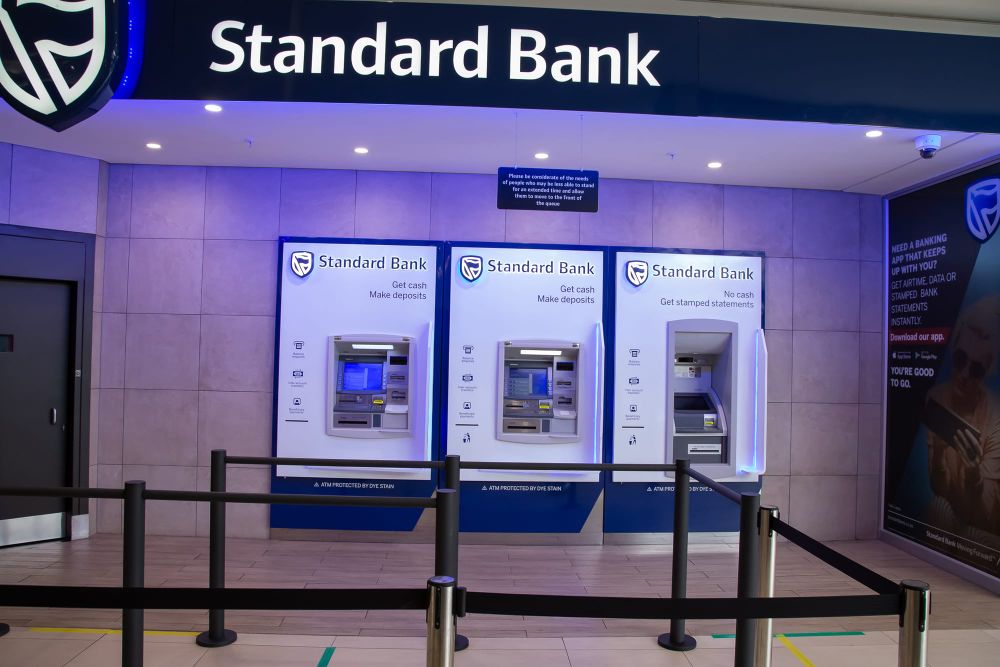
Standard Bank, MTN and Gold Fields faced growing political and public pressure after anti-immigrant protests spread, exposing multinational firms to a wave of reputational and operational risks across parts of Africa, Moneyweb reported.
The protests put companies with large footprints in the region under scrutiny from customers, civil society groups and political actors, as firms moved to manage immediate fallout and broader strategic exposure in multiple markets. The developments followed a surge in public anger that targeted foreign nationals and, by extension, businesses perceived as connected to non-citizen communities.
COMPANIES NAVIGATED PUBLIC AND POLITICAL PRESSURE
Standard Bank, as a major lender with operations across the continent, was among the firms that faced heightened attention as the demonstrations spread. Media coverage and public commentary focused on the responsibility of large corporations to respond to community concerns while protecting their employees and customers.
Telecommunications group MTN and mining firm Gold Fields also confronted criticism linked to the unrest, illustrating how companies from different sectors can be drawn into politically charged episodes. In each case, the challenges combined reputational risk with operational considerations, including the safety of staff, access to sites and the continuity of customer services.
Companies took visible steps to address immediate risks, including assessments of local operations and messaging to stakeholders. The attention also prompted closer scrutiny of corporate policies on community engagement and crisis response, which investors and regulators frequently consider when evaluating governance practices.
MARKET IMPLICATIONS AND REGULATORY CONTEXT
For financial institutions and multinational firms, episodes of civil unrest carry several layers of market implication. Short-term impacts typically include operational disruption and reputational damage, while longer-term risks can involve shifts in consumer behaviour, increased regulatory intervention and changes to investment calculus in affected markets.
Banks and payments providers remain sensitive to political risk because it can affect credit quality, deposit flows and access to foreign exchange in constrained markets. For a lender with extensive regional operations, sustained political tensions can complicate cross-border provisioning decisions and client relationships, particularly where households and small enterprises face economic strain.
Telecoms and mining companies similarly face distinct vulnerabilities: telecoms rely on uninterrupted networks and retail access, while miners depend on secure sites and stable supply chains. In each sector, corporate responses to unrest factor into assessments by institutional investors and regulators that monitor systemic resilience and market conduct.
Regulators have in previous episodes signalled a willingness to intervene where public order issues intersect with market stability, consumer protection or financial inclusion objectives. The current wave of protests revived questions about how governments and regulators balance enforcement with safeguarding business continuity and the rights of affected populations.
Analysts and market participants typically watch three areas after such events: the immediate confidence of local customers, the stance of regulators and political leaders, and any operational restrictions that could influence revenue flows. While those assessments vary by company and country, the cross-sector presence of firms such as Standard Bank, MTN and Gold Fields means reputational and operational fallout can have wider ripple effects across supply chains and financial linkages.
Companies operating in the region have historically faced cyclical political and social risks, and recent protests underscored the need for robust local engagement strategies and crisis preparedness. For multinational firms, the episode reinforced the importance of aligning corporate communications with on-the-ground risk management, while also engaging with policymakers and community stakeholders to help stabilise markets and address underlying grievances.
Sources: Moneyweb SA