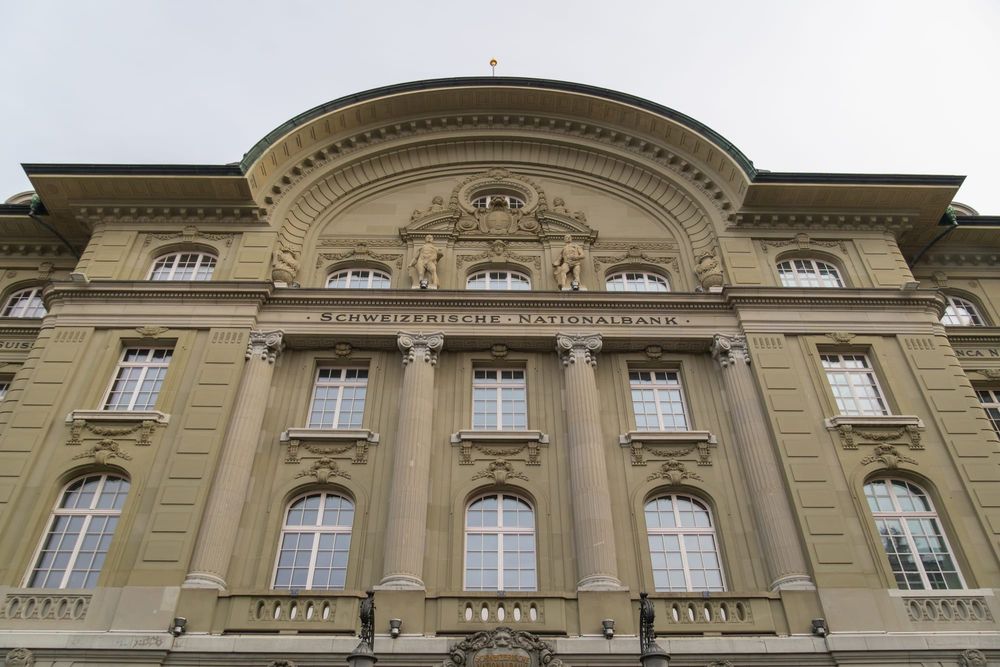
The Swiss National Bank kept its policy rate at 0% on 24 September, maintaining borrowing costs at zero for a third consecutive quarterly decision. It said the stance remained appropriate for price stability and economic development. The central bank also retained its willingness to intervene in foreign-exchange markets when necessary.
Swiss inflation rose to 0.8% in August from 0.6% in May, mainly because of higher energy prices. The SNB said goods-price inflation turned positive for the first time since May 2024. It expects inflation to increase further in the fourth quarter before easing during 2027.
FORECASTS MOVED HIGHER
The bank raised its average inflation forecast for 2026 to 0.7%, from 0.6% in its June assessment. It projected inflation of 0.8% in both 2027 and 2028. The forecast assumes the policy rate remains at 0% throughout the projection period.
The SNB now expects Switzerland’s economy to expand between 1.5% and 2% in 2026, followed by growth of about 1.5% in 2027. It cited considerable uncertainty around the outlook, including the Middle East conflict, global growth, trade policy and exchange-rate movements.
CURRENCY POLICY REMAINS ACTIVE
Sight deposits up to each bank’s threshold continue to be remunerated at the policy rate. Balances above the threshold receive a rate 0.25 percentage points lower. That tiered framework helps the SNB steer short-term secured money-market rates close to its policy rate.
The decision leaves currency intervention as the principal immediate tool if safe-haven demand produces an unwanted appreciation of the franc. The next scheduled policy decision is due on 10 December, while the SNB’s quarterly bulletin is scheduled for 30 September. Changes in energy prices, inflation and the exchange rate will shape that assessment.