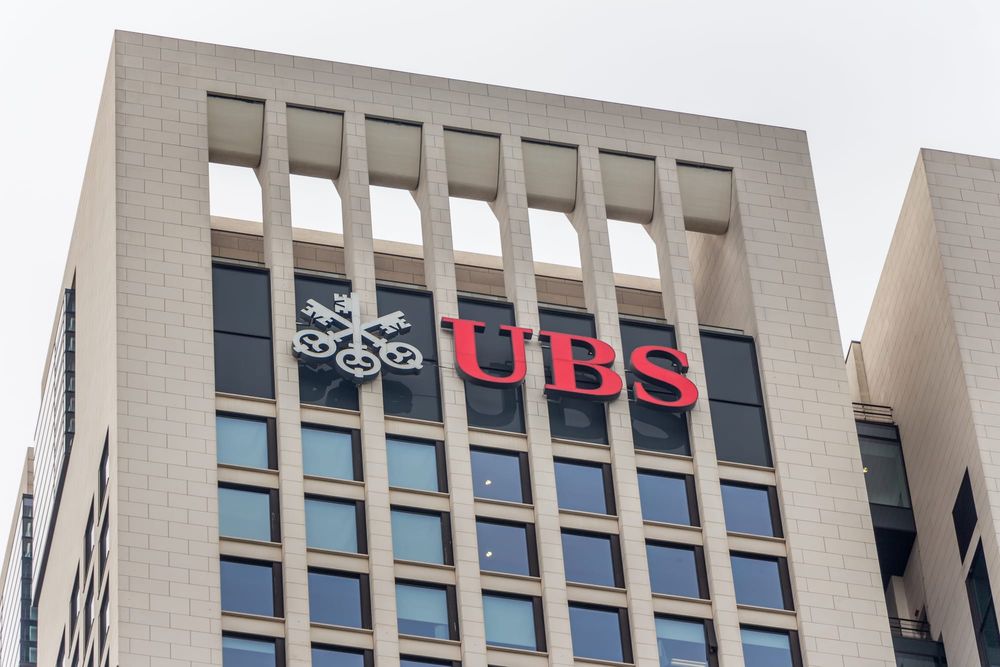
UBS has completed the integration of Credit Suisse's legacy businesses into its own structure, drawing a formal close to the most consequential banking merger in European history since the global financial crisis. The consolidation of Credit Suisse's Swiss banking operations into UBS's retail and commercial banking franchise follows the emergency acquisition of Credit Suisse by UBS in March 2023, a government-brokered rescue that averted a disorderly collapse of Switzerland's second-largest bank and the systemic risks that such a failure would have posed to both the Swiss financial system and, given Credit Suisse's global reach, the broader international banking system.
The completion of the integration leaves UBS as Switzerland's dominant banking institution, with a balance sheet of approximately $1.6 trillion — a scale that makes it one of the largest banks in the world relative to the size of its home country's economy. The combined entity encompasses the full breadth of Credit Suisse's former operations in retail and private banking within Switzerland, incorporating millions of domestic customer accounts, a nationwide branch network, and a significant share of the Swiss residential mortgage and corporate lending market. The milestone marks the end of an extraordinarily complex operational programme conducted under sustained public and regulatory scrutiny.
THE MARCH 2023 EMERGENCY RESCUE REVISITED
The Credit Suisse acquisition was arranged over a single weekend in March 2023 as Swiss authorities, the Swiss National Bank, and FINMA moved to prevent a rapidly accelerating confidence crisis from deteriorating into an outright bank run with systemic consequences. Credit Suisse had been afflicted for several years by a succession of risk management failures, prolonged management instability, significant litigation and settlement costs, and a series of high-profile losses stemming from its exposure to collapsed investment vehicles including Archegos Capital and supply chain finance funds associated with Greensill Capital. By early March 2023, deposit outflows had reached a pace that made independent survival untenable.
UBS agreed to the acquisition at a consideration of three billion Swiss francs in an all-share deal, supported by substantial government-backed loss guarantees and central bank liquidity facilities. The transaction involved the write-down of approximately 16 billion Swiss francs of Credit Suisse's Additional Tier 1 bonds, a decision that sent shockwaves through the AT1 debt market globally and prompted legal challenges from affected bondholders. The integration programme that has now concluded has been one of the most operationally complex and carefully watched undertakings in the modern history of global banking.
DOMINANCE, RISK, AND REGULATORY SCRUTINY
The creation of a single dominant Swiss bank at this scale has attracted sustained and pointed scrutiny from Swiss regulators and policymakers. FINMA and the Swiss federal government have both signalled that the consolidated entity requires a materially strengthened prudential framework to address the concentration of systemic risk that results from a single institution whose balance sheet is several multiples of Switzerland's annual GDP. Discussions about additional capital surcharges and enhanced recovery and resolution planning requirements were already advancing well before the operational integration reached its conclusion.
For UBS's management team, the completion of the integration removes a major source of execution risk, cost uncertainty, and strategic distraction from the group's outlook and frees resources to focus on optimising the performance of the combined franchise. The challenge that now confronts the leadership is to demonstrate that the enlarged institution can generate returns on its expanded balance sheet that justify the complexity of the merger and satisfy shareholders who have extended considerable patience through an extended period of integration costs and operational investment. UBS has positioned itself as a pre-eminent global wealth manager with a dominant Swiss domestic banking franchise, and the next chapter will be defined by how effectively it converts that market position into sustained earnings growth.