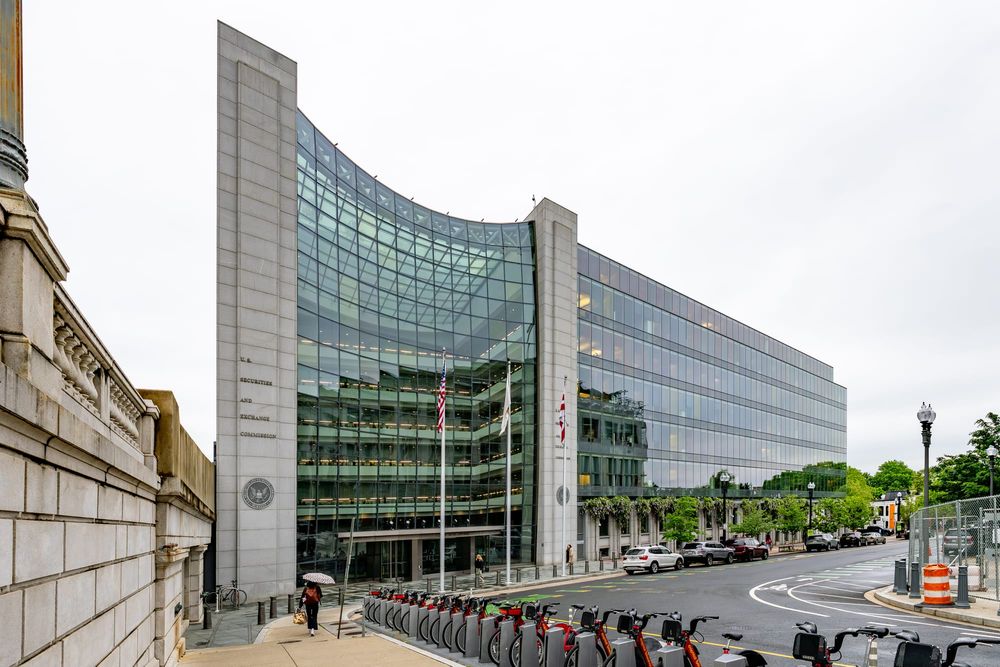
The US Securities and Exchange Commission granted temporary, conditional relief for venues trading tokenised National Market System stocks on 17 September. The order exempts qualifying Tokenized Securities Venues from the Exchange Act definition of an exchange when they use permissioned automated market makers and liquidity pools. It also provides conditional dealer-registration relief for certain liquidity providers using proprietary capital. The exemptions are scheduled to expire five years after publication.
The decision establishes a route for blockchain-based representations of listed US shares to trade within a defined regulatory framework. Reuters reported that the exemption applies to tokens carrying the same shareholder rights as the corresponding conventional shares. The SEC described the relief as temporary while it considers whether further action is needed. The order also requests public comment on possible modifications and next steps.
CONDITIONS GOVERN VENUES AND STOCKS
A qualifying venue must observe limits on the number of symbols and trading volume. It must verify that each tokenised stock provides holders with the same rights and privileges as the equivalent class of traditional stock. When an unaffiliated third party tokenises the shares, the venue must notify the underlying issuer in writing and give it an opportunity to object.
The SEC also requires venue smart contracts to be auditable and public and to operate on a public, permissionless distributed ledger. Trading in a tokenised stock must stop when trading in the underlying stock is halted on its primary exchange. Venues must publish information about their operations, trading activity and affiliated trading on the platform.
TEMPORARY RELIEF PRECEDES FURTHER REVIEW
The separate dealer exemption covers liquidity providers that supply tokenised NMS stock to a venue’s pool using proprietary capital and may undertake other dealer-like activity. The relief is conditional rather than a broad removal of registration requirements. It is tied to the defined venue structure and the safeguards in the SEC order.
The next milestone is publication of the order in the Federal Register and the resulting public-comment process. The five-year expiry gives the SEC a limited period in which to assess the model and consider permanent changes. Market participants will need to demonstrate compliance with the venue, stock-rights, issuer-notice and transparency conditions before relying on the relief.