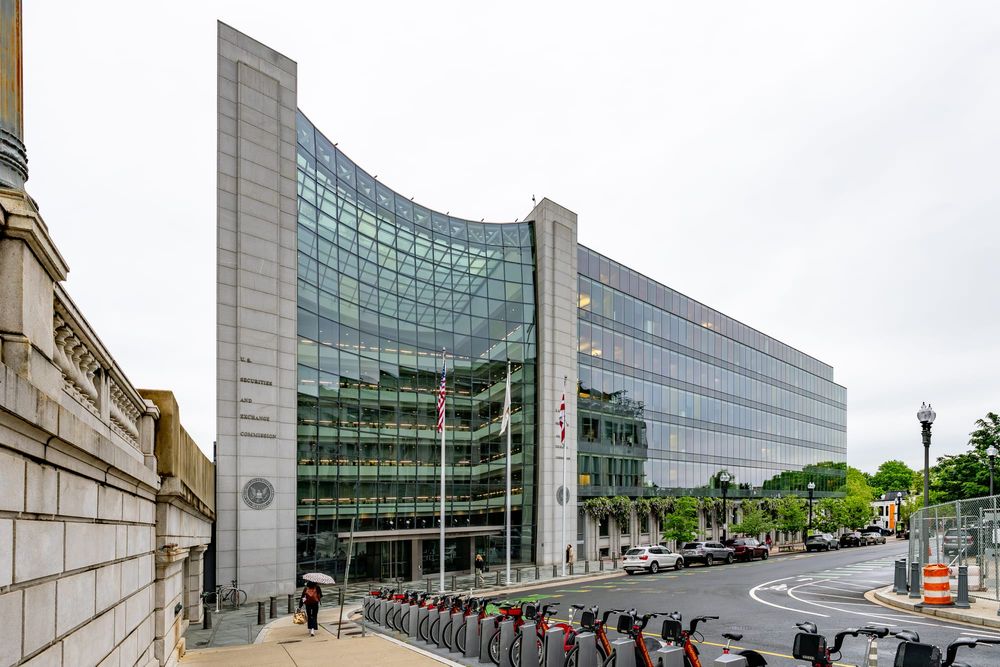
The US Securities and Exchange Commission granted temporary conditional relief for venues trading tokenized US-listed stocks on 17 September. The exemption allows qualifying tokenized securities venues to use permissioned automated market makers and liquidity pools without registering as exchanges. It is scheduled to expire five years after publication. The SEC also requested public comment on possible modifications and next steps.
The order applies to tokenized National Market System stocks that give holders the same rights and privileges as the equivalent traditional shares. It does not provide a general exemption for every digital representation of a security. The SEC also granted conditional dealer-registration relief to certain liquidity providers using proprietary capital in approved pools. Reuters reported that the measure forms part of the regulator's effort to bring tokenized-equity activity within US markets.
CONDITIONS FOR TOKENIZED VENUES
A venue must limit the number of securities and the trading volume available under the exemption. If an unaffiliated third party tokenizes a company's stock, the venue must notify the issuer in writing and give it an opportunity to object. Smart contracts must be auditable, public and deployed on a public permissionless distributed ledger.
Trading in a tokenized stock must stop when trading in the underlying security is halted on its primary listing exchange. Venues must also publish information about their operations, trading activity and affiliate activity. Those requirements are intended to retain links between the tokenized instrument and the rights, controls and market events affecting the listed share.
TEMPORARY RELIEF AND REVIEW
The relief gives platforms a defined route to test on-chain trading while the SEC considers whether broader rule changes are warranted. It also creates a time-limited framework for liquidity providers whose activity could otherwise bring them within the statutory definition of a dealer. The order does not remove the conditions attached to the underlying listed securities.
The immediate next steps are publication of the order in the Federal Register and the public-comment process. Platforms seeking to rely on the exemption will need to satisfy the operational, disclosure and investor-protection conditions before using it. The SEC can use the resulting market experience and comments when considering any replacement framework before the five-year period ends.