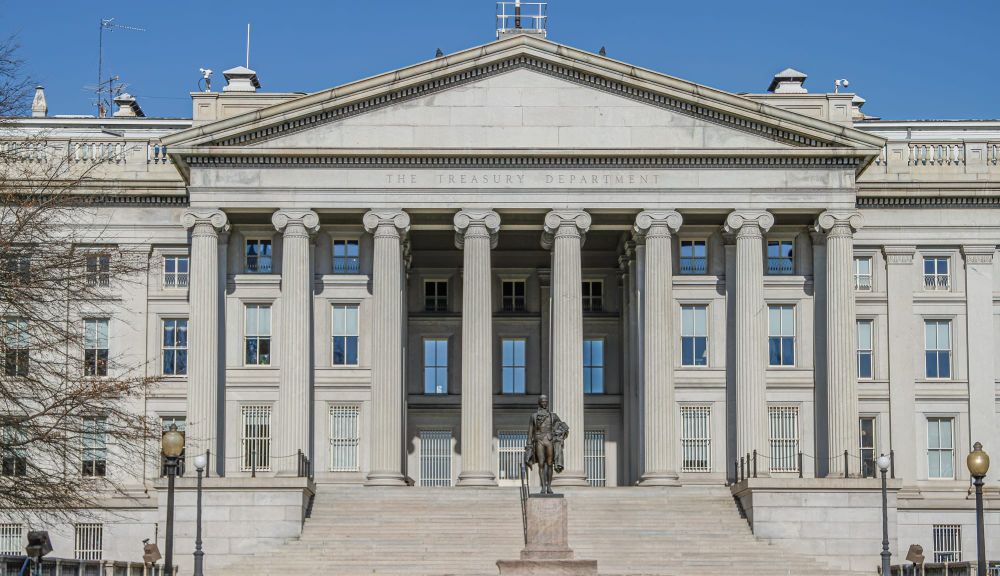
The United States Treasury Department imposed sanctions on Istanbul-based Golden Global Yatirim Bankasi Anonim Sirketi and two of its subsidiaries on Friday, accusing the institutions of facilitating tens of millions of dollars' worth of transactions for the Islamic Revolutionary Guard Corps Qods Force. The Office of Foreign Assets Control added the bank, asset manager Golden Global Portfoy Yonetimi Anonim Sirketi and asset leasing company Golden Global Varlik Kiralama Anonim Sirketi to its Specially Designated Nationals list, cutting all three off from the dollar-based financial system. Treasury simultaneously issued a general license permitting counterparties to wind down existing transactions with the designated entities. Golden Global Yatirim Bankasi is Turkey's 35th-largest bank, holding total assets of approximately 25 billion Turkish lira, or about $517 million, in 2025, according to database TheBanks.EU.
The designation marks the first time a bank domiciled in a NATO member state has been targeted under Operation Economic Outcast, the sanctions campaign launched by Treasury Secretary Scott Bessent on 24 August. Golden Global becomes the second financial institution designated under the programme. A week earlier, Washington moved to impose Patriot Act curbs restricting the United Arab Emirates branches of Egyptian lender Banque Misr from US dollar transactions over dealings with Iran, a measure that left the bank's head office and other branches untouched and which does not take effect for 30 days. The European Union formally joined the campaign this week after expressing earlier support.
TREASURY ALLEGES OIL REVENUE CONDUIT
Treasury said Golden Global was established for the purpose of enabling Iran's rahbar network, the shadow banking apparatus used by the Iranian government, to transfer oil revenues from China to Turkey, where the proceeds could be converted into cash and gold by rahbar money exchangers. The department further alleged the bank knowingly offered correspondent banking services to Iranian financial institutions, enabling transactions through accounts controlled by the Qods Force and its proxies. Among the proxies named was Turkish businessman Sitki Ayan and his associated companies, which were themselves designated by Washington in 2022. Treasury characterised the correspondent access as a mechanism allowing the Iranian government to move funds internationally.
Golden Global Yatirim Bankasi rejected the allegations. The lender said it had complied with local and international banking and compliance requirements and would pursue its legal rights against what it described as unfounded allegations. It added that the individuals and entities named in the OFAC decision were not its customers and that it had no direct or indirect dealings with them. In a statement accompanying the designation, Bessent said the action sent a clear message to institutions the US government believes are facilitating trade with Iran and the Revolutionary Guard, adding that Washington would continue to act alongside allies and partners.
SECONDARY RISK FOR CORRESPONDENT BANKS
Sanctions specialists framed the action as a signal to the wider Turkish banking sector rather than a material blow to Iranian finances. Miad Maleki, sanctions expert at the Foundation for the Defense of Democracies, said the message to Ankara was blunt, noting that as Gulf channels close, Turkey is the obvious destination for the money to move next. Maleki said any foreign bank continuing to do business with the designated lender was itself at risk, and that this knock-on effect, rather than the half-billion-dollar bank itself, was the real point of the action. Bessent said separately that further sanctions against another bank were possible in the coming week, while telling reporters he hoped no additional banks would need to be designated.
The campaign's ultimate reach remains constrained by Washington's approach to China, Iran's largest trading partner and principal oil buyer, against which no tangible action has yet been taken. Bessent has said Beijing is not exempt from potential sanctions, though the administration faces a scheduled meeting between President Donald Trump and President Xi Jinping later this month. Brett Erickson, managing principal of Obsidian Risk Advisors, questioned the measure's effectiveness, saying the designation would marginally increase pressure on Iran but that hurting Iran and changing the outcome of the war are different propositions. Erickson cautioned that if the pressure cannot meaningfully alter the economic trajectory of the conflict, Washington risks inviting Iranian retaliation capable of inflicting broader damage on the global economy. Correspondent banks with Turkish exposure will be watching whether Treasury extends designations to larger institutions in the coming weeks.