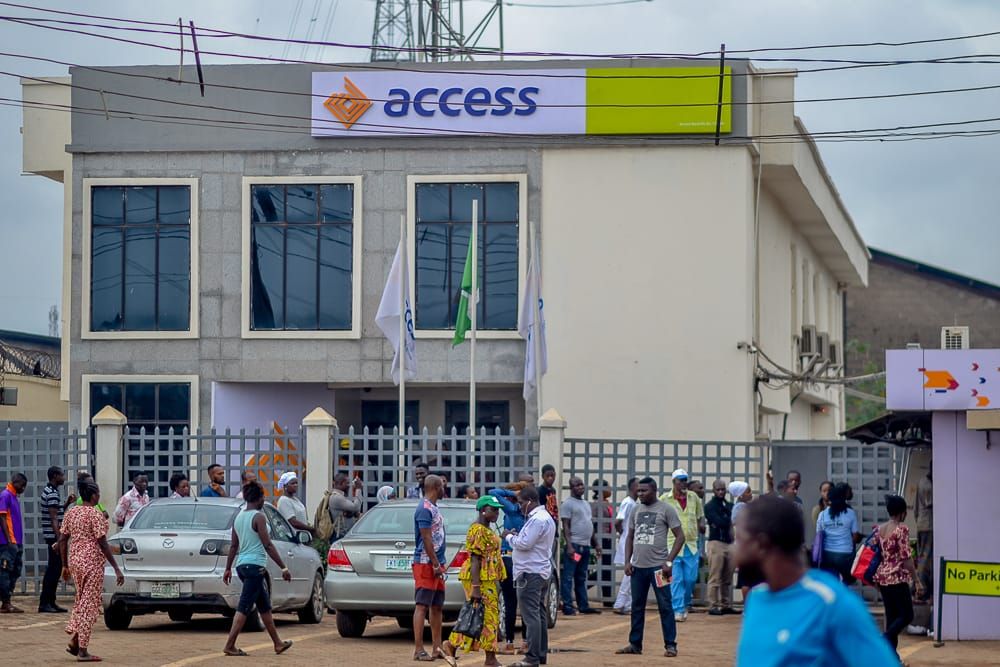
Access Bank has signed an agreement to acquire National Bank of Kenya from KCB Group for $109.6 million, in a deal that represents one of the most consequential cross-border banking transactions on the African continent in recent years. The agreement, signed approximately March 2024, would see the Nigerian lender take full ownership of NBK, a full-service commercial bank with an established retail and corporate franchise in Kenya. The transaction extends Access Bank's pan-African footprint into East Africa's most internationally connected financial market and positions the Nigerian lender to serve a broader base of corporate and consumer clients across the region.
The acquisition underscores Access Bank's sustained ambition to build a pan-African banking network that stretches well beyond its West African roots. Kenya, home to one of the continent's most developed financial sectors and a regional hub for multinational operations, has long been identified by leading Nigerian banks as a priority destination for expansion. National Bank of Kenya brings with it a nationwide branch network, a diversified loan book, and deposit-gathering infrastructure that would take years and considerable capital to replicate through organic growth alone.
KCB GROUP EXITS A NON-CORE HOLDING
For KCB Group, Kenya's largest bank by assets, the disposal of National Bank of Kenya represents a strategic rationalisation of its portfolio. NBK was absorbed into KCB's group structure following an earlier state-facilitated rescue, and the subsidiary has since operated alongside KCB's core banking business. Selling the unit to Access Bank allows KCB to sharpen its focus on its flagship retail and corporate banking operations, redeploy capital into higher-priority segments, and reduce the operational complexity associated with running two overlapping Kenyan bank brands under a single parent structure. The $109.6 million sale price reflects NBK's position as a mid-tier lender with meaningful market presence but also a franchise that requires continued investment to reach its full potential.
Regulatory approvals from the Central Bank of Kenya and the relevant Nigerian authorities remain a prerequisite before the transaction can be completed. Both parties indicated they would work constructively with regulators to secure the necessary clearances. The deal is subject to the standard conditions precedent that accompany cross-border bank acquisitions in regulated markets, including fitness and propriety assessments, review of capital adequacy at the combined entity, and confirmation that no competition concerns arise from the combination.
ACCESS BANK DEEPENS CONTINENTAL REACH
The NBK acquisition would rank as the largest single cross-border bank acquisition in Access Bank's expansion history, signalling a step-change in its ambitions for the East African market. Access Bank has pursued an aggressive international strategy in recent years, establishing or acquiring banking licences across sub-Saharan Africa, the United Kingdom, and other international markets. The Kenyan deal delivers a ready-made platform with existing customers, staff, and operational infrastructure rather than requiring a costly and time-consuming greenfield entry into a competitive market with well-established domestic incumbents.
Once integrated, the combined Kenyan operation is expected to benefit from Access Bank's broader product capabilities, technology platforms, and correspondent banking relationships, enhancing the service proposition available to NBK's existing clients. For the Nigerian parent, the transaction reinforces its publicly stated goal of becoming a leading pan-African financial institution capable of facilitating trade and capital flows across the continent, competing with the established regional banking groups that currently dominate cross-border corporate banking in East Africa. The deal also positions Access Bank to capture growing intra-African trade volumes as infrastructure investment and regional economic integration continue to expand commercial activity between West and East Africa.