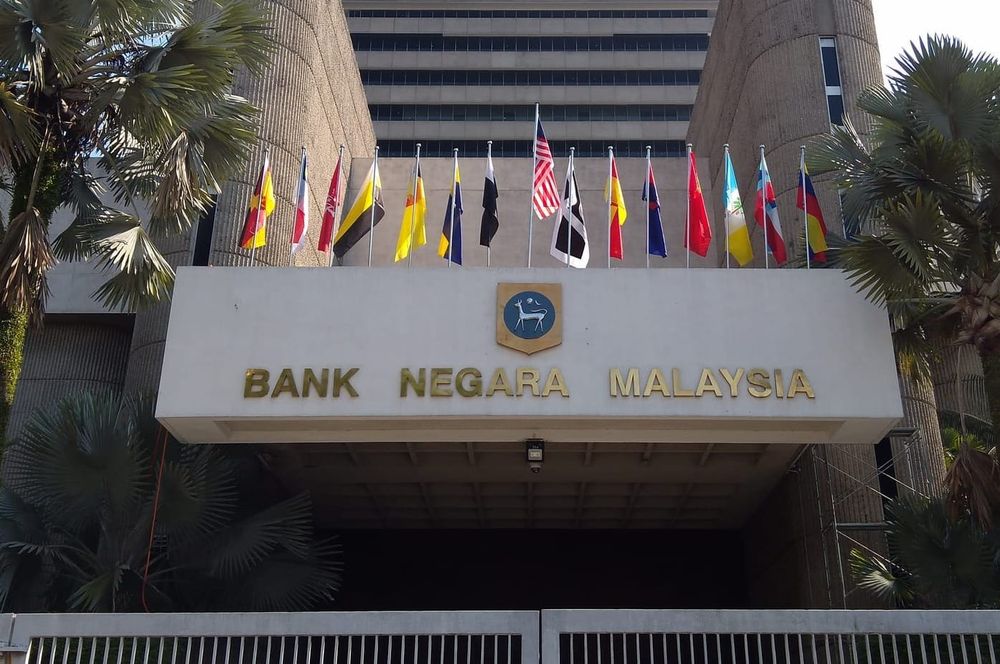
Bank Negara Malaysia (BNM) and the Bank of Thailand (BOT) have joined the Monetary Authority of Singapore's BLOOM (Borderless, Liquid, Open, Online, Multi-currency) initiative as policymaker members, MAS announced. The three central banks will partner industry players across their jurisdictions to develop common approaches for the cross-border use of digital money.
Those approaches cover how different forms of digital money can be accepted, exchanged and settled across institutions, networks and jurisdictions. Through implementation frameworks and aligned commercial and operating arrangements, BLOOM aims to reduce the need for financial institutions to set up separate arrangements with each counterparty or market, lowering implementation cost and improving time to market.
INDUSTRY ROSTER WIDENS TO INCLUDE WORLD BANK
BLOOM's participation has also expanded to include Airwallex, Mastercard, Maybank, Monee, Nium, Ripple, ShopeePay, Visa and the World Bank Group. The World Bank Group takes part as a Multilateral Development Bank, contributing its global experience in payment systems modernisation, cross-border payments and financial inclusion. It will also bring the perspectives and needs of developing economies to the initiative.
Existing participants are Anchorage Digital, Ant International, Circle, Coinbase, DBS, J.P. Morgan, Kasikornbank, OCBC, Partior, Schroders, Standard Chartered, StraitsX, Stripe, Temasek, UOB and Xweave. The industry members at the start were local banks DBS, OCBC and UOB, foreign banks including Standard Chartered and JPMorgan Chase, crypto exchange Coinbase, XSGD issuer StraitsX and USD Coin issuer Circle. Singapore investment company Temasek was also an original member.
THREE FOCUS AREAS AND SETTLEMENT ASSETS
Participants will focus on three areas to support the use of digital money across jurisdictions. These are acceptance and settlement across jurisdictions, interoperability across digital money arrangements, and programmable controls. The controls include safeguards such as identity verification, sanctions screening and transaction controls.
BLOOM will enable the use of settlement assets such as tokenised forms of commercial bank money and stablecoins that meet regulatory expectations. MAS will work with the financial industry to enable settlement in tokenised bank liabilities and well-regulated stablecoins, managing risks in the evolving digital settlement asset landscape through standardised approaches. The initiative will enable settlement in multiple currencies, including G10 and Asian currencies, and support both domestic and cross-border transactions.
CENTRAL BANKS SET OUT THEIR AIMS
Leong Sing Chiong, MAS deputy managing director for markets and development, said: “To fully harness the benefits of using digital money, collaboration among policymakers and industry participants will be needed to address practical issues around acceptance, settlement and interoperability.” Policymaker participation also helps ensure that public policy and regulatory considerations are taken into account as the approaches are developed.
Daranee Saeju, Deputy Governor for Payment Systems Stability and Financial Services Supervision of BOT, said: “The initiative also allows us to carefully explore emerging innovations, while ensuring our oversight remains prudent, proportionate, and responsive to evolving risks.” The Bank of Thailand expects the initiative to inform its approach to regulating tokenised money, particularly in cross-border payments and wholesale settlement.
HOW THE INITIATIVE BEGAN AND WHAT IT BUILDS ON
MAS launched BLOOM in October last year. The public-private initiative aims to advance next-generation settlement infrastructure for domestic and cross-border payments and financial transactions. It brings together policymakers, financial institutions, payment networks and technology providers to advance the use of digital money in cross-border financial activity.
BLOOM builds on the groundwork of Project Orchid, which explored use cases for a digital Singapore dollar and the infrastructure required to support it. Established in 2021, Project Orchid has successfully conducted more than 10 trials. BLOOM also aims to strengthen the financial infrastructure capabilities of Singapore's financial centre.