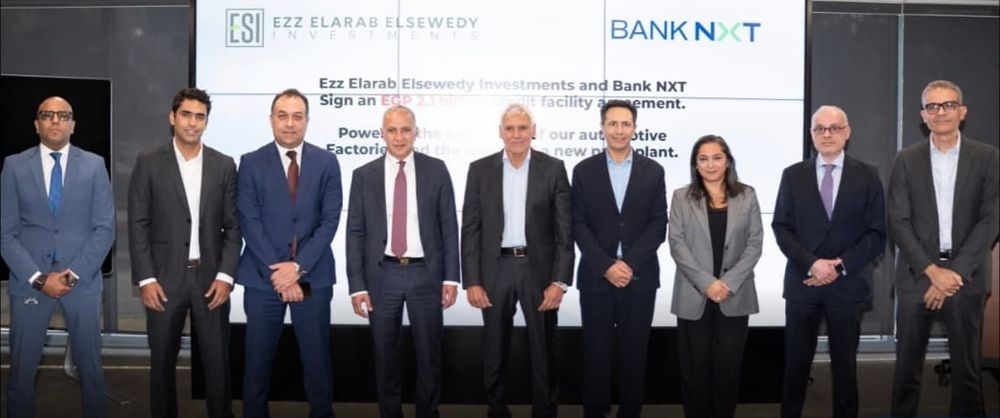
Bank NXT signed an EGP2.1 billion credit facility with Ezz Elarab Elsewedy Investments for an automotive industrial expansion in Egypt. The financing will support investment at Ezz Elarab Elsewedy Automotive Factories and the construction of a new paint plant. The parties dated the signing to 28 September 2026. EFG Holding, Bank NXT’s majority shareholder, published the transaction announcement.
Ezz Elarab Elsewedy Investments separately confirmed the facility and its intended use. Local reporting on 29 September also described the EGP2.1 billion agreement and the two industrial projects. The accessible announcements did not disclose the facility’s tenor, pricing or drawdown schedule.
FINANCING THE INDUSTRIAL BUILD-OUT
The facility links Bank NXT’s corporate lending to additional automotive manufacturing capacity. Its stated uses cover both investment in the existing factory platform and a separate paint facility. The disclosed amount is EGP2.1 billion across those purposes, without a published allocation between them.
EFG Holding’s announcement said Bank NXT’s paid-up capital had reached EGP5 billion after an acquisition and successive capital increases. That background places the facility within the lender’s broader corporate-banking activity. The transaction is a credit agreement rather than an equity investment or acquisition.
EXECUTION NOW MATTERS
The signing establishes the financing commitment, but the accessible disclosures do not state when funds will be drawn or when construction will begin. They also do not provide a completion date for the paint plant. Those omissions limit any assessment of the facility’s near-term operational effect.
The next material milestone will be evidence of drawdown, construction or production associated with the financed projects. Further disclosures from Bank NXT or Ezz Elarab Elsewedy would also clarify the repayment structure and whether the expansion changes the borrower’s manufacturing output.