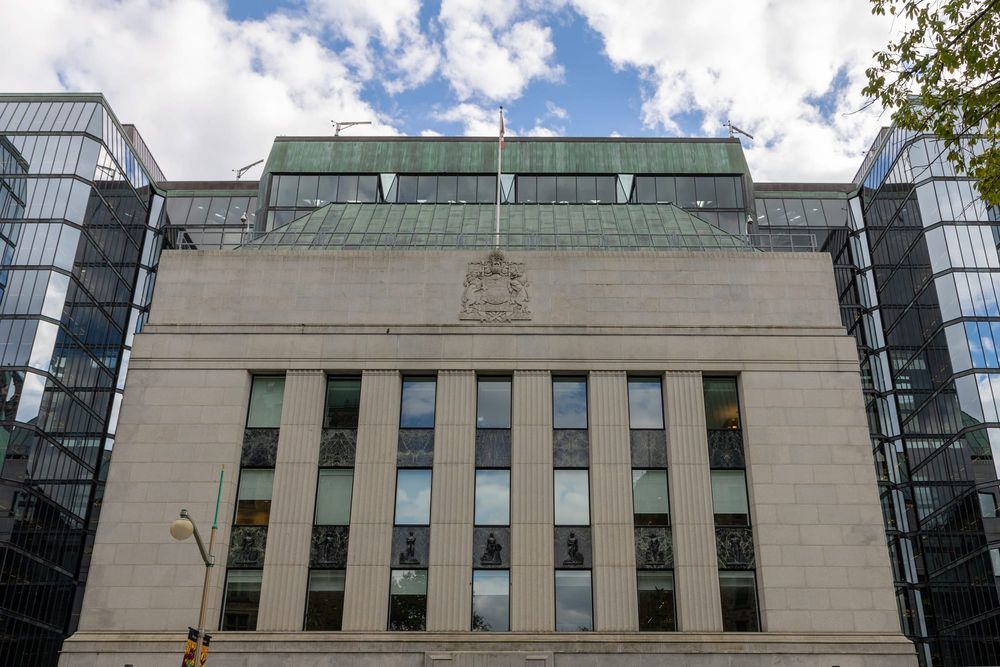
The Bank of Canada held its overnight target rate at 2.75% at its June 2025 policy meeting, maintaining the level set at the previous decision and signalling that the Governing Council saw no immediate case for either tightening or loosening monetary conditions. The decision reflected the central bank's assessment that two concurrent developments — an easing of trade tensions between Canada and the United States and core inflation sitting at the midpoint of its target range — warranted a steady hand on policy.
The hold followed a period of uncertainty in Canada's economic outlook driven by the threat of significant tariffs on Canadian exports to the United States. A subsequent truce between the two countries removed the most acute near-term risk and gave the Bank of Canada the space to pause and assess the underlying trajectory of the domestic economy rather than responding to external shocks. The central bank indicated it would continue to monitor trade developments closely, as the tariff situation had been fluid and the potential for renewed disruption had not been eliminated.
CORE INFLATION AT TARGET MIDPOINT
The Bank of Canada's preferred measures of core inflation — which strip out volatile components such as food and energy to provide a cleaner read on underlying price pressures — were sitting at the midpoint of the bank's 1% to 3% control range at the time of the June decision. That positioning gave policymakers considerable comfort, since inflation running at the centre of the target band is precisely the outcome monetary policy is designed to deliver and removes any urgency to adjust the policy rate in either direction.
Reaching the midpoint of the target band is a meaningful marker for the Bank of Canada at this point in the monetary policy cycle. The bank had raised rates aggressively through 2022 and 2023 in response to the surge in inflation that followed the pandemic, and the subsequent easing cycle had brought the overnight rate down from its peak. The June 2025 hold at 2.75% suggested that the Governing Council believed it had arrived at a rate level broadly consistent with returning inflation to target sustainably.
The bank's communications at the June meeting did not signal a strong directional bias toward either additional cuts or a return to tightening. Instead, policymakers emphasised their data-dependence and their intention to assess incoming economic and inflation readings before determining the appropriate path for rates at future meetings.
TRADE TRUCE REDUCES DOWNSIDE RISKS
The US-Canada tariff truce that the Bank of Canada cited as a factor in its June decision had removed a source of downside risk that had been weighing on the Canadian economic outlook for several months. Canadian exporters — particularly in sectors such as automotive manufacturing, aluminium, and steel — had been operating under significant uncertainty about their access to the US market, their largest trading partner, and that uncertainty had begun to affect investment and hiring decisions.
With the immediate tariff threat reduced, the central bank's baseline scenario for Canadian growth became somewhat more supportive of a steady rate stance. A sharp escalation in trade barriers would have posed a stagflationary challenge — simultaneously dampening growth and pushing up import prices — that would have complicated the bank's policy choices considerably. The truce did not resolve all outstanding trade policy questions between the two countries, and the Bank of Canada noted the ongoing uncertainty in its accompanying statement.
The next scheduled policy decision will give the Governing Council an opportunity to incorporate more data on both the domestic economic trajectory and the evolution of the trade situation. The bank said it would reassess conditions at that meeting and remained prepared to adjust the policy rate if the evidence warranted a change in direction.