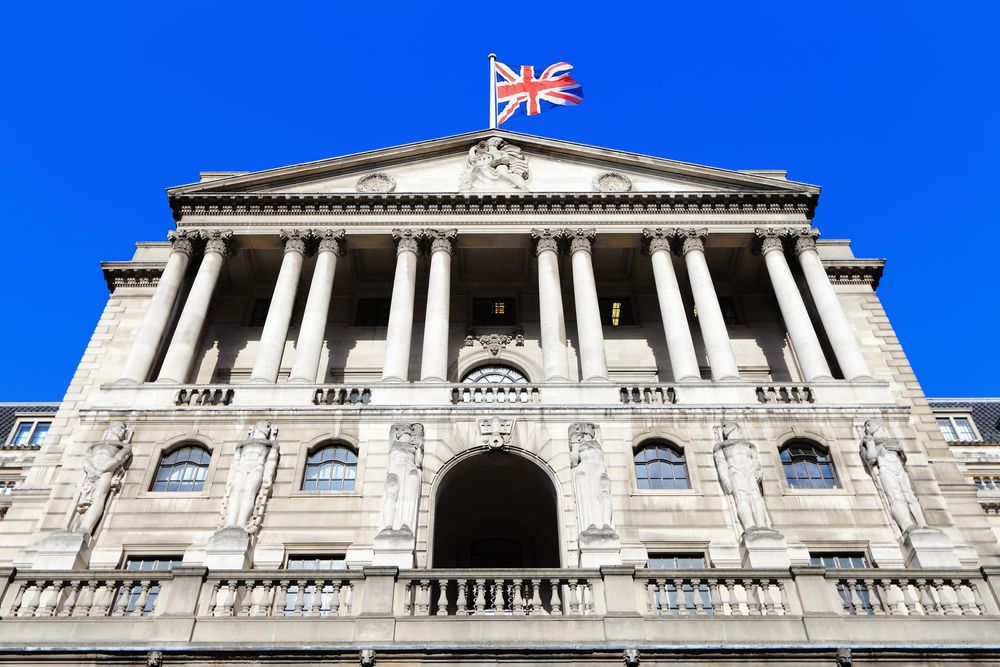
The Bank of England reduced its Bank Rate by 25 basis points to 3.75% on 18 December 2025, extending a sequence of monetary easing that has now delivered six cuts since the Monetary Policy Committee began loosening policy in August 2024. The decision was passed by a narrow majority of MPC members, underscoring the degree of disagreement among policymakers over the appropriate pace of rate reductions as the British economy navigates persistently elevated services inflation alongside subdued growth.
The narrow majority vote was the defining feature of December's decision, reflecting genuine division within the Committee. Dissenters in favour of keeping the rate on hold argued that underlying inflation pressures had not eased sufficiently to justify a further reduction at this meeting, while the majority judged that the balance of risks pointed to the case for a gradual continuation of the easing path established earlier in the year.
A GRADUAL EASING CYCLE CONTINUES
The six consecutive cuts since August 2024 represent a meaningful shift in British monetary policy after a prolonged period of restrictive rates that followed the sharp inflation surge of 2022 and 2023. Each reduction has been calibrated at 25 basis points, reflecting the MPC's preference for an incremental approach that allows time to assess the effect of each move on the real economy before committing to the next step.
At 3.75%, the Bank Rate remains above levels considered neutral for the United Kingdom economy, providing the Committee with room to continue easing if inflation continues its descent towards the 2% target. Services price inflation, which has proven stickier than goods prices throughout the post-pandemic period, has been the principal concern of those members advocating caution, given that it feeds more directly into domestically generated price pressures.
The labour market has remained relatively tight by historical standards, supporting household incomes but also contributing to wage growth that feeds into services costs. The MPC has emphasised a data-dependent approach, making clear that the trajectory of future cuts will hinge on how incoming prints for inflation, wages, and economic activity evolve in the months ahead.
MARKET EXPECTATIONS AND NEXT STEPS
Financial markets had largely anticipated the 25 basis point cut heading into the meeting, with pricing in overnight index swap markets implying a continuation of the gradual easing path into 2026. The narrow vote, however, introduced a degree of uncertainty about the pace of future reductions, with some market participants revising their expectations for the speed of further cuts in light of the visible dissent within the Committee.
The December decision marks the close of a notable year for the Bank of England, which began 2025 with rates well above current levels and has now delivered a cumulative 150 basis points of easing since the cycle began. Heading into 2026, the MPC faces the challenge of steering between two risks: cutting too quickly and reigniting inflation, or moving too slowly and adding unnecessary drag to an economy that has struggled to generate consistent above-trend growth. The Committee's next scheduled meeting will provide the first opportunity to update its assessment against fresh economic data in the new year.