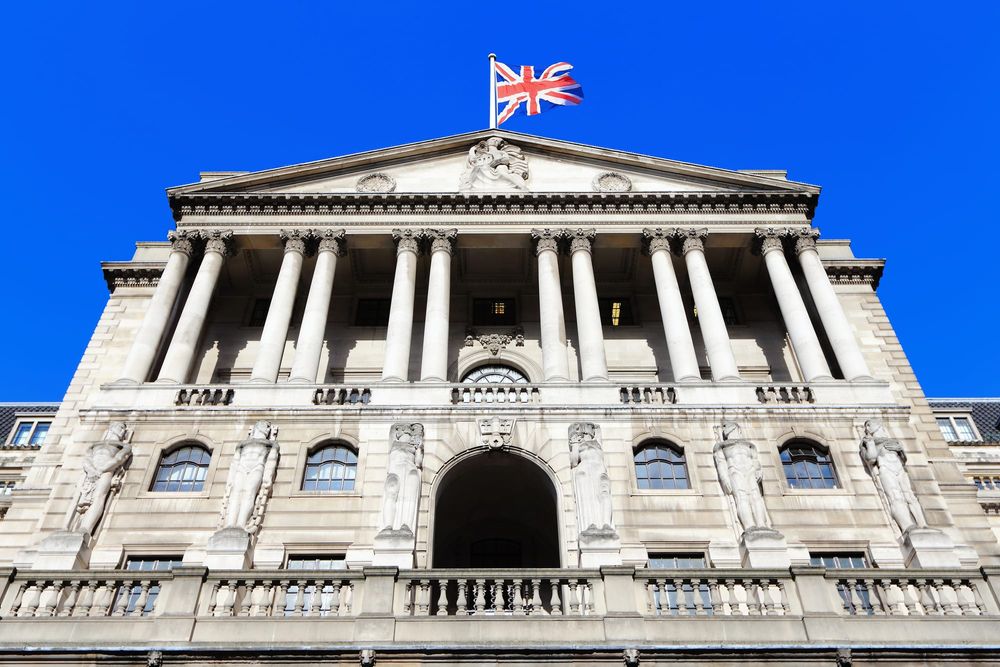
The Bank of England is examining whether Barclays traders misrepresented illiquid private credit loans to understate their risk, after an insider at the British bank raised concerns, the Financial Times reported on Monday.
The Prudential Regulation Authority (PRA) received a complaint earlier this year about how Barclays was recording derivatives used to finance private credit loans. The complaint centred on the allocation of total return swaps referencing illiquid private credit loans to Barclays' trading book, and the report did not disclose an amount.
TRADERS CITE A MATCHING SWAP HEDGE
The complaint also alleged that Barclays' handling of the deals breached PRA rules. Those rules restrict banks from assigning derivatives backed by illiquid collateral to their trading book unless they can supply enough evidence to justify the treatment. Barclays traders argued the exposure should be treated as a traded position because it was hedged through a matching swap with another counterparty, despite being linked to illiquid private credit loans.
The regulatory concern is that classifying derivatives linked to illiquid loans as easier-to-trade investments could understate the risk of the underlying exposure and reduce the money required to be set aside for potential losses. Barclays has built up billions of dollars in exposure to private credit loans through these derivatives, according to sources familiar with the bank's positions.
Total return swaps allow a bank to finance loans for private credit funds while passing the economic performance to the client for a fee. Their use in private credit financing is relatively recent and has gained momentum as funds look to increase leverage by using private loans as collateral.
WHY BOOK CLASSIFICATION DRIVES CAPITAL
Banks classify assets into either the banking book or the trading book, a decision that largely dictates the capital they must hold against potential losses. The banking book holds harder-to-sell loans that require higher capital reserves, while the trading book is meant for assets that can be sold easily. Improperly allocating illiquid assets to the trading book can lower capital requirements and boost profitability.
Last year the PRA wrote to chief financial officers to warn banks explicitly against bypassing capital rules by restructuring illiquid assets to look like tradable ones. It said some banks had taken a reckless approach to recognising collateral for regulatory capital, leading to potential undercapitalisation. Restructuring illiquid assets into a tradable format, the PRA added, is not enough to justify trading book capital treatment without supporting evidence.
Barclays' overall risk-weighted assets increased by £15.4 billion to £358.1 billion, compared with £342.7 billion in December 2023. Credit risk risk-weighted assets increased by £11.2 billion.
VALUATION CONCERNS IN PRIVATE CREDIT
Private credit loans are generally considered illiquid because they cannot be traded on secondary markets and lack daily mark-to-market valuations. Their valuation is central to concerns about potential risks in the private credit market. Regulators in Europe, the UK and the US have warned that valuations could expose lenders to losses in a market slowdown, and that links between banks and private credit funds could be contributing to systemic risks.
Banks have helped fuel the private credit boom by providing hundreds of billions of dollars in financing to a sector that now handles much of the lending to higher-risk companies. Private credit is non-bank lending to unlisted companies and has grown rapidly over the last 15 years, with global assets under management projected to reach $3 trillion by 2028, nearly ten times the 2010 level.
SHARE REACTION AND A SENSITIVE BACKDROP
Barclays shares were down 2.6% at 421.4 pence at 0750 GMT on Monday, while the FTSE 100 index was 0.9% lower. In an emailed statement, the bank said it takes seriously its regulatory obligations in markets where it operates. The Bank of England declined to comment on the report.
The complaint comes at a sensitive time for the PRA, whose chief executive, Katharine Braddick, worked at Barclays immediately before taking her public sector role this year. Braddick must recuse herself from any matters involving her former employer until the end of the year to avoid potential conflicts of interest.
Related: Bank of England’s Pill questioned pricing for four rate rises