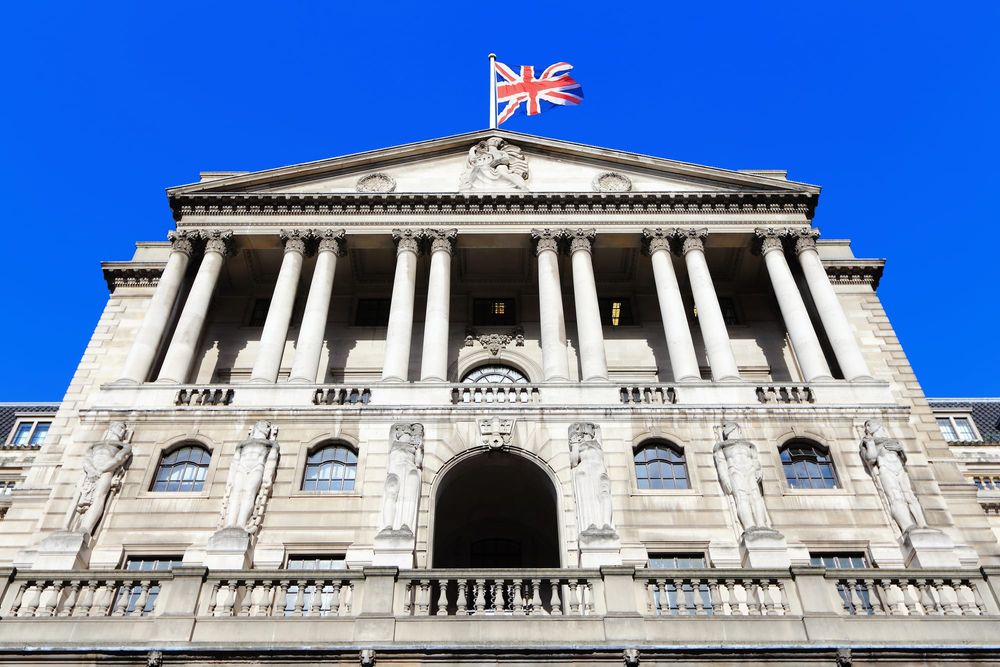
The Bank of England's Monetary Policy Committee voted to hold Bank Rate at 4.00% at its September 2025 meeting, pausing the easing cycle as policymakers assessed the cumulative impact of the 150 basis points of cuts delivered since August 2024. The decision reflects a committee that views the existing degree of monetary easing as sufficient for the time being and wishes to allow those reductions to work their way more fully into household budgets, mortgage lending, and business investment before considering any further adjustment. Bank Rate remains at its lowest level in the current cycle.
Consumer price inflation has been easing towards the Bank's 2% target, offering some reassurance that the earlier rate reductions have not reignited broad-based price pressures across the economy. Nonetheless, the MPC signalled caution, noting that the full effect of the 150-basis-point reduction applied over a period of little more than twelve months had not yet filtered entirely through to the real economy. The lag between a change in the policy rate and its full effect on activity and inflation is a well-established feature of monetary transmission, and the committee is choosing to respect that dynamic rather than pre-empt it with additional easing.
TRANSMISSION LAG DRIVES PAUSE
Monetary policy operates with a well-documented transmission lag, and the committee's reasoning in September reflects exactly that dynamic. With 150 basis points of cuts applied since August 2024, the cumulative stimulus in the pipeline is considerable, and the MPC appears unwilling to layer additional easing on top of relief that has not yet fully arrived in the real economy. Many fixed-rate mortgage holders, for example, will still be rolling over onto products set before the easing cycle began and will only benefit from lower rates at their next renewal date. The same pattern applies across portions of business lending and consumer credit.
From a markets perspective, the decision was broadly in line with expectations. Expectations had shifted in recent weeks towards a pause rather than a further cut, as data on services inflation and wage growth gave the committee reason to proceed carefully. The Bank's forward projections continue to point towards inflation converging on the 2% target over the medium term, but policymakers have made clear that confidence in that path must be earned through sustained data evidence rather than assumed in advance. The hold preserves the committee's optionality as the economy digests the existing easing.
RATE PATH REMAINS DATA DEPENDENT
The MPC reiterated its commitment to a data-dependent approach, emphasising that the timing and magnitude of any future adjustments will be determined by incoming evidence on inflation, wage growth, labour market conditions, and the broader trajectory of economic activity. With Bank Rate at 4.00%, policy remains somewhat restrictive relative to most estimates of the neutral rate for the UK economy, leaving meaningful scope for further cuts if the disinflation trend continues on its current course without interruption.
The Bank will next review policy at its November 2025 meeting, by which point additional inflation, growth, and labour market data will be available, alongside the Autumn Budget statement. Analysts expect the committee to maintain flexibility, neither pre-committing to a cut nor ruling one out, in keeping with the cautious and iterative approach it has pursued throughout the current easing phase. The combination of a data-dependent stance and significant cumulative easing already in the pipeline suggests that any further moves will be gradual, well-telegraphed, and contingent on inflation evidence continuing to move in the right direction.