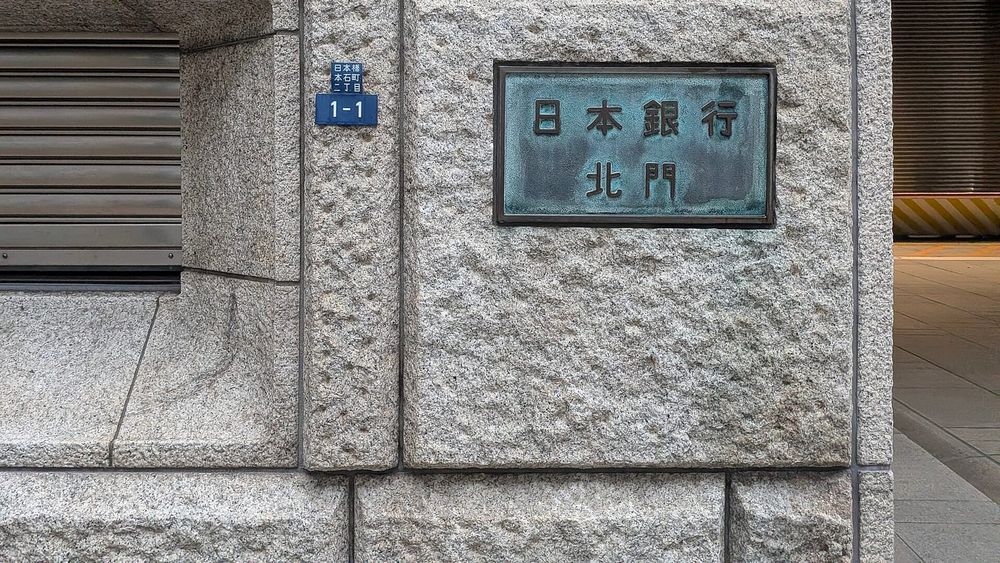
The Bank of Japan is expected to hold its policy rate at 1.25% by a majority vote at its two-day meeting ending on Friday. It would forgo a back-to-back hike to spend more time scrutinising the effect of past rate hikes on lending conditions. The central bank will also likely declare victory in a nearly 14-year battle to hit its 2% inflation target and emphasise the risk that prices could overshoot, signalling the chance of a rate hike as soon as December.
In a quarterly report due after the meeting, the BOJ is likely to slightly revise up next fiscal year's price forecast and signal that underlying inflation has roughly achieved its 2% target, people familiar with the matter told Reuters. With wage gains becoming embedded and inflation expectations hovering around 2%, the central bank will likely stress that it will now focus on anchoring inflation around its target by raising rates toward levels deemed neutral to the economy.
LOOSE CONDITIONS LEAVE ROOM TO TIGHTEN
With growth in bank lending still strong, the central bank is likely to stress that financial conditions remain loose. That would signal scope for further rate hikes before the policy rate reaches levels close to neutral, the people said.
The policy rate of 1.25% is already within the range of 1.1% to 2.5% that BOJ staff estimated as Japan's neutral rate, the level that neither cools nor overheats the economy. That has drawn market attention to how far the bank could eventually hike rates.
ANALYSTS WEIGH DECEMBER AGAINST JANUARY
Analysts polled by Reuters expect the BOJ to raise rates to 1.5% in December and stick to a quarterly pace of rate hikes. Naomi Muguruma, chief bond strategist at Mitsubishi UFJ Morgan Stanley Securities, said the BOJ will probably scrutinise upcoming data and market moves in deciding whether to raise rates in December, or hold until January.
Still, the BOJ is likely to avoid explicit hints on the timing and pace of future rate rises, analysts say, as it balances the need to forestall an inflation overshoot against the risk of disrupting jittery markets with a premature hike. One person familiar with the bank's thinking, a view echoed by two more, said that with rises in prices and wages moderate, the BOJ will keep raising rates gradually without rushing.
FROM 2013 STIMULUS TO A SHORTER HIKING GAP
Under former governor Haruhiko Kuroda, the BOJ deployed a stimulus programme in 2013 to pull Japan out of deflation and lift inflation to its 2% target. Even after ending its mix of unorthodox easing steps in 2024, the central bank has trodden cautiously in raising rates, on the view that underlying inflation remained below target. Underlying inflation refers to price moves that exclude one-off factors and are driven by domestic demand.
Stubbornly high energy costs and rising import prices from a weak yen added to inflationary pressures, and the BOJ raised rates in September after a hike in June. That interval was shorter than the roughly twice-a-year hikes of 2024 and 2025. Governor Kazuo Ueda signalled a shift in policy focus when rates rose in September, and the pivot would mark another symbolic departure from the BOJ's prolonged efforts to fire up inflation through ultra-loose monetary policy.
FED AND ECB MEETINGS FRAME THE DECISION
The BOJ's meeting follows that of the US Federal Reserve, which is seen skipping a hike at its two-day meeting concluding on Wednesday. The European Central Bank is set to keep rates unchanged at 2.5% on Thursday. Hawkish language from the BOJ may reinforce expectations that it, the Fed and the ECB will all raise rates by year-end, as brisk AI demand and the Iran war-induced energy shock worsen global inflationary pressures.
Naomi Muguruma, chief bond strategist at Mitsubishi UFJ Morgan Stanley Securities, described the moment as a historical one for the BOJ. "It's a historical moment for the BOJ, though it faces a more challenging task now that it needs to step not just on the accelerator but the brakes," she said.
Related: Bank of Japan Reported Broader Cost Pass-Through Across Regional Economies