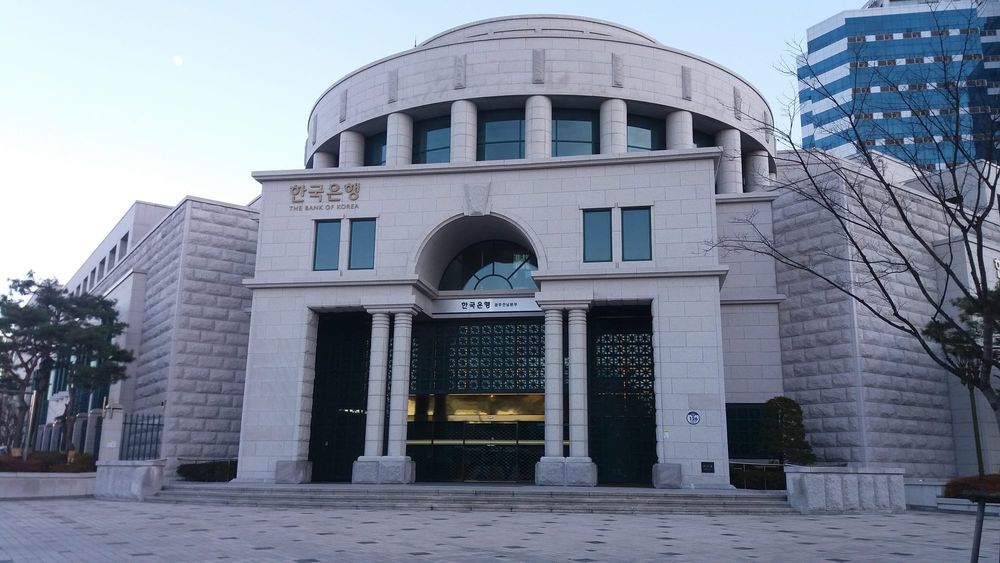
The Bank of Korea held its base rate at 2.50% at its October 2025 Monetary Policy Board meeting, marking the third consecutive decision to leave borrowing costs unchanged. The announcement on 23 October 2025 reflects the central bank's continuing effort to balance below-trend growth against inflation that has not yet fully returned to target, in an economy navigating a challenging combination of weak domestic demand and persistent external headwinds from slowing global trade.
The hold was broadly in line with market expectations following the previous two meetings at which the Monetary Policy Board declined to act despite calls from some quarters for additional easing. The Bank of Korea's communications since its last move have consistently emphasised that any future adjustment to the policy rate will depend on the incoming trajectory of domestic inflation and global financial conditions, a framing that has left investors uncertain about the timing and direction of the next change.
GROWTH AND INFLATION FORECASTS REVISED HIGHER
The Bank of Korea accompanied its rate decision with a slight upward revision to its GDP growth forecast for 2025, raising the projection to 0.9%. The upgrade, modest though it is, suggests that the Monetary Policy Board sees less downside risk to the economic outlook than its previous forecasts implied, possibly reflecting resilience in certain export sectors or a stabilisation in domestic consumption indicators that had been tracking below earlier estimates. Growth of 0.9% remains subdued relative to South Korea's historical pace of expansion, providing an ongoing rationale for a cautious monetary stance.
The inflation forecast for 2025 was also revised upward, to 2.1%, placing the Bank of Korea's central expectation just above its target rate. A reading of 2.1% is not alarming by global standards, but it is sufficient to give the board pause before committing to further easing, particularly given the experience of many central banks worldwide that moved too quickly to declare victory over inflation only to find price pressures re-emerging. The combination of slightly higher growth and inflation projections reinforces the board's current posture of watchful patience.
POLICY OUTLOOK AND EXTERNAL CONSTRAINTS
South Korea's monetary policy environment is shaped not only by domestic conditions but by developments in the global economy, particularly in the United States and China. The Bank of Korea must assess the implications of Federal Reserve policy for capital flows and exchange rate dynamics, as well as the health of Chinese demand, which remains one of the most significant external drivers of South Korean exports. Both factors introduce uncertainty that makes the board reluctant to signal a clear directional commitment that could quickly be overtaken by events.
With three consecutive holds now on the record, analysts are watching closely for any shift in the Monetary Policy Board's tone at upcoming meetings that might presage either a resumption of the cutting cycle or, should inflation data surprise on the upside, a period of sustained stasis. The slightly higher forecasts for both growth and inflation suggest the board currently sees no compelling case for action in either direction, making a fourth consecutive hold a plausible baseline as the year's final quarter gets under way.