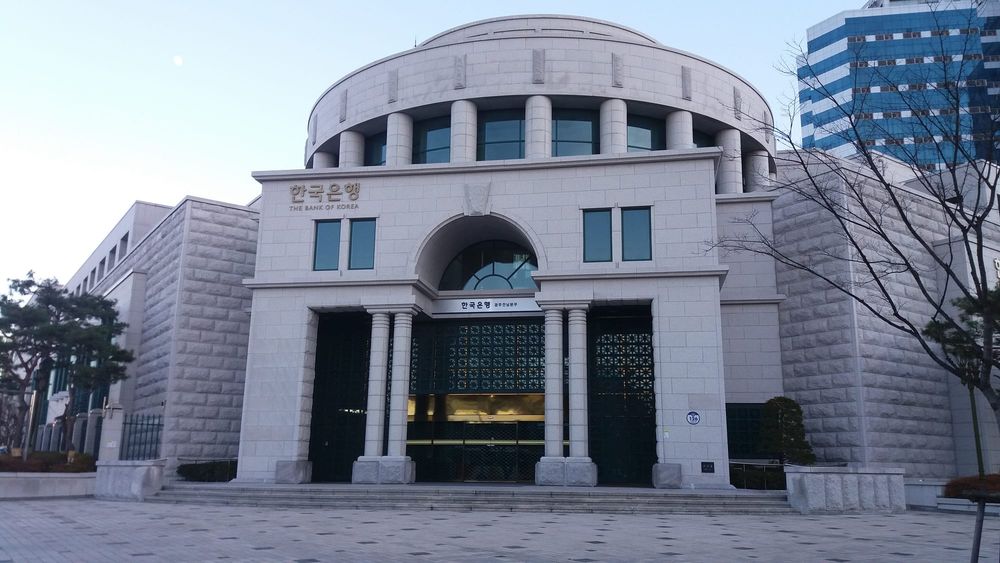
The Bank of Korea's Monetary Policy Board kept the base rate unchanged at 2.50% on 23 October 2025, the third consecutive meeting at which it left borrowing costs on hold, as it weighed renewed gains in Seoul-area housing prices and volatility in the won.
The central bank began easing in October 2024 and lowered the rate four times, by a total of 1 percentage point, with the most recent cuts in February and May 2025. It then held the rate at its July and August meetings. In its policy statement, the board said it judged it appropriate to keep the rate unchanged because it needed more time to assess the impact of the government's real estate measures on the Seoul metropolitan housing market and household debt, as well as exchange-rate volatility.
HOUSING MARKET AND GROWTH
The board said growth in household lending had slowed considerably, but prices and transaction volumes in the Seoul metropolitan housing market had picked up again. Volatility in exchange rates and interest rates had increased since late September, with the won weakening significantly against the dollar amid uncertainty over tariff negotiations with the United States and renewed US-China trade tensions.
On the economy, the board said recovering consumption and solid export growth had kept activity improving despite weak construction investment. It expects growth this year and next to be broadly in line with its August projections of 0.9% and 1.6% respectively, although it said uncertainty had increased. Consumer price inflation was 2.1% in September and core inflation 2.0%, and the board expects inflation to stay around 2%, consistent with its August forecasts of 2.0% for 2025 and 1.9% for 2026.
The board said it would maintain its rate-cut stance to ease downside risks to growth, while deciding the timing and pace of any further reduction after closely monitoring changes in domestic and external policy conditions, inflation and financial stability. Its final rate-setting meeting of the year is scheduled for 27 November.