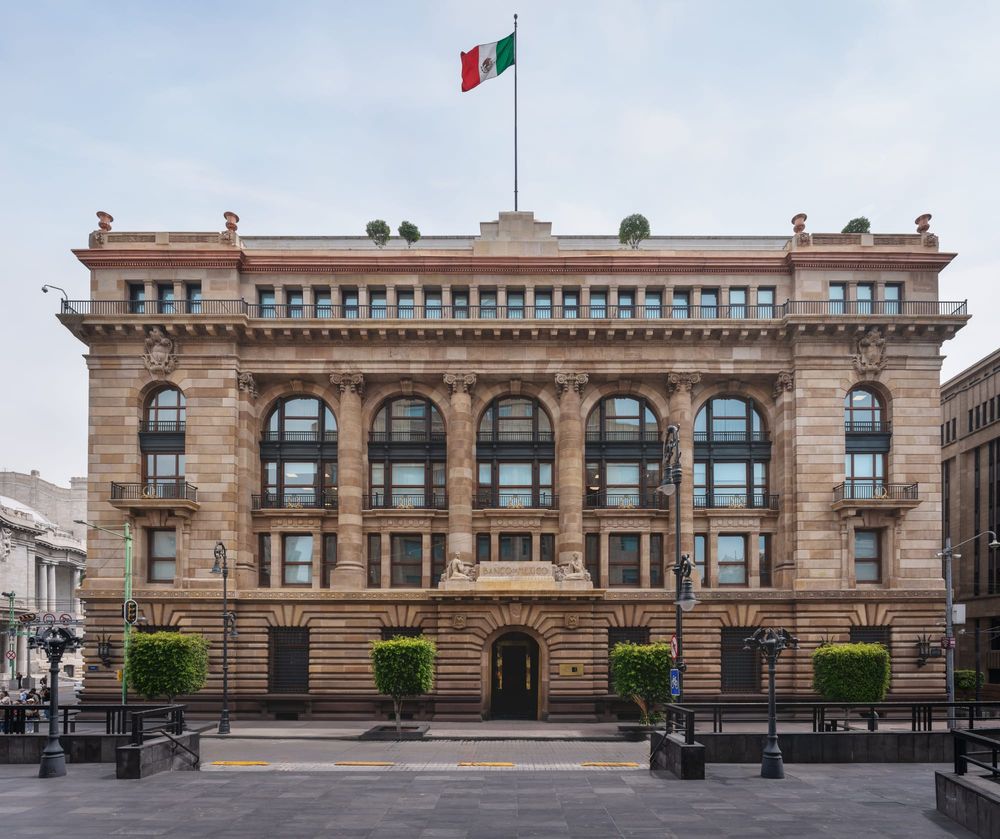
Banco de México reduced its overnight interbank rate by 25 basis points to 10.25 per cent at its November 2025 monetary policy meeting, extending an easing cycle that has now delivered a cumulative 225 basis points of cuts during the calendar year. The decision reflects the governing board's assessment that inflation in Mexico is on a credible convergence path toward the bank's 3.5 to 4.0 per cent target band, creating the conditions for continued, measured policy normalisation.
The cut represents a continuation of the gradual recalibration of monetary policy that Banxico initiated following a prolonged period of restrictive settings put in place to combat the inflation surge that spread across emerging markets in the aftermath of the pandemic and the commodity price shock that followed Russia's invasion of Ukraine. Inflation has been declining toward the target range, the bank said, in a trajectory that the board judged sufficient to support further easing without compromising the credibility of the inflation anchor.
225 BASIS POINTS OF EASING DELIVERED IN 2025
The November reduction brings the total policy rate adjustment in 2025 to 225 basis points, a substantial quantum of easing that has progressively reduced the real cost of borrowing as nominal rates have fallen against a backdrop of declining inflation. The cumulative scale of the cuts reflects Banxico's judgement that the restrictive monetary stance maintained at the peak of the tightening cycle has served its purpose in anchoring price expectations and reducing headline and core inflation toward acceptable levels.
For borrowers across Mexico's financial system, the trajectory of rate reductions has provided incremental relief on lending costs, with transmission into mortgage and corporate credit rates typically operating over several months as banks and other lenders reprice their loan portfolios. The domestic labour market has remained relatively resilient through the easing cycle, with employment conditions not deteriorating sharply despite the cumulative monetary tightening that preceded the current period of cuts.
Banxico has proceeded at a deliberate, incremental pace relative to some of its Latin American peers, delivering reductions in measured 25 basis point steps rather than front-loading the adjustment. That approach has been shaped in part by the need to maintain a sufficient interest rate differential with the United States to support the peso and limit the inflationary pressure that could arise from significant exchange rate depreciation.
INFLATION TRAJECTORY TOWARD TARGET BAND
Inflation in Mexico has been declining toward the 3.5 to 4.0 per cent target band cited by Banxico in its policy communications. The bank has attributed this convergence to the lagged effect of prior monetary tightening, a fading of global supply-side pressures, and a moderation in food and energy price dynamics that had driven headline indices sharply higher in 2022 and 2023.
Services inflation, which has historically been stickier than goods prices in Mexico, remains an area under active scrutiny by the governing board. Ensuring that disinflation extends across all components of the consumer price index, rather than reflecting only a temporary correction in volatile categories, is seen as a precondition for a more confident pace of further easing without risking a resurgence in price pressures.
Banxico's next policy meeting will provide an opportunity for the governing board to assess whether incoming data continue to support the prevailing easing path or whether any renewed inflationary pressure, financial market volatility, or shift in the external environment warrants a pause. The bank has signalled that it will remain data-dependent, calibrating each decision in light of the conditions and information available at the time of each meeting rather than committing to a fixed schedule of adjustments.