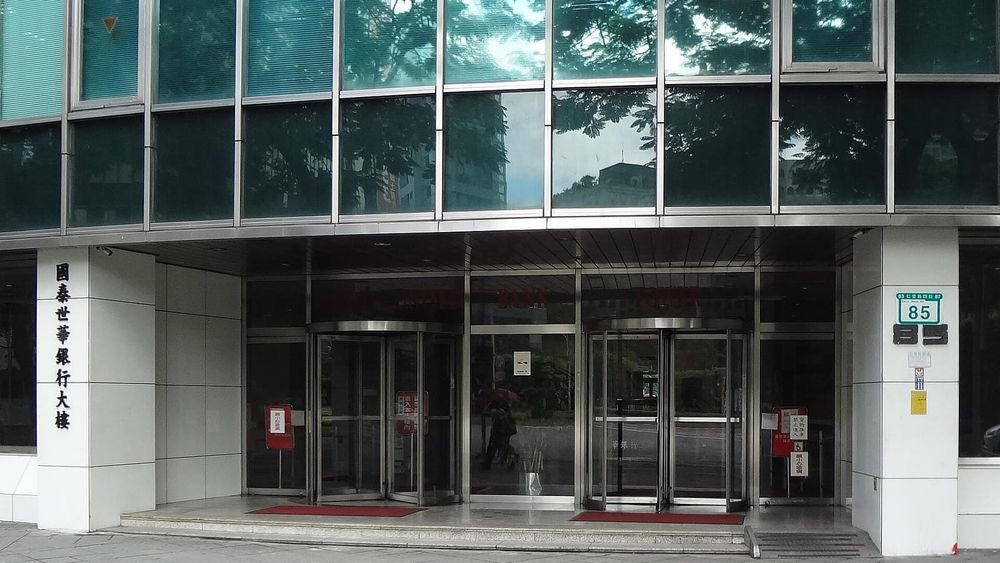
Cathay United Bank plans to work with leading domestic virtual asset service providers (VASPs) to build stablecoin cross-border collection and settlement services for corporate clients. The bank said it will combine the cross-border cash-flow, compliance and risk management expertise it has built in corporate finance with the VASPs' strength in digital assets.
Corporate clients will be able to create transaction information on the bank's corporate online banking, while partner VASPs help with the stablecoin exchange so the collection can be completed. After receiving stablecoins, clients can convert them into fiat currency for deposit, which the bank said reduces market volatility risk.
BUSINESS-TO-BUSINESS COLLECTION COMES FIRST
Cathay United Bank said it will prioritise B2B stablecoin collection scenarios and gradually build capabilities in stablecoin collection, fiat conversion and bank account deposits. It added that it will keep exploring how virtual asset services can be integrated with its existing corporate finance offering.
The VASPs' role reflects current licensing. The licence to transfer virtual assets remains with VASPs, so a company collecting stablecoins must first go through a VASP exchange before funds move into the banking system. Taiwan's total imports and exports reached $1.12 trillion in 2025, leaving businesses grappling with cross-border payment efficiency and exchange-rate risks.
CATHAY'S VIRTUAL ASSET GROUNDWORK
Cathay United Bank said it was approved by the FSC in 2025 to trial virtual asset custody services and launched the trial in May 2026. The bank said the trial has given it practical experience in compliance, risk control, information security and operating processes.
Cathay United Bank is one of five Taiwanese banks approved to pilot virtual asset custody, alongside CTBC Bank, Taishin Bank, KGI Bank and Union Bank of Taiwan. Cathay Financial Holdings has disclosed that it is evaluating opportunities in stablecoins, digital asset custody, cross-border payments and tokenization, and sees cross-border payments as one of the scenarios most likely to achieve scale in the near term.
OTHER BANKS AND EXCHANGES MOVE ON SETTLEMENT
O-Bank and BitoGroup announced on 11 September a pilot of the Bito.ONE enterprise stablecoin settlement scheme, integrating stablecoin collection into corporate online banking. O-Bank said the service starts on 15 September, and BitoGroup had introduced Bito.ONE on 7 July 2026.
The pilot initially covers a selected group of companies, each subject to a cap per transaction, a daily limit of NT$5 million and a monthly limit of NT$150 million. Risk testing and process verification begin on 15 September, with the official launch date to be announced afterwards. Three other financial institutions, which have not been named, are also taking part in BitoGroup's pilot.
MaiCoin Group has announced a partnership with CTBC Bank on corporate stablecoin settlement. MaiCoin said its service focuses mainly on highly liquid US dollar stablecoins and that it is in talks with other financial institutions. HOYA BIT also offers corporate stablecoin settlement, and SMEs and listed companies have opened accounts with the exchange.
REGULATORY FRAMEWORK TAKES SHAPE
Taiwan's Virtual Asset Service Act completed its third reading on 30 June 2026, establishing a comprehensive regulatory framework for crypto assets. The FSC has announced nine virtual asset subordinate regulations, including stablecoin rules, targeting implementation as early as the first quarter of 2027.
Peng Jin-long said the FSC's initial policy direction will prioritise allowing banks to issue stablecoins. The framework requires issuers to maintain full reserve backing, place reserve assets in trust and undergo regular audits.